





News Categories


When choosing an intravenous administration device, it is important to understand the difference between an IV set and a blood transfusion set. Although both are used to deliver fluids through a patient's vein, they are designed for different applications.
An IV set, also called an IV infusion set or intravenous infusion set, is primarily designed to administer fluids, medications, electrolytes, and other compatible solutions. A blood transfusion set, also called a blood administration set, is specifically designed to deliver whole blood and blood components such as red blood cells and plasma.
The main difference is that a blood transfusion set incorporates a blood filter and components designed specifically for blood products, while a standard IV set is intended for routine intravenous fluid and medication administration.
| Feature | IV Set | Blood Transfusion Set |
|---|---|---|
| Primary use | IV fluids, medications and compatible solutions | Whole blood and blood components |
| Common name | IV infusion set | Blood administration set |
| Filter | Standard drip chamber; design varies by product | Blood filter integrated into the drip chamber |
| Main application | Routine intravenous therapy | Blood transfusion |
| Tubing | Designed for compatible IV fluids and medications | Designed for blood products and transfusion use |
| Flow control | Roller clamp or flow regulator | Roller clamp or flow regulator |
| Typical products | Saline, dextrose solutions, medications | Whole blood, red blood cells, plasma and other blood components |
| Key consideration | Fluid delivery, sterility and flow control | Blood filtration, compatibility and transfusion safety |
In simple terms: an IV set is generally used to deliver fluids and medications, while a blood transfusion set is specifically designed for administering blood or blood components.
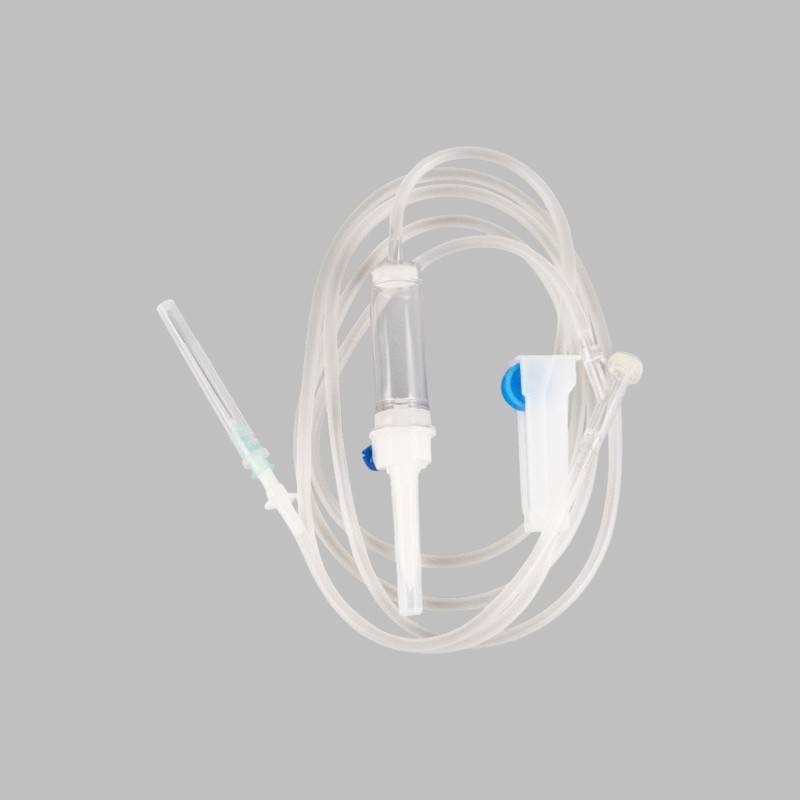
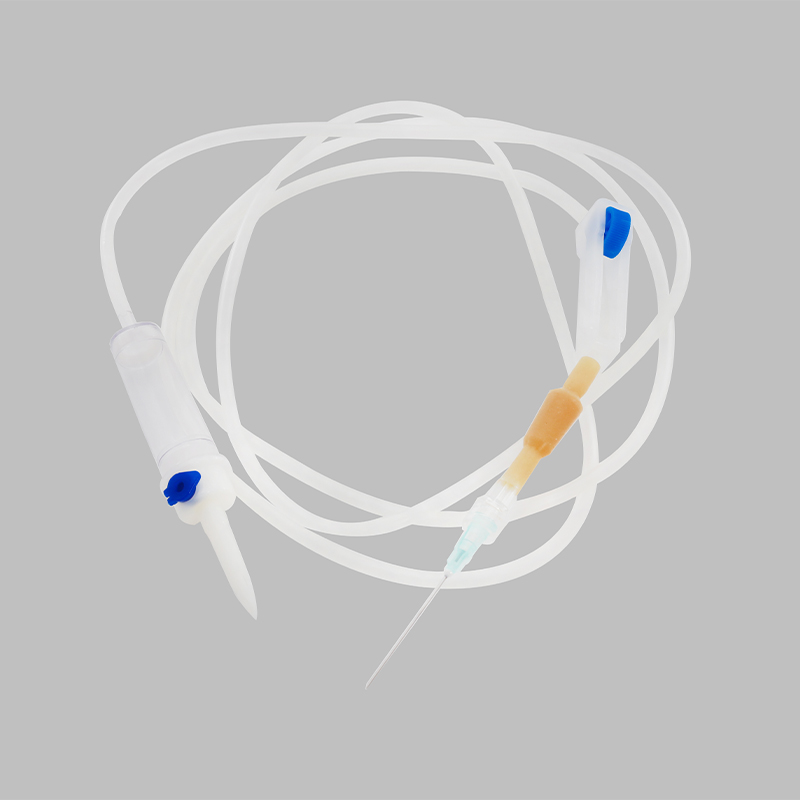
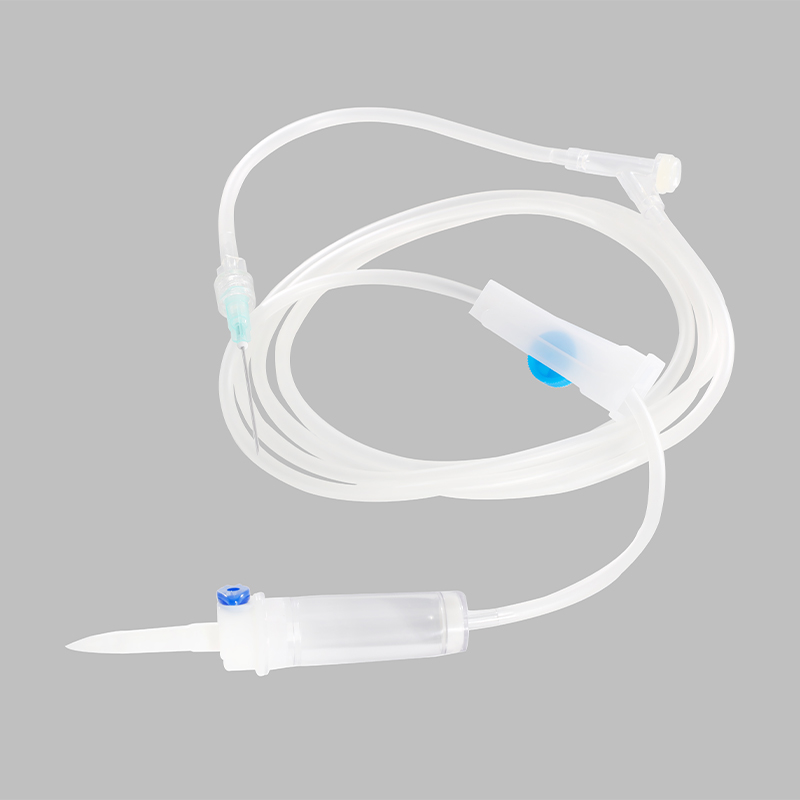
An IV set is a sterile disposable medical device used to administer fluids or medications directly into a patient's vascular system through an intravenous access device.
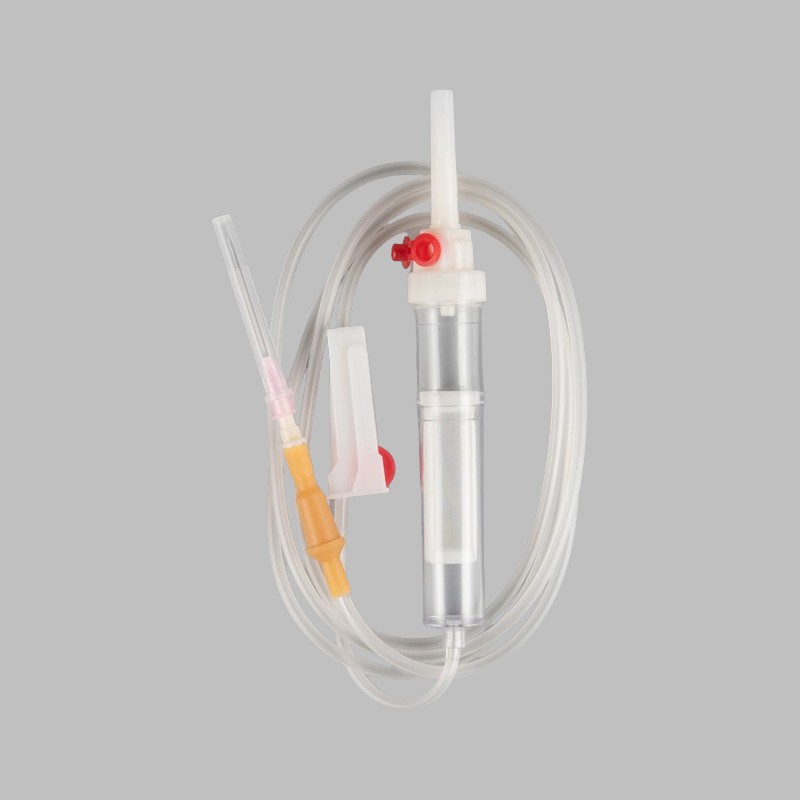
Depending on the configuration, an IV infusion set may connect to an IV catheter, needle or other compatible vascular access device. It normally includes a spike, drip chamber, flexible tubing, flow-control device and connector.
The exact configuration can vary depending on the intended application and product design, but common IV set components include:
Spike: Used to connect the set to a fluid container.
Drip chamber: Allows the healthcare professional to observe the fluid flow and drops.
Flexible tubing: Provides a sterile pathway for fluid delivery.
Roller clamp or flow regulator: Used to control the flow rate.
Injection site: Allows medication to be introduced when the product is designed with an injection port.
Luer connector: Connects the IV set to a compatible catheter, needle or other device.
Protective caps: Help maintain sterility before use.
Some IV infusion sets may also include an air vent, needle, Y-site, latex-free injection port or other specialized components.
IV sets are commonly used to administer compatible intravenous solutions and medications, including:
Normal saline and other electrolyte solutions
Dextrose solutions
Intravenous medications
Compatible nutritional solutions
Other fluids prescribed for intravenous administration
The appropriate IV set should be selected according to the solution, administration method, required flow rate, connector configuration and applicable clinical requirements.

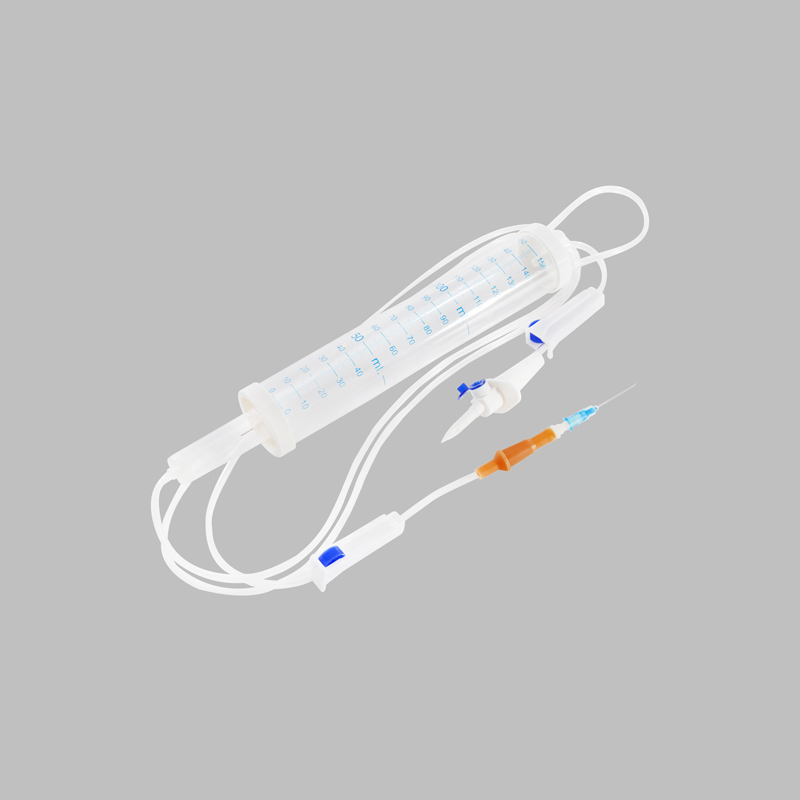
A blood transfusion set is a sterile disposable administration device specifically designed for the transfusion of blood and blood components.
It has a similar basic structure to an IV set, but its design incorporates features intended for blood administration. One of the most important components is the blood filter, which helps filter clots, fibrin strands, cellular aggregates and other particulate matter that may be present in blood products.
A blood transfusion set may be used with appropriate blood components according to the applicable clinical procedure and product instructions.
Typical blood administration set components include:
Spike: Connects the set to the blood bag or compatible container.
Drip chamber with blood filter: Provides filtration during blood administration.
Flexible tubing: Provides the pathway for blood products.
Roller clamp or flow regulator: Controls the flow rate.
Injection site: Available on applicable configurations.
Luer connector: Provides connection to a compatible vascular access device.
Protective caps: Maintain sterility before use.
The exact design, filter specifications, tubing material and connector configuration may vary by product and intended application.
The blood filter is one of the most important differences between a blood transfusion set and a standard IV infusion set.
Blood products can contain or develop particulate matter such as clots, fibrin strands or cellular aggregates during storage and handling. A blood administration set uses an integrated filter to help prevent these particles from entering the patient's bloodstream during transfusion.
The filter is therefore an important component of the blood administration pathway. However, the appropriate filter specifications and transfusion procedure should always follow the applicable product instructions, clinical protocols and regulatory requirements.
Although both devices provide intravenous administration, their intended applications are different.
An IV set is generally used for intravenous fluids and medications.
A blood transfusion set is specifically intended for blood and blood components.
A standard IV infusion set is not necessarily designed with a blood filter.
A blood transfusion set incorporates a filter specifically intended for blood administration.
IV sets are optimized for routine fluid and medication administration, with components selected according to the intended solution and flow requirements.
Blood administration sets are designed with blood-compatible components and filtration features appropriate for transfusion applications.
IV sets are commonly used in general intravenous therapy.
Blood transfusion sets are used when administering blood or blood components under appropriate clinical procedures.
When selecting an IV set, buyers should consider factors such as:
Intended fluid or medication
Flow rate
Tubing configuration
Connector type
Injection port requirements
Sterility
Packaging
Applicable standards and regulations
For a blood transfusion set, additional considerations include:
Intended blood product
Filter configuration
Tubing and component compatibility
Connector configuration
Flow-control requirements
Sterility
Applicable transfusion standards and regulations
A standard IV set should not automatically be substituted for a blood transfusion set.
Blood transfusion requires equipment specifically intended for blood products and appropriate filtration. Using a device that is not designed or validated for blood administration may not provide the required filtration or compatibility characteristics.
Healthcare professionals should select a blood administration set according to the blood product, clinical procedure, manufacturer instructions and applicable local requirements.
For medical device buyers, it is important to verify the product's intended use and specifications before purchasing or using an IV set for a particular application.
| Component | IV Set | Blood Transfusion Set |
|---|---|---|
| Spike | Yes | Yes |
| Drip chamber | Yes | Yes |
| Flexible tubing | Yes | Yes |
| Roller clamp / flow regulator | Yes | Yes |
| Injection site | Depending on configuration | Depending on configuration |
| Luer connector | Depending on configuration | Depending on configuration |
| Blood filter | Not typically the defining feature | Yes |
| Blood-specific design | No | Yes |
The two devices share many basic components, but the intended use and blood filtration function distinguish a blood transfusion set from a standard IV set.
For hospitals, distributors and medical device importers, choosing the right product involves more than comparing the basic components.
First determine whether the device will be used for routine IV fluid and medication administration or for blood and blood components.
Tubing material should be appropriate for the intended application. Buyers may also need to consider flexibility, transparency, compatibility and latex-free requirements.
Common configurations may include Luer Slip or Luer Lock connections. The connector should be compatible with the intended catheter, needle or vascular access device.
The roller clamp or flow regulator should provide suitable control for the intended application and required flow rate.
For blood transfusion sets, verify that the product includes the appropriate blood filter and that its specifications meet the intended application and applicable requirements.
For disposable medical devices, buyers should confirm sterilization method, sterile packaging, shelf life and packaging configuration according to the intended market requirements.
Medical distributors and healthcare product brands may require customized packaging, labeling, connector configurations, tubing lengths or other product specifications.
A reliable medical device supplier should be able to provide detailed product specifications, quality documentation and customization support.
For hospitals, distributors and medical device importers, product selection should be based on the actual application rather than simply choosing the lowest-cost option.
Before placing an order, buyers should evaluate:
Product configuration
Intended application
Material specifications
Filter design
Connector type
Sterilization method
Packaging
Applicable certifications and regulatory documentation
OEM/private-label capability
Production capacity
Quality-control procedures
Clear product specifications are particularly important for international buyers because regulatory and documentation requirements can vary between markets.
An IV set is generally designed for administering intravenous fluids and medications, while a blood transfusion set is specifically designed for administering blood and blood components. A blood transfusion set typically includes an integrated blood filter.
An IV set is commonly called an IV infusion set, intravenous infusion set, or IV administration set, depending on the product configuration and market terminology.
A blood transfusion set is also commonly called a blood administration set or blood giving set.
The integrated filter helps remove particulate matter such as clots, fibrin strands and cellular aggregates that may be present in blood products during administration.
Not every IV set is designed or intended for blood administration. A blood transfusion should use an appropriate blood administration set with suitable filtration and components according to the manufacturer's instructions and applicable clinical requirements.
Typical components include a spike, drip chamber, flexible tubing, flow-control device, connector and, depending on the design, an injection port, air vent or needle.
Typical components include a spike, drip chamber with blood filter, flexible tubing, flow-control device, connector and, depending on the configuration, an injection site and other accessories.
For medical distributors, hospitals and healthcare product brands, supplier capability is an important part of product selection.
Changzhou Medical Appliances General Factory Co., Ltd. supplies disposable medical products including IV infusion sets and blood transfusion sets. Buyers can evaluate product configurations, materials, packaging, customization options and applicable quality documentation according to their market requirements.
For OEM and private-label projects, buyers should communicate their required specifications, packaging, labeling and regulatory requirements with the supplier before production.
The key difference between an IV set and a blood transfusion set is their intended application and design.
An IV set is primarily used for administering compatible intravenous fluids and medications, while a blood transfusion set is specifically designed for blood and blood components and incorporates an appropriate blood filtration system.
Understanding the differences in components, filtration, tubing, connectors, intended use and product specifications can help hospitals, distributors and medical device buyers select the appropriate administration set for their requirements.
If you are looking for a reliable supplier of disposable IV infusion sets or blood transfusion sets, contact Changzhou Medical Appliances General Factory Co., Ltd. for product specifications, OEM/private-label options and quotation support.
Whatsapp: +86-13616120206
E-mail: sale01@lelun.com
ADD: HengShanQiao Town, out of East Gate, Changzhou ,Jiangsu, China
Mobile: (+)86-13616120206