






News Categories

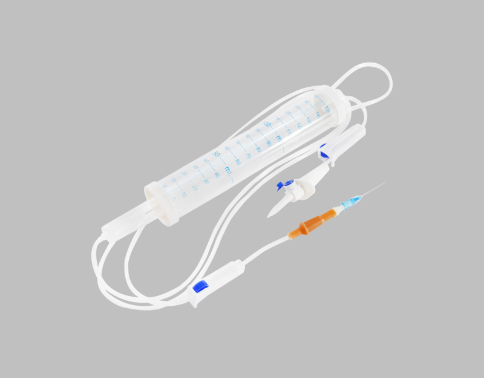
An IV set is used to deliver prescribed fluids and compatible medications directly into a patient's bloodstream through an established intravenous (IV) access. It plays an important role in fluid replacement, medication administration, and supportive care in hospitals, clinics, and other healthcare settings.
For medical professionals, the appropriate IV set helps facilitate controlled fluid delivery and routine infusion management. For medical device distributors, importers, and hospital procurement teams, understanding IV set applications, product specifications, and compatibility requirements is essential when selecting products for different healthcare markets.
This guide explains the main uses of IV sets, their common clinical applications, and the key factors buyers should evaluate when sourcing disposable IV infusion sets.
The primary purpose of an IV set is to establish a fluid delivery pathway between a compatible infusion container and a patient's IV access. Depending on its design and intended use, an IV set can support several clinical applications.
One of the most common uses of an IV set is administering prescribed intravenous fluids. Healthcare professionals may use IV infusion systems when patients require fluid replacement or cannot receive sufficient fluids through oral intake.
Common applications include:
Replacing fluids lost through vomiting, diarrhea, or other conditions when intravenous treatment is clinically indicated.
Providing maintenance fluids to selected patients who cannot meet their fluid requirements orally or enterally.
Administering prescribed electrolyte solutions to support fluid and electrolyte management.
The specific fluid, volume, and infusion rate depend on the patient's condition and the treatment plan established by qualified healthcare professionals.
IV sets can also be used to administer medications formulated and approved for intravenous infusion. This route may be selected when a medication needs to be delivered intravenously under clinical supervision.
When selecting an IV set for medication administration, healthcare facilities must consider material compatibility, tubing characteristics, connector design, and medication-specific requirements. Some medications require specialized administration sets, filters, or tubing materials.
A standard IV set should not be assumed to be compatible with every intravenous medication.
IV infusion systems are commonly used in surgical and perioperative settings to administer prescribed fluids and compatible medications. Depending on the procedure and the patient's needs, these systems may support fluid management before, during, or after surgery.
For hospitals purchasing IV sets for perioperative use, consistent product specifications, reliable packaging, and clear product documentation are important considerations.
In emergency departments and inpatient units, IV sets may be used when intravenous fluid or medication administration is required. Their applications can include fluid replacement, prescribed medication infusions, and supportive treatment for patients who require close monitoring.
Healthcare providers must select an appropriate infusion system based on the prescribed treatment, the patient's clinical condition, and the equipment available. Standard gravity IV sets are not substitutes for specialized rapid-infusion systems when those systems are clinically required.
IV sets are also used in outpatient departments, day-treatment facilities, and other healthcare settings that provide intravenous therapy. These facilities may require disposable infusion sets for scheduled treatments and routine clinical procedures.
Product selection depends on the prescribed therapy, the equipment in use, and the facility's infection prevention and inventory management policies.
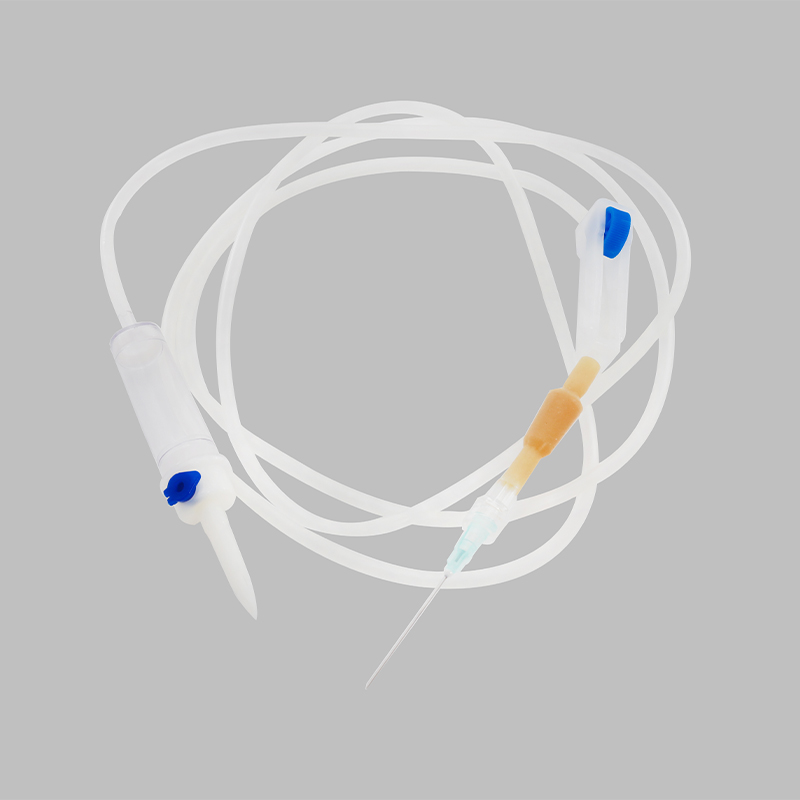
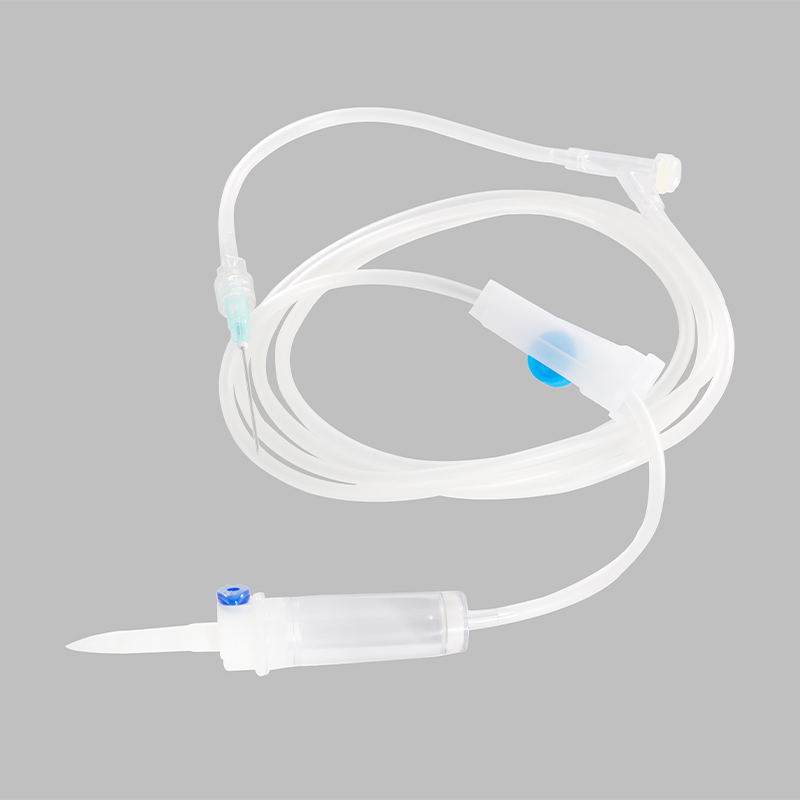
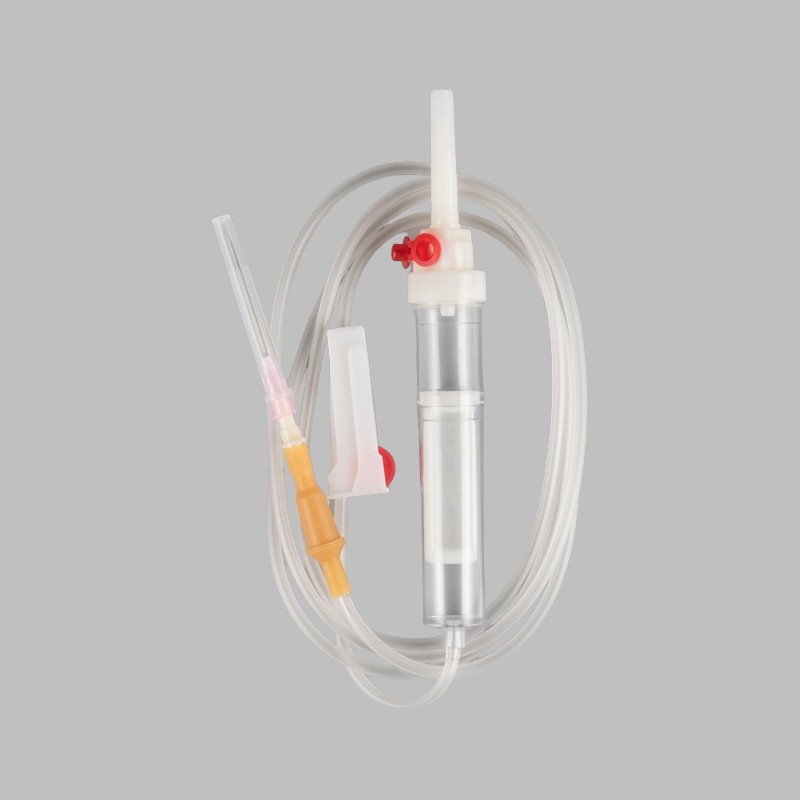
Although IV sets vary in design, most conventional sets contain components that work together to transport fluid from an infusion container to the patient's IV access.
The spike connects to a compatible fluid container, while the drip chamber allows the fluid flow to be observed in gravity-fed systems. The tubing carries the fluid toward the patient, and a roller clamp or another flow-control mechanism may be used to regulate gravity-driven flow.
The distal connector attaches to a compatible IV access device or another component of the infusion system. Some IV sets are designed for use with infusion pumps, while others are intended primarily for gravity infusion. Compatibility depends on the specific device design and the manufacturer's instructions.
An IV set provides the fluid pathway, but it does not independently determine the correct treatment, dosage, or infusion rate. These decisions must follow the prescribed clinical protocol.
Different healthcare environments have different infusion requirements. Understanding these settings helps medical device buyers select appropriate products.
| Healthcare Setting | Typical Applications | Procurement Considerations |
|---|---|---|
| Hospitals | Prescribed fluid and medication administration | Product consistency, compatibility, and documentation |
| Emergency Departments | Intravenous treatment when clinically indicated | Application suitability and equipment compatibility |
| Surgical Departments | Perioperative fluid and medication administration | Reliable connections and procedure-specific requirements |
| Outpatient Clinics | Scheduled intravenous treatments | Inventory management and packaging |
| Medical Supply Distributors | Supplying healthcare facilities with infusion consumables | Market requirements, product range, and supply continuity |
These applications do not mean that one IV set is suitable for every clinical setting. Buyers should match the product to the intended use and verify the manufacturer's specifications before purchasing.
Understanding the main components helps procurement teams compare product configurations and confirm whether a set meets their customers' requirements.
| Component | Main Function | What Buyers Should Check |
|---|---|---|
| Spike | Connects the set to a compatible infusion container | Connector design and container compatibility |
| Drip Chamber | Allows observation of droplets in gravity-fed infusion | Chamber design and visibility |
| IV Tubing | Transports fluid through the infusion system | Material, length, and compatibility |
| Roller Clamp | Regulates or stops gravity-driven flow in applicable designs | Adjustment mechanism and usability |
| Injection Port | Provides an additional access point in designs that include one | Port configuration and intended use |
| Distal Connector | Connects to a compatible IV access device or component | Connector type and compatibility |
Not every IV set contains all these components. Features, materials, dimensions, and configurations vary by model and intended application. Buyers should request the applicable product specification sheet and instructions for use rather than relying solely on generic descriptions.
For importers, distributors, hospital purchasing departments, and medical supply companies, IV set procurement involves more than comparing unit prices. Product suitability, regulatory documentation, manufacturing consistency, and supply arrangements all matter.
Start by identifying the intended clinical use and the requirements of the target healthcare market. Determine whether the product is required for routine gravity infusion, infusion pump use, or another specified application.
Confirm any special requirements for fluid type, medication compatibility, filters, connectors, or other components. This helps buyers avoid selecting a general-purpose product for an application that requires a specialized administration set.
Before requesting a quotation, clarify the required specifications, including:
Tubing material and length.
Drip chamber design.
Spike and connector configuration.
Presence and type of injection port.
Compatibility with the intended infusion equipment.
Packaging configuration and labeling requirements.
Not every specification applies to every product. Buyers should establish a clear technical checklist based on the actual intended use.
Disposable IV infusion sets intended for sterile use should be evaluated according to their specified sterilization method, packaging system, and applicable product requirements.
Buyers should confirm:
Sterilization method and supporting documentation.
Sterile barrier packaging and package integrity requirements.
Lot identification and traceability.
Expiry date and shelf-life documentation.
Storage and transportation requirements.
Medical device requirements differ between countries and regions. Before placing a bulk order, buyers should identify which registrations, certificates, declarations, and quality documents apply to the specific product and destination market.
Depending on the market and product, relevant documentation may include an ISO 13485 quality management system certificate, applicable conformity documentation, product registration, or other required regulatory records.
An ISO certificate alone does not establish that every product is approved for sale in every country. Buyers should verify the scope, validity, issuing body, and applicability of each document.
For distributors and importers, a suitable supplier should be able to provide consistent product specifications, appropriate quality documentation, and clear communication throughout the purchasing process.
Questions to ask a potential supplier include:
What IV set configurations are available?
Can the supplier provide technical specifications and samples?
What are the minimum order quantity and production lead time?
What packaging and labeling options are available?
Can the supplier support the documentation requirements of the destination market?
What quality control and batch traceability procedures are in place?
These questions help buyers compare suppliers on technical suitability and supply reliability, rather than price alone.
Share your required specifications, target market, estimated order quantity, and documentation requirements to discuss product availability and procurement options.
Discuss Your IV Set RequirementsFor B2B buyers, supplier selection should be based on the fit between the supplier's product range and the buyer's commercial and regulatory requirements.
First, confirm that the supplier offers the required infusion set configuration. Then review the technical documentation, product quality information, packaging options, and available evidence of compliance with applicable requirements.
For distributors serving multiple markets, it is also useful to clarify whether different product configurations, labeling arrangements, or packaging specifications can be supported.
Before finalizing a bulk order, buyers should confirm the approved product specification, sample requirements, order quantity, delivery schedule, and any market-specific documentation.
A clear procurement process can help reduce specification mismatches and support more consistent purchasing decisions.
Choosing an appropriate IV infusion set requires matching product specifications to clinical requirements, equipment compatibility, and destination-market regulations.
Changzhou Medical Appliances General Factory Co., Ltd. supplies disposable medical products, including syringe and infusion-related products. Buyers interested in disposable IV infusion sets should confirm the currently available models, specifications, and applicable documentation with the company before placing an order.
If you are sourcing IV sets for a hospital supply program, medical distribution business, or import project, prepare your product requirements before requesting a quotation.
Whatsapp: +86-13616120206
E-mail: sale01@lelun.com
ADD: HengShanQiao Town, out of East Gate, Changzhou ,Jiangsu, China
Mobile: (+)86-13616120206