






News Categories

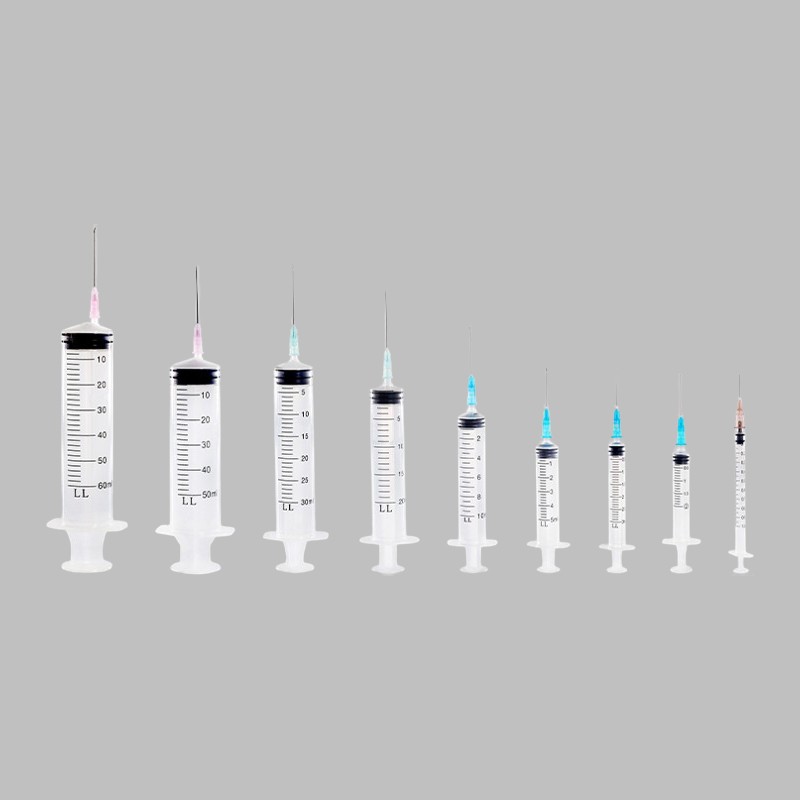
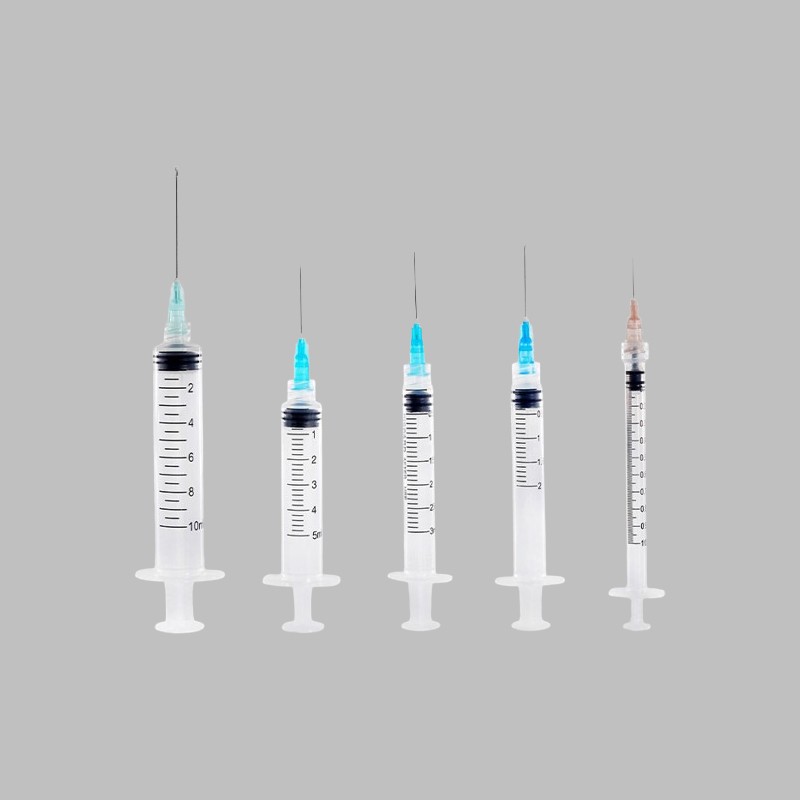
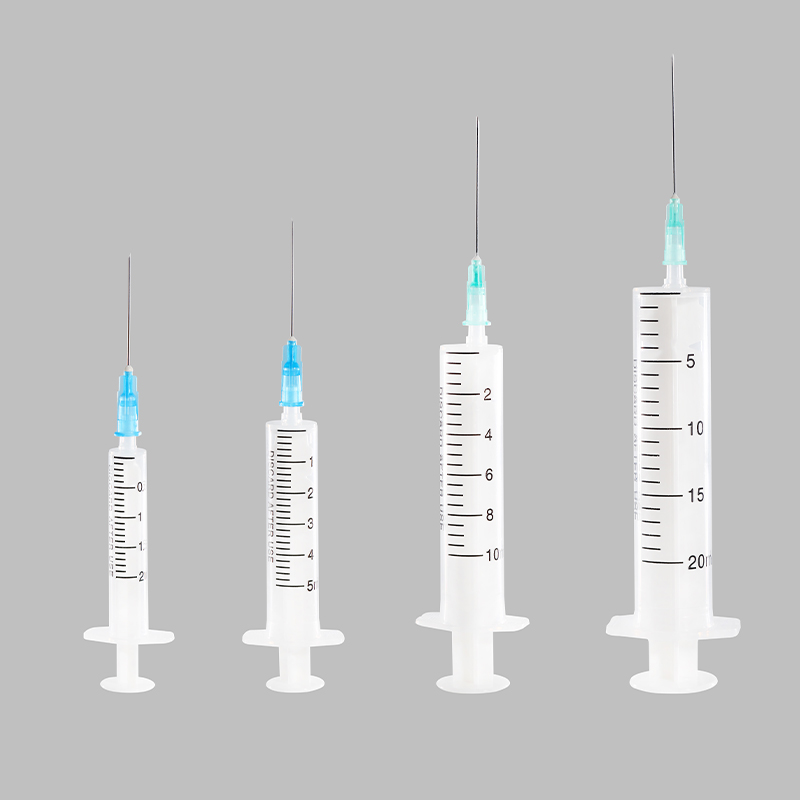
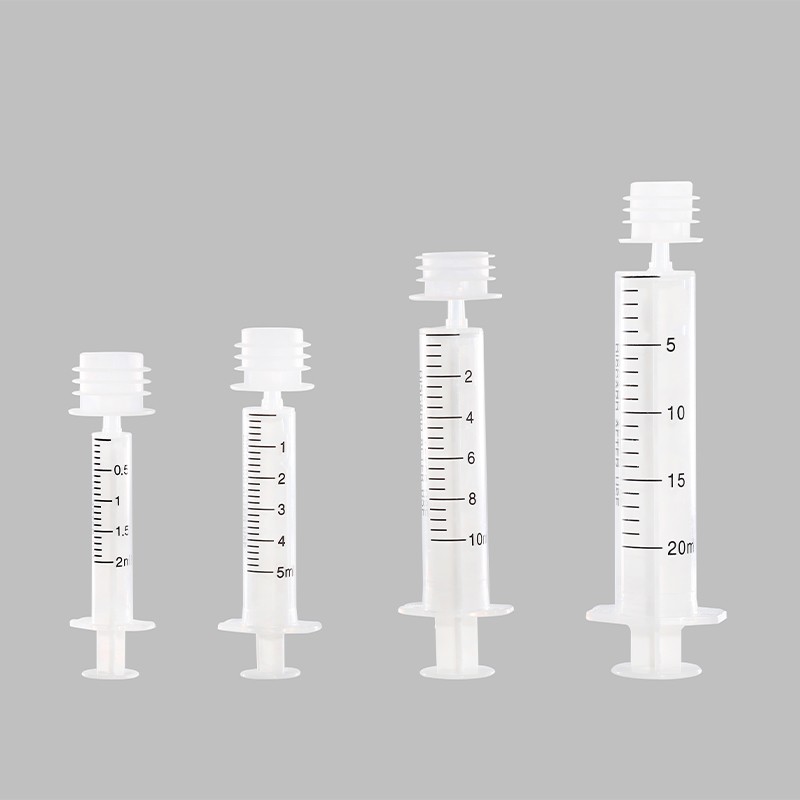
A syringe is a medical device used to draw in, measure, transfer, or administer liquids. In healthcare, syringes are commonly used for injections, medication delivery, liquid sample handling, and flushing certain medical devices when clinically indicated. The specific use depends on the syringe type, capacity, connector design, and intended application.
Disposable syringes are widely used in healthcare settings because they are designed for single use and are available in different capacities and configurations. Understanding the common uses of a syringe, its main components, and the differences between syringe types can help healthcare professionals and medical product buyers identify suitable products for their requirements.
In this guide, we explain what a syringe is used for, how it works, the main types of syringes, and what to consider when selecting disposable syringes for healthcare or bulk procurement.
1. What Is a Syringe?
A syringe is a device that uses a movable plunger inside a barrel to draw in or expel a liquid. Depending on its design, a syringe may be used with a needle, a compatible medical connector, or another appropriate attachment.
Syringes are available in different sizes and configurations to meet different medical and laboratory requirements. Some are supplied with needles, while others are designed to be used without a needle or with a compatible accessory.
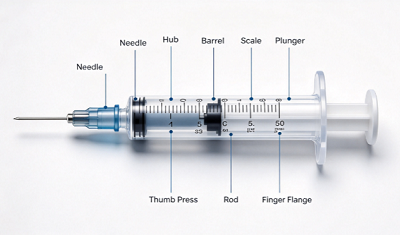
Barrel: The main cylindrical body that holds the liquid. It commonly includes graduation markings for measuring volume.
Plunger: The movable component used to draw liquid into the barrel or push liquid out.
Tip or connector: The outlet at the end of the barrel that connects to a compatible needle or other intended attachment, depending on the design.
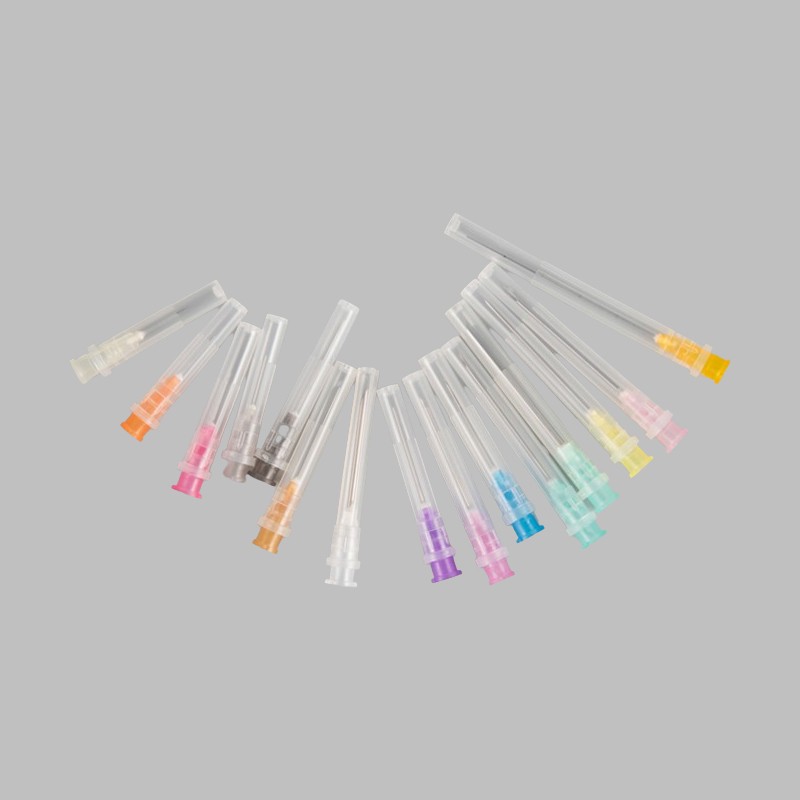
Needle: A component used to penetrate tissue when required for a specific medical procedure. Not all syringes include a needle.
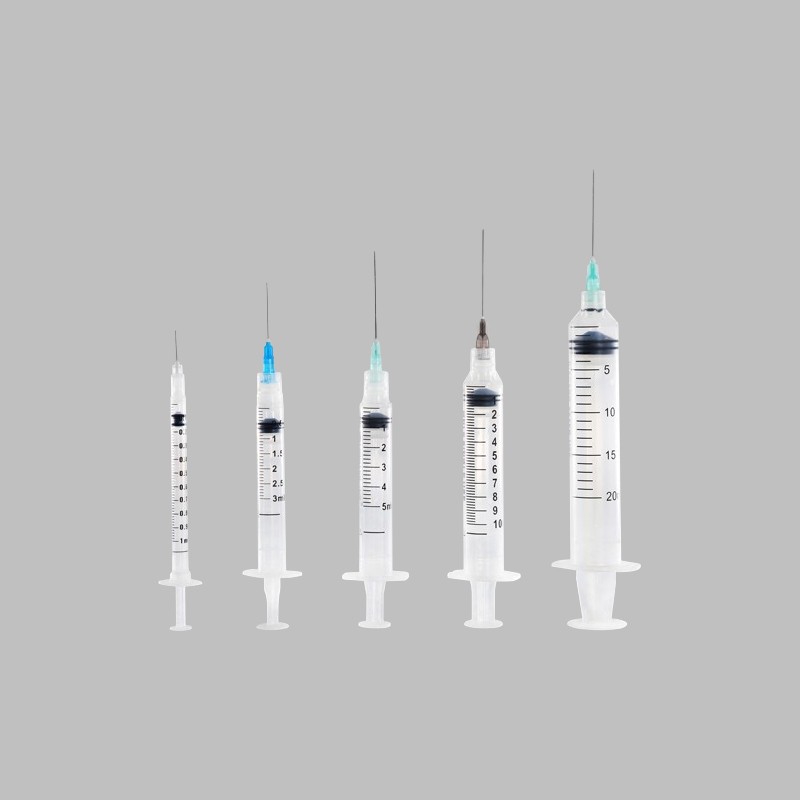
Plunger stopper: In a three-part syringe, an elastomeric stopper is fitted to the plunger assembly to provide a sealing interface within the barrel.
The materials, dimensions, and component configuration vary by product. Buyers should review the manufacturer's specifications to confirm that a syringe meets the requirements of its intended application.
The main uses of a syringe in medicine include administering injections, measuring and delivering liquid medication, drawing medication from a container, transferring liquid samples, and flushing certain medical devices when required by an appropriate clinical procedure.
One of the most recognized uses of a syringe is administering injectable medication and vaccines. When a procedure requires an injection, the syringe holds and delivers the prescribed liquid through a compatible needle.
The appropriate syringe depends on the medication, prescribed volume, route of administration, and applicable clinical requirements. Syringe capacity, graduation markings, needle compatibility, and product labeling should all be considered when selecting a product for an intended procedure.
Syringes can be used to measure and deliver specific volumes of liquid medication. Graduation markings help users identify the volume contained in the barrel, subject to the syringe's design and measurement specifications.
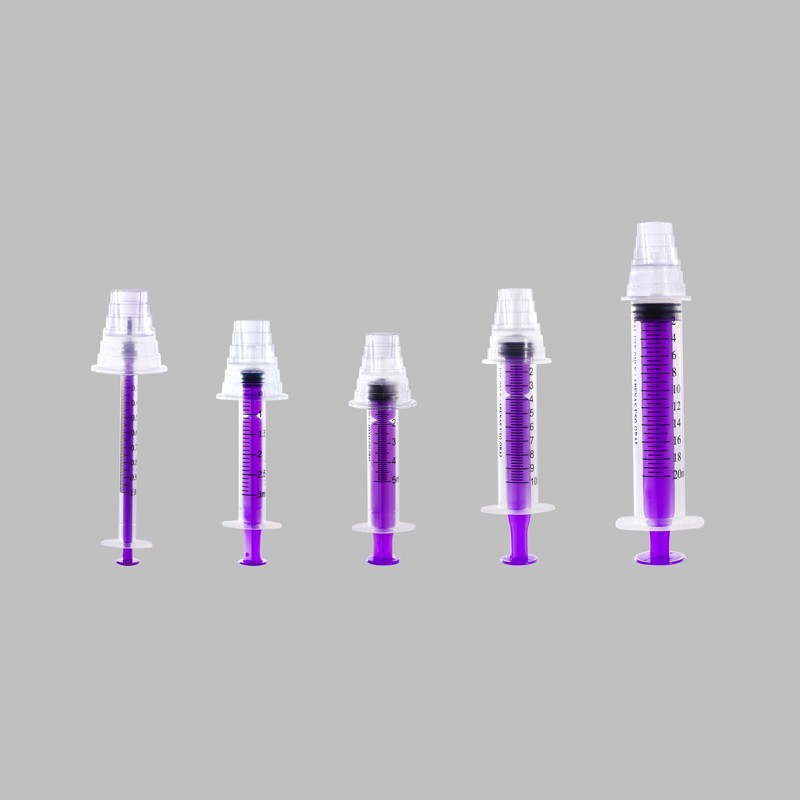
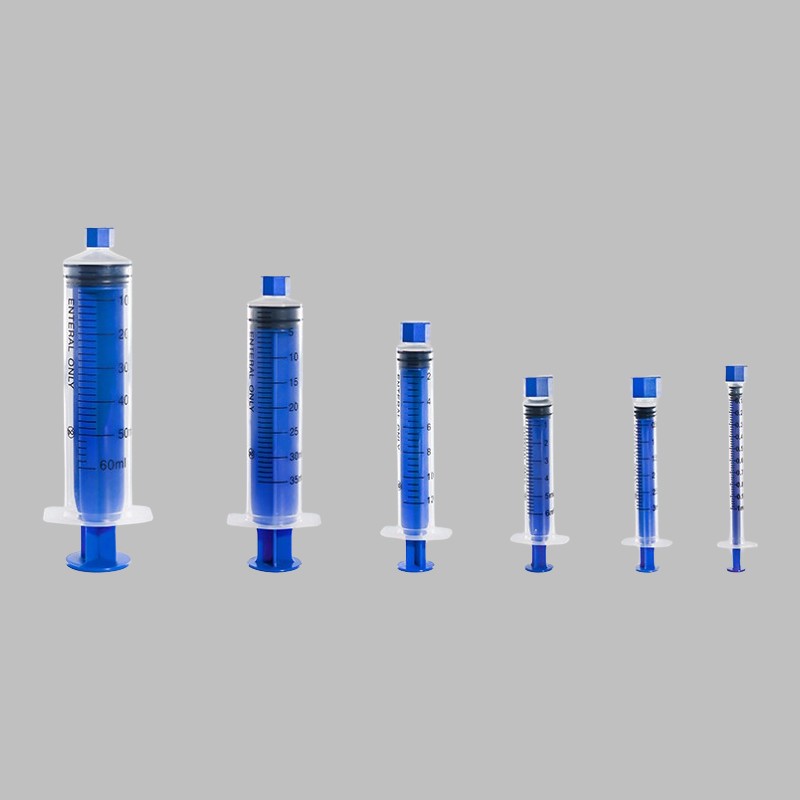
In clinical settings, the syringe must be suitable for the intended medication and route of administration. Oral medication syringes, for example, are specifically designed for oral delivery and should not be confused with syringes intended for injection.
A syringe may be used to draw liquid medication from a vial or another compatible container before administration. The selected syringe and any attached needle or transfer device must be appropriate for the container, medication, and intended procedure.
Healthcare professionals should follow the medication instructions, aseptic practices, and applicable procedures when preparing injectable medications.
Depending on the device design and intended use, syringes can be used to collect or transfer liquid samples in healthcare, laboratory, and other controlled settings. The syringe must be compatible with the liquid, the collection method, and any relevant contamination-control requirements.
Not every medical syringe is suitable for every sampling or laboratory application. Users should verify the product specifications and intended-use information before selecting a syringe for sample handling.
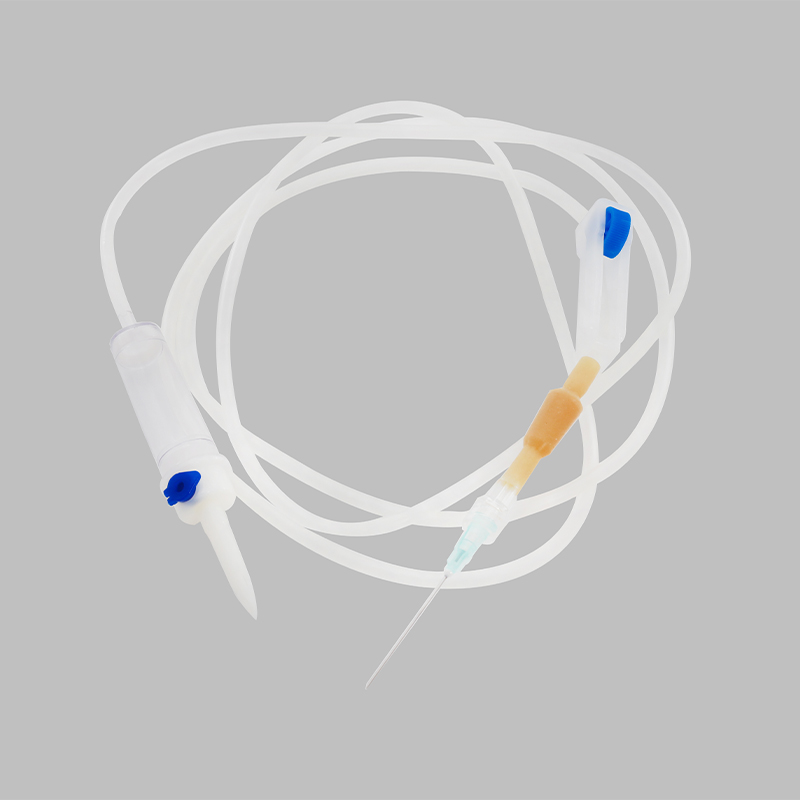
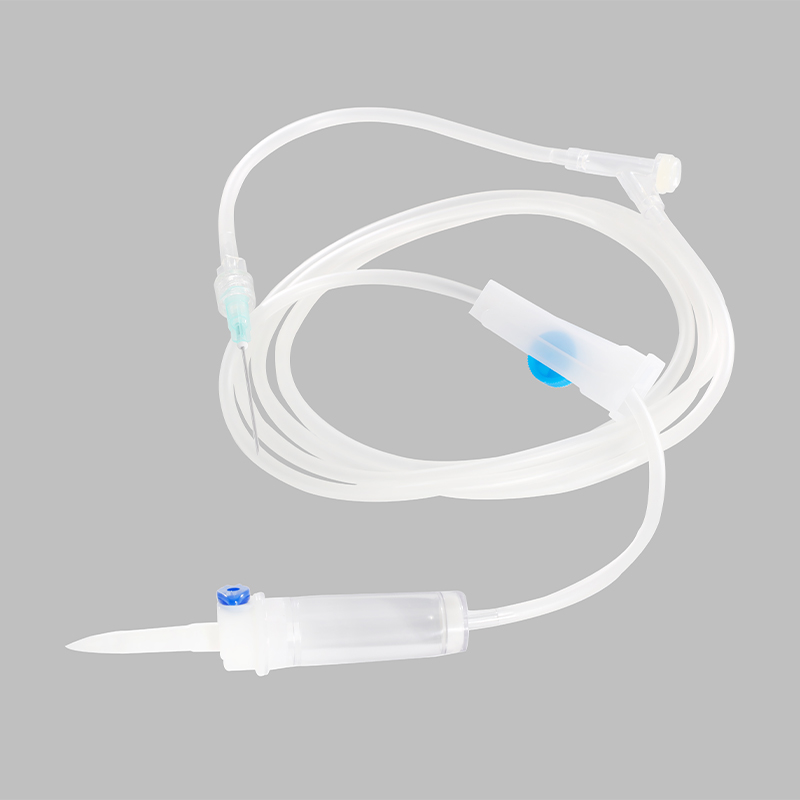
Certain syringes are used to deliver an appropriate flushing solution through compatible medical devices when required by a clinical procedure. The syringe type, connector, fluid, and volume must be suitable for the specific device and clinical purpose.
Always follow the relevant device instructions and healthcare protocols. A general-purpose syringe should not automatically be assumed suitable for every flushing application.
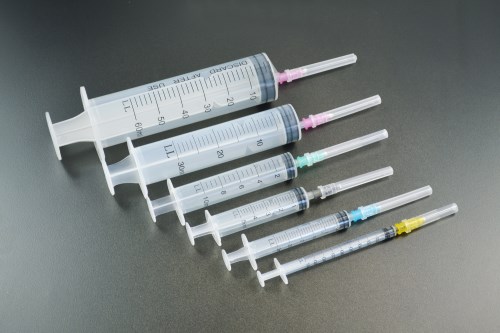
Syringes can be classified by their intended application, capacity, connector design, and component structure. Understanding these differences helps users and procurement teams select a product that matches the required procedure and specifications.
| Syringe Type | Main Characteristics | Common Considerations |
|---|---|---|
| Disposable syringe | Designed for single use according to its labeling and instructions. | Intended use, capacity, packaging, sterility, and disposal requirements. |
| Luer Slip syringe | Uses a compatible slip-fit connection. | Connector compatibility and suitability for the intended procedure. |
| Luer Lock syringe | Uses a threaded connector designed to secure a compatible attachment. | Connection compatibility and the requirements of the medical application. |
| Two-part syringe | Generally consists of a barrel and a plunger, without a separate elastomeric stopper. | Design-specific sealing, materials, and functional specifications. |
| Three-part syringe | Generally consists of a barrel, plunger, and separate elastomeric stopper. | Stopper material, sealing requirements, plunger movement, and product specifications. |
Disposable syringes are designed for single use and are commonly used in healthcare settings for applications specified by the manufacturer. Depending on the model, they may be supplied with or without a needle and in different capacities and connector configurations.
Single-use devices help support infection prevention practices when used and discarded according to their instructions. A disposable syringe should not be reused unless the product is specifically designed and authorized for reuse, which ordinary single-use syringes are not.
Explore the available disposable syringe products to review the product options relevant to your requirements.
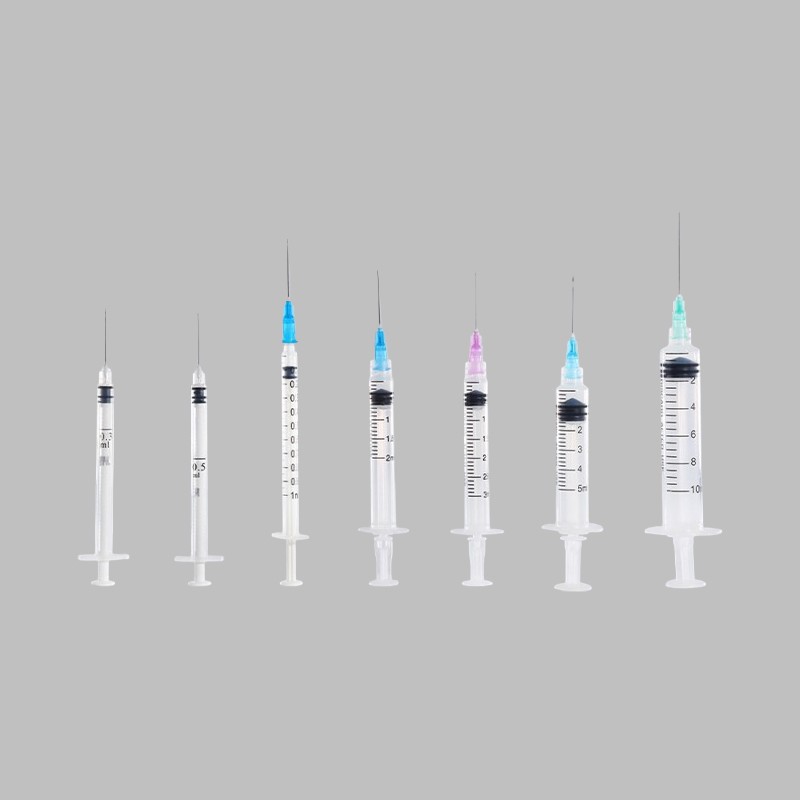
A Luer Slip syringe uses a slip-fit connector designed for compatible attachments. The connection is made by fitting the compatible component onto the syringe tip. Its suitability depends on the design of the connector and the requirements of the intended application.
When selecting a Luer Slip syringe, buyers should verify connector compatibility, capacity, needle requirements, packaging, and the product's intended use.
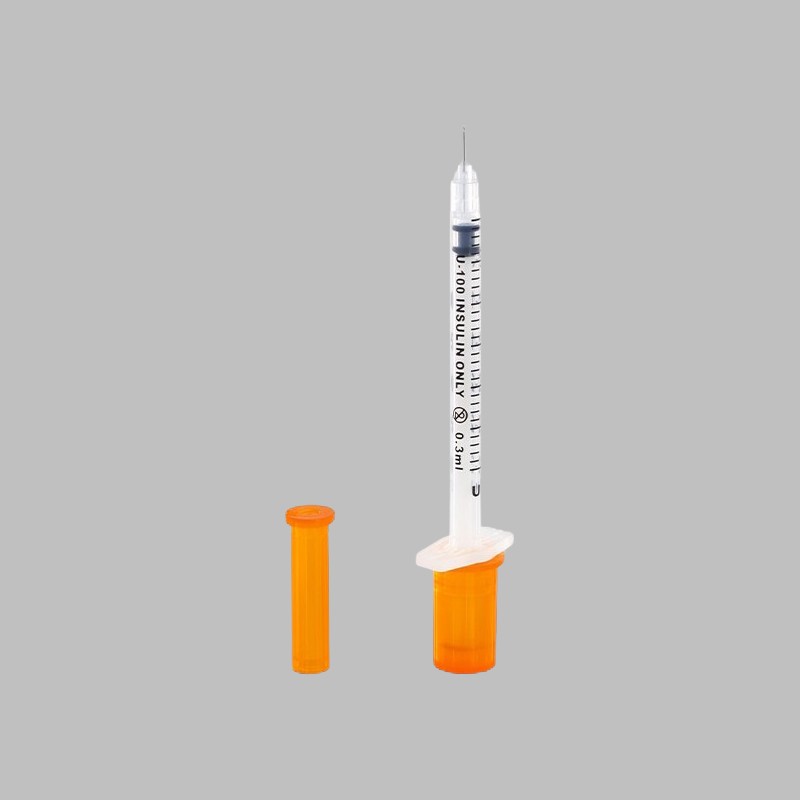
View the 1 mL Disposable Luer Slip Syringe for a product-specific example.
A Luer Lock syringe features a threaded connector designed to secure a compatible needle or attachment. The locking mechanism helps retain the correctly matched component when the connection is properly assembled.
Luer Lock syringes may be considered for applications that require a compatible locking connection. Users should check the connection standard, intended use, and device instructions before selecting a syringe.
Learn more about Disposable Luer Lock Syringes.
Two-part and three-part syringes differ mainly in their component structure. A two-part syringe generally has a barrel and a plunger, while a three-part syringe includes a separate elastomeric stopper as part of the plunger assembly.
These design differences can affect sealing characteristics, materials, and plunger movement. Buyers should compare the actual product specifications and applicable performance requirements rather than assuming that one design is always better than the other.
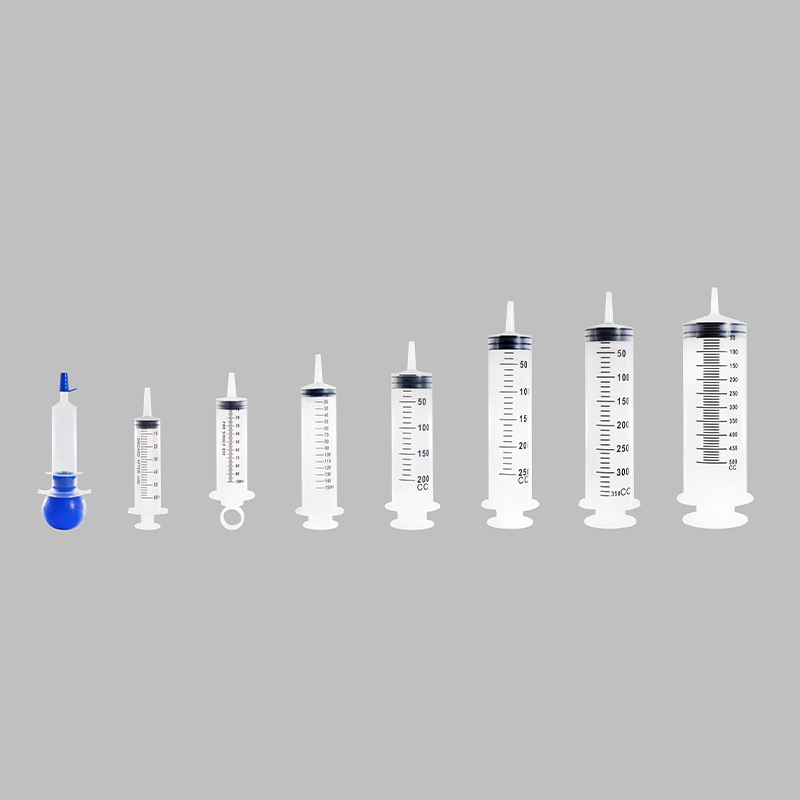
Syringes are available in different capacities to accommodate different prescribed volumes and application requirements. Smaller capacities may be appropriate for applications requiring measurement of relatively small volumes, while larger capacities may be used when the intended procedure requires more liquid.
Capacity alone does not determine whether a syringe is suitable for a procedure. Graduation accuracy, connector design, product labeling, medication compatibility, and clinical requirements must also be considered.
A syringe works through the movement of a plunger inside a barrel. Pulling the plunger back increases the available space inside the barrel, allowing liquid to enter through the tip when the syringe is used in an appropriate setup. Pushing the plunger forward reduces the space inside the barrel and expels the liquid through the outlet.
The main operating components work together as follows:
Barrel: Holds the liquid and provides the main body of the syringe.
Plunger: Moves inside the barrel to draw in or expel liquid.
Graduation markings: Help indicate the volume within the barrel, subject to the product's specifications.
Tip or connector: Provides the outlet and, where applicable, connects to a compatible needle or attachment.
Syringe designs vary, so operating instructions should always be followed for the specific product. Medical procedures involving injections, medication preparation, or device flushing should be performed by appropriately trained individuals in accordance with applicable clinical protocols.
Choosing the right syringe requires more than selecting a capacity. The product must match the intended application, required volume, connector type, and relevant safety and regulatory requirements.
Start by identifying how the syringe will be used. A syringe intended for injection may have different requirements from one designed for oral medication delivery, laboratory work, or another specialized application. Always select a product labeled and intended for the relevant use.
The syringe capacity should accommodate the volume required by the intended procedure. Graduation markings and measurement specifications are also important, particularly when a specific volume must be measured.
Buyers should confirm the available capacity options, graduation units, and product specifications before placing an order.
The connector must be compatible with the intended needle or medical attachment. Luer Slip and Luer Lock are two common connector designs, but they should not be treated as interchangeable in every setup. Confirm the connector requirements of the device and application.
Determine whether the syringe should be supplied with a needle or without one. If a needle is required, verify the specified dimensions and compatibility. Buyers should also confirm the packaging format, labeling, and sterility requirements applicable to the selected product.
For medical product procurement, check the applicable product standards, regulatory requirements, and supporting documentation for the destination market. Relevant documents may vary by product type, intended use, and jurisdiction.
For professional buyers, confirming specifications and documentation before production or shipment can help reduce purchasing misunderstandings and support smoother order coordination.
Disposable syringes are commonly used in healthcare because they are designed for single use and are available in configurations for different intended applications. When used according to their labeling and instructions, appropriate single-use devices form part of established infection prevention practices.
Important considerations when using disposable syringes include:
Single-use design: Ordinary disposable syringes should not be reused.
Packaging integrity: Packaging should be checked before use, and damaged or compromised packaging should be handled according to applicable procedures.
Sterility status: Use only products with the required sterility status for the intended procedure.
Correct product selection: Confirm that the syringe is suitable for the medication, device, and intended application.
Safe disposal: Used syringes and needles should be discarded through the appropriate waste stream. Sharps must be handled and disposed of in suitable sharps containers in accordance with local requirements.
Disposable medical devices do not eliminate every risk associated with healthcare procedures. Correct product selection, proper handling, clinical protocols, and safe disposal remain essential.
Medical product distributors, importers, and other professional buyers need to assess both product suitability and supplier capability when sourcing disposable syringes in bulk. Clear specifications and appropriate documentation are important parts of the purchasing process.
Confirm whether the supplier offers the required syringe types, capacities, connector configurations, and packaging formats. Review the product specifications to make sure the selected model matches the intended application and destination market requirements.
Ask which quality checks and records are applicable to the selected product. Depending on the product and market, relevant information may include specifications, inspection records, sterilization documentation for sterile products, and applicable certificates. Verify the validity and scope of any certification before relying on it for procurement.
Discuss individual packaging, carton quantities, labeling, minimum order quantities, production lead times, and shipment requirements. For recurring orders, maintaining clearly documented specifications can help both parties manage product and order expectations.
A clear purchasing process should allow buyers to confirm product details, request available documentation, and discuss samples where appropriate. Evaluating products against agreed requirements is more useful than relying on broad claims about quality alone.
LELUN provides information about its disposable syringe product range for professional buyers. You can browse the disposable syringe category or learn more about the company through the LELUN company profile .
Contact LELUN for Product Information
The main purpose of a syringe is to draw in, measure, transfer, or administer liquids. In healthcare, common uses include delivering injectable medication, measuring liquid medication, and handling liquids for certain medical procedures.
Five common uses are administering injections or vaccines, measuring and delivering liquid medication, drawing medication from compatible containers, collecting or transferring liquid samples, and flushing certain medical devices when clinically indicated. The appropriate syringe depends on the intended use.
The main parts are the barrel, plunger, and tip or connector. Some designs also include a separate plunger stopper, and some syringes are supplied with a needle. The exact components vary by syringe design.
A two-part syringe generally consists of a barrel and a plunger. A three-part syringe generally includes a barrel, plunger, and separate elastomeric stopper. The designs can differ in materials, sealing characteristics, and plunger movement, so buyers should compare product-specific specifications.
No. Ordinary disposable syringes are designed for single use and should not be reused. Follow the product instructions and applicable infection prevention procedures, and dispose of used syringes and needles safely.
The appropriate syringe size depends on the required volume, intended application, graduation markings, and product specifications. For medical procedures, follow the instructions of the prescribing healthcare professional and the applicable device guidance.
No. Some syringes are supplied with needles, while others are supplied without them or are designed for compatible attachments. Buyers should confirm the exact product configuration before ordering.
Understanding what a syringe is used for helps healthcare professionals and medical product buyers select a suitable device for a specific application. Syringe capacity, connector design, component structure, packaging, and intended use should all be considered before making a selection.
For distributors, importers, and professional buyers, confirming product specifications and documentation requirements in advance can support a more efficient procurement process.
LELUN welcomes inquiries from buyers seeking disposable syringe product information. Share your required syringe type, capacity, connector configuration, packaging preferences, destination market, and order quantity to discuss available options.
Explore our product range or contact LELUN to discuss your syringe specifications and bulk purchasing requirements.
Explore Disposable Syringes Contact UsWhatsapp: +86-13616120206
E-mail: sale01@lelun.com
ADD: HengShanQiao Town, out of East Gate, Changzhou ,Jiangsu, China
Mobile: (+)86-13616120206