






News Categories

Buying the wrong insulin syringe is not a small purchasing mistake. A U-40 syringe filled with U-100 insulin delivers 2.5 times the intended dose at the same graduation mark — a dosing error with real clinical consequences. Yet on B2B marketplaces, syringes are often listed without stating which concentration scale the barrel is printed for, which needle gauge is attached, or whether the piston is latex-free. This guide explains, in plain language, what U-40 and U-100 actually mean, how insulin syringe sizes and gauges are specified, and what to check before signing with an insulin syringe manufacturer. The technical facts are drawn from published international standards and clinical guidance; the sourcing advice reflects what a factory floor actually looks like.
Diabetes is one of the fastest-growing health burdens worldwide: recent global estimates put the number of people living with diabetes at 830 million in 2022, up from 200 million in 1990, according to the latest global diabetes fact sheet published by a leading international health authority. Every one of those patients who injects insulin depends on a small piece of molded plastic doing its job accurately, several times a day. That is the market an insulin syringe manufacturer serves — and the reason the details in this guide matter.
U-40 vs U-100 refers to insulin concentration: 40 units vs 100 units of insulin per milliliter. The syringe's printed scale must match the insulin it will hold.
Common sizes are 0.3 ml, 0.5 ml and 1 ml, holding a maximum of 30, 50 and 100 units of U-100 insulin respectively.
Fine, short needles are the norm: insulin syringes typically use thin fixed needles, and shorter needle lengths (around 4–12.7 mm) are associated with more comfortable subcutaneous injection.
Verify the manufacturer, not the brochure: ISO 13485 certification, ISO 8537 product compliance, validated sterilization and latex-free options are the minimum checks.
OEM is standard practice for insulin syringes — private-label barrels, IU graduations, packaging and artwork can all be customized at reasonable order volumes.
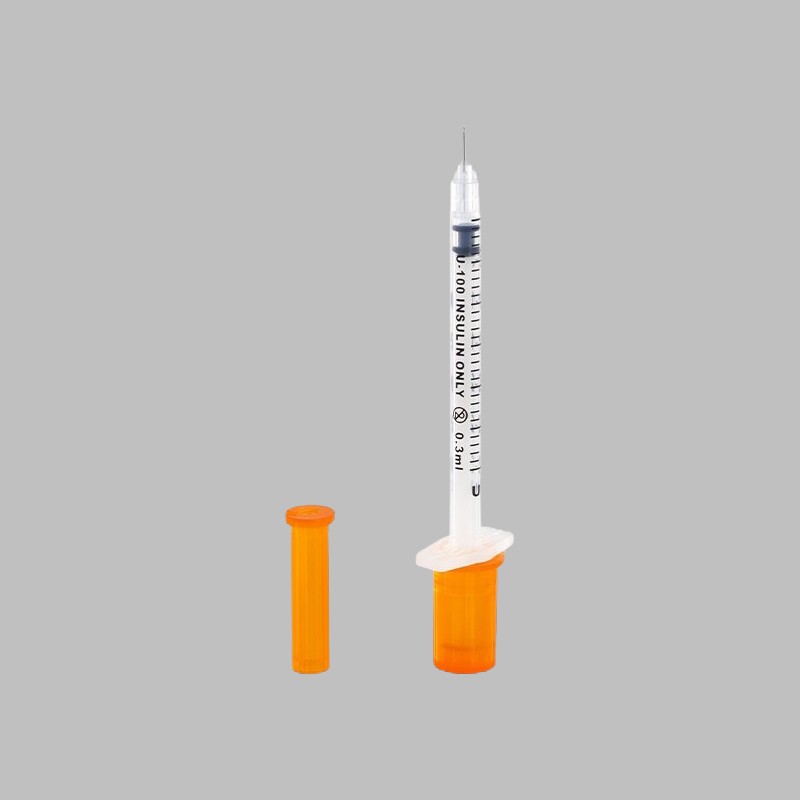
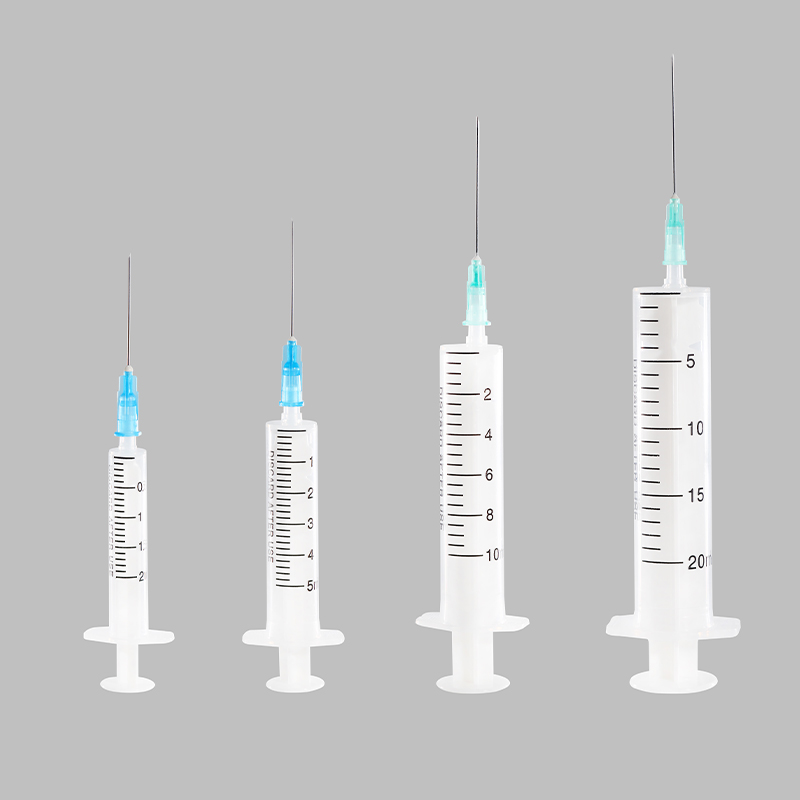
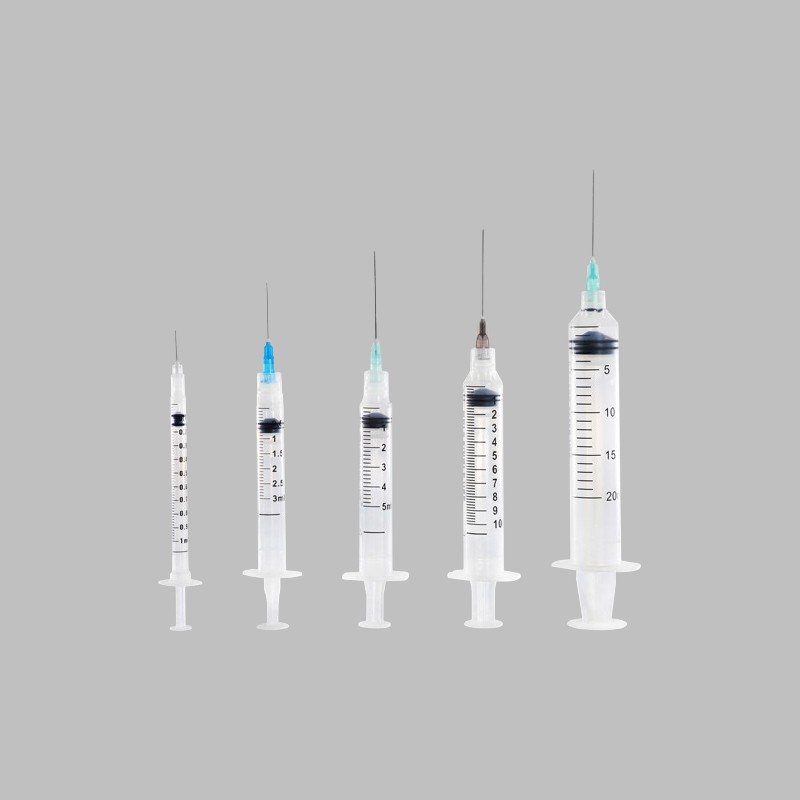
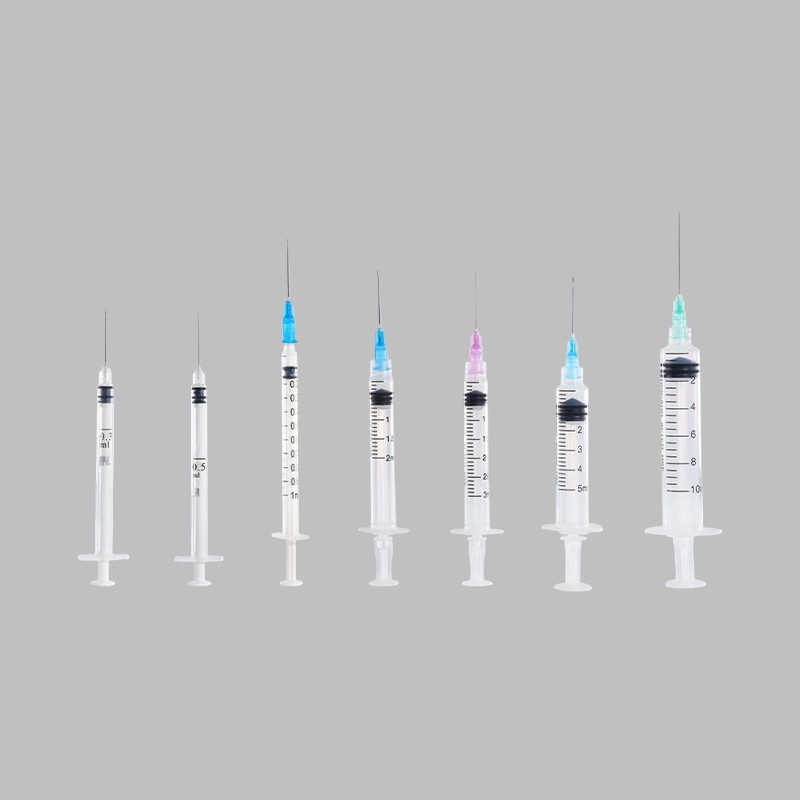
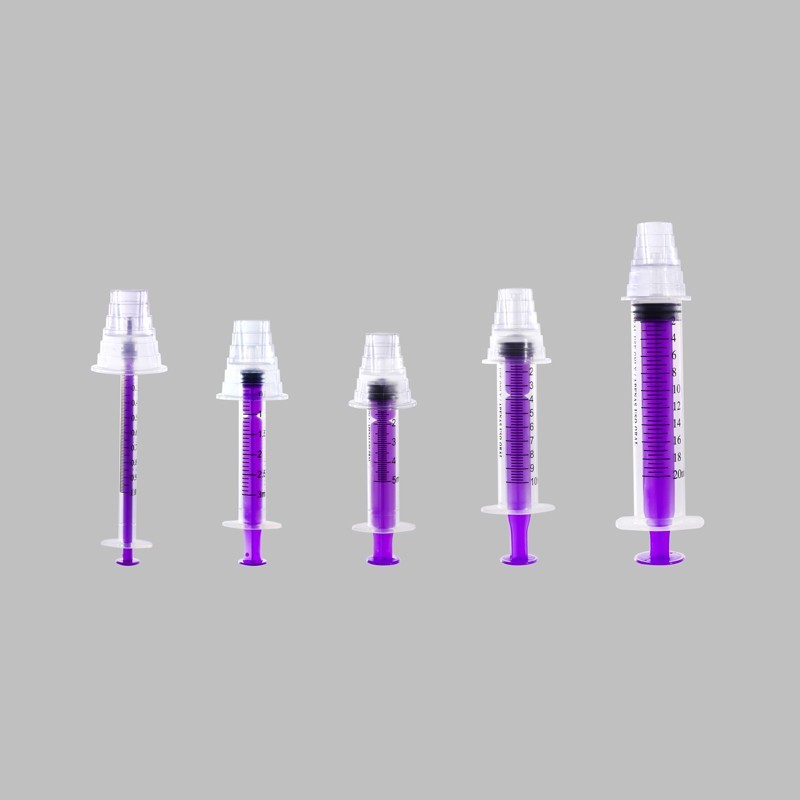
An insulin syringe is a small-volume syringe designed for one job: injecting insulin into the fatty tissue just under the skin. Three design choices separate it from a standard disposable syringe. First, the barrel is graduated in insulin units (IU), not milliliters, so the user can read the dose directly without converting. Second, it is sized in fractions of a milliliter — 0.3, 0.5 and 1 ml — because insulin doses are measured in units, not cubic centimeters. Third, the needle is usually fixed (permanently attached), ultra-fine, and optimized for subcutaneous injection rather than intramuscular or intravenous use.
Everything else looks familiar: a medical-grade polypropylene barrel, a plunger with a sealed piston, a needle shield, and individual sterile packaging. But because the product is used daily, often by elderly patients or those with reduced eyesight and dexterity, small details — bold graduation printing, a smooth plunger action, a sharp triple-ground needle tip — carry more weight here than in almost any other syringe category.

U-40 and U-100 describe the concentration of the insulin, not the size of the syringe. U-100 insulin contains 100 units of insulin in every milliliter of liquid; U-40 insulin contains 40 units per milliliter. The syringe barrel must be printed with a scale that matches the concentration it will be filled with. Most insulin sold worldwide today is U-100, but U-40 insulin remains in use in some markets and in veterinary practice, and international standards still cover both formats.
| Item | U-40 | U-100 |
|---|---|---|
| Insulin concentration | 40 units per 1 ml | 100 units per 1 ml |
| Maximum dose in a 1 ml syringe | 40 units | 100 units |
| Barrel scale printed in | IU (U-40 scale) | IU (U-100 scale) |
| Typical use | Some regional markets; certain veterinary insulins | Standard for most human insulin worldwide |
| International standard coverage | Both concentrations are covered by the international standard for sterile single-use insulin syringes | |
Both formats are specified in ISO 8537, the international standard for sterile single-use syringes for insulin.
The two scales are not interchangeable, and the arithmetic shows why. A patient who needs 20 units of U-100 insulin should draw to the "20" mark on a U-100 syringe — that is 0.2 ml of liquid. If the same patient draws to the "20" mark on a U-40 syringe, the barrel holds 0.5 ml of U-100 insulin, which contains 50 units — 2.5 times the intended dose. This is why distributors should always confirm the concentration scale with the insulin syringe manufacturer before ordering, and why the scale marking must be clearly printed and impossible to misread.
Insulin syringes come in three standard volumes, and the size you stock should match the dose range of the patients you serve. Current clinical guidance on insulin injection technology describes the common syringe sizes and their U-100 dose capacity as follows:
| Syringe size | Max U-100 dose | Typical users | Graduation detail |
|---|---|---|---|
| 0.3 ml | 30 units | Low-dose patients; children | Some models offer half-unit markings |
| 0.5 ml | 50 units | Most adults on moderate doses | 1-unit increments |
| 1 ml | 100 units | Higher-dose patients | 1–2 unit increments |
Size and dose-capacity data per current clinical guidance on diabetes injection technology (American Diabetes Association, Standards of Care).
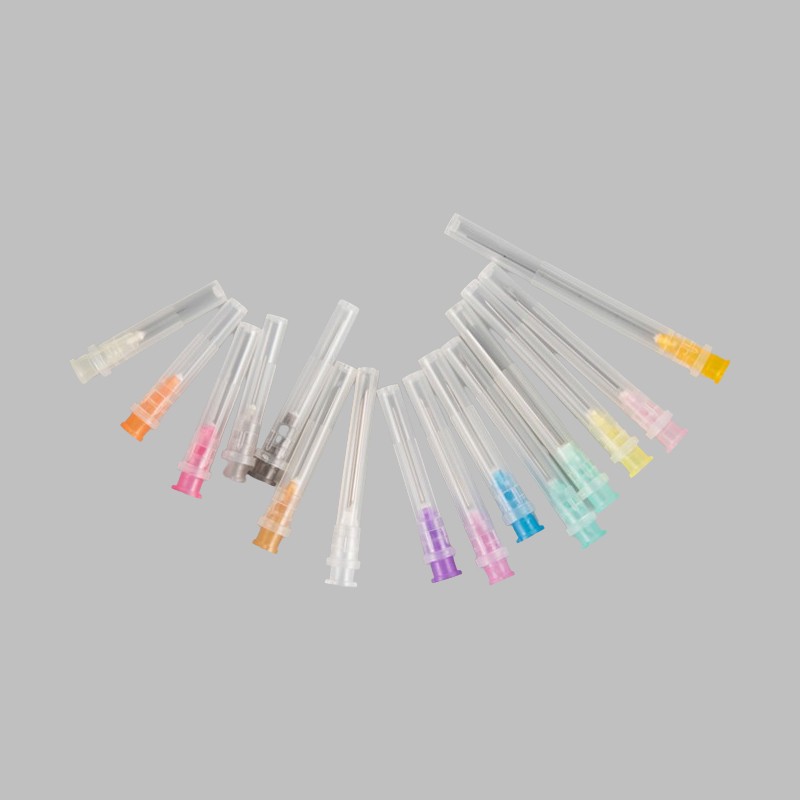
Needle thickness is expressed in gauge (G), and the convention is counterintuitive: the higher the gauge number, the thinner the needle. A thinner needle generally causes less discomfort at the injection site, while a slightly thicker one allows the dose to be delivered faster. Insulin syringes typically carry fine gauges such as 29G, 30G or 31G with fixed needles, and clinical guidance notes that needle lengths from about 4 mm to 12.7 mm are in use, with shorter needles associated with a lower risk of injecting into muscle instead of fat. For general subcutaneous injection technique, public-health guidance such as a widely used reference manual chapter on injection administration similarly emphasizes matching needle length to the injection route and the patient's body size.
For buyers, the practical checklist is: confirm the gauge and length options offered, confirm whether the needle is fixed or detachable, and confirm the piston material — latex-free options matter for patients with latex sensitivity and are now standard in most tenders.
Understanding the product makes the factory audit easier. A qualified insulin syringe manufacturer should be able to demonstrate competence in four areas — and each can be checked with a document or a sample rather than a promise.
The barrel and plunger should be molded from medical-grade polypropylene in the manufacturer's own injection-molding shop. The piston is available in latex or latex-free formulations; the fixed needle is bonded to the tapered tip so it cannot detach during injection. Ask which combinations are standard and whether the needle bonding process is validated — a needle that separates mid-injection is a safety incident, not a quality complaint.
Molding, assembly and packing take place in a classified cleanroom (100,000-class / ISO 14644 Class 8 is the norm for this category), and finished syringes are sterilized by ethylene oxide (EO) gas or gamma irradiation, with a sterility assurance level of 10⁻⁶ and pyrogen-free validation. The sterilization report and residual test should be available for every batch — not "on request" in the sense of eventually.
Product compliance should be verifiable against the published international standard for sterile single-use insulin syringes, and the factory should operate under ISO 13485. On the commercial side, insulin syringes are a mature OEM category: barrel scale (U-40 or U-100), graduation boldness, cap color, private-label artwork, polybag or blister packing, and destination-market labeling can all be customized. Order volumes for standard SKUs typically start around 200,000 pieces per size.

LELUN Disposable Insulin Syringes with Fixed Needle
Individually EO-sterilized, pyrogen-free insulin syringes for daily diabetes care. Made from medical-grade PP with a latex or latex-free piston, ultra-fine fixed needle for minimal penetration resistance, and bold, high-visibility IU graduations that support accurate dosing even for users with impaired vision.
Specifications: 0.3 ml / 0.5 ml / 1 ml · Fixed needle · EO gas sterilized, non-toxic, pyrogen-free · PE bag or blister individual packing · MOQ 200,000 pcs · Production capacity 800,000 pcs/day · Trademark: LELUN or OEM
View Full Product Details Get a QuoteSend us your specification — sizes, scale (U-40 or U-100), needle gauge and packaging — and receive a quotation with a full cost breakdown.
Get a Quote View ProductCategory expertise can be verified quickly if you know what to ask. Before committing to an insulin syringe manufacturer, run these five checks:
Scale confirmation in writing. The factory should state explicitly whether its tooling and printing are configured for U-40, U-100, or both — with a printed barrel sample to prove it.
ISO 13485 with the right scope. The certificate must cover syringe manufacturing, not trading, and the address must match the factory.
Sterilization validation. Request the EO or gamma validation summary and residual test for a recent batch, plus the SAL 10⁻⁶ statement.
Latex-free and graduation options. Confirm piston material choices, half-unit markings on 0.3 ml models, and bold-print options for low-vision users.
OEM and registration documents. A working OEM line — artwork, blister, private label — plus Free Sales Certificate and technical file support for your market's registration.
Each of these checks takes minutes; replacing a mis-printed batch of 200,000 barrels takes weeks. Current clinical guidance on insulin injection technology and device selection is a useful neutral reference to share internally when defining your specification.
Evaluate the barrel printing, plunger action and needle quality yourself. Samples ship with the ISO 13485 certificate, sterilization report and product specifications.
Request Free Samples Browse All SyringesAn insulin syringe looks like a simple product, but its three variables — concentration scale, needle gauge, and size — determine whether a patient receives the prescribed dose comfortably and safely. U-40 and U-100 barrels are not interchangeable; sizes of 0.3, 0.5 and 1 ml map to 30, 50 and 100 units of U-100 insulin; and fine fixed needles in the 29G–31G range with short lengths define the modern standard of comfort. A capable insulin syringe manufacturer can document all three variables, along with cleanroom production, validated sterilization and registration-grade paperwork.
If you are looking for a reliable Insulin Syringe Manufacturer for your market — whether for a distributor portfolio, a public tender, or an OEM private-label program — LELUN (Changzhou Medical Appliances General Factory Co., Ltd.) is a proven choice: manufacturing disposable medical devices since 1988, producing insulin syringes in 0.3 ml, 0.5 ml and 1 ml with fixed needles at up to 800,000 pieces per day, with ISO 13485-certified production and export experience in more than 60 countries. Contact LELUN to request samples, OEM artwork options and a quotation.
Whatsapp: +86-13616120206
E-mail: sale01@lelun.com
ADD: HengShanQiao Town, out of East Gate, Changzhou ,Jiangsu, China
Mobile: (+)86-13616120206