




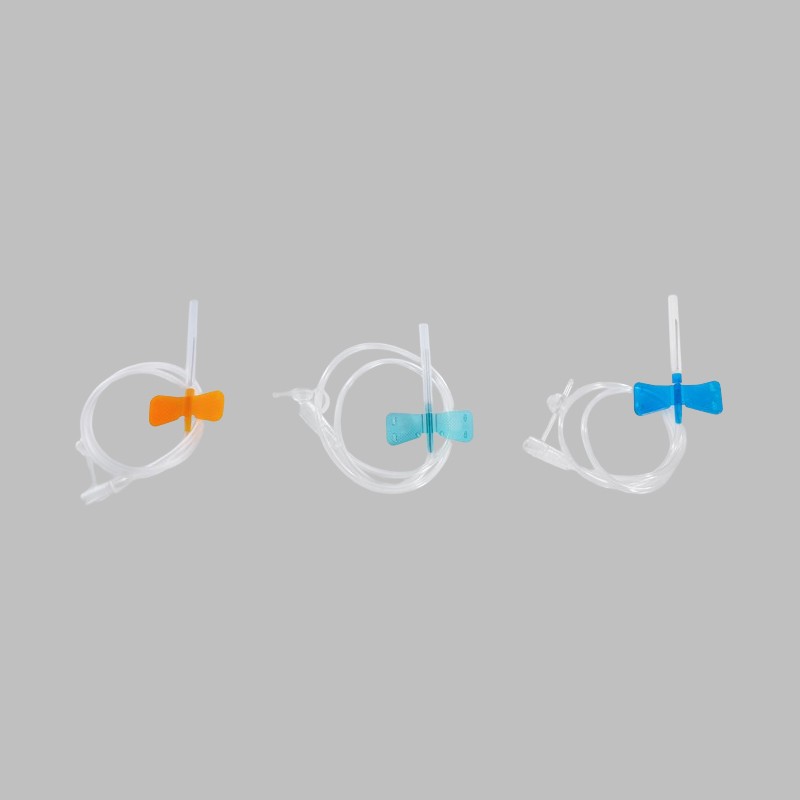


News Categories

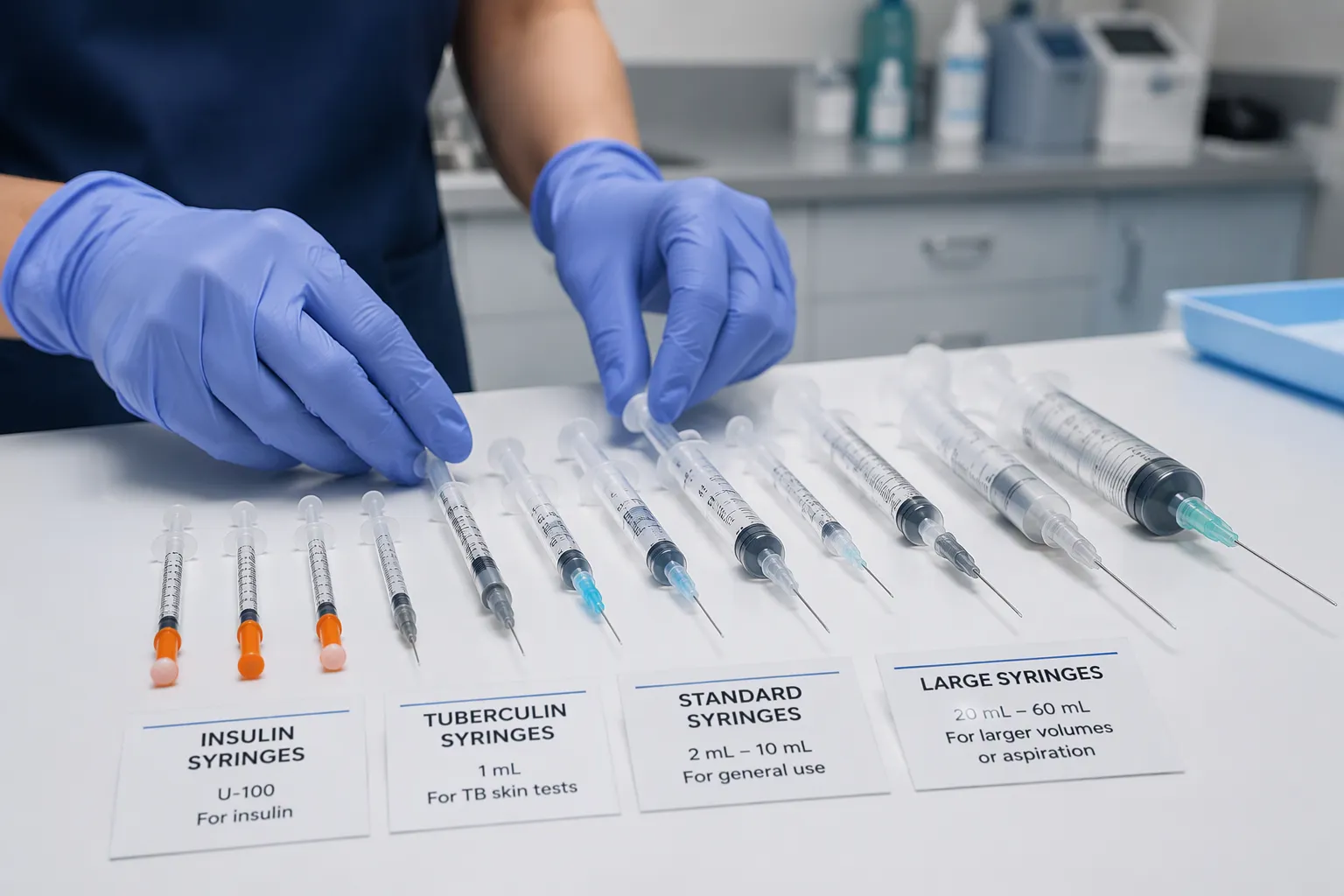
Picking the right disposable syringe type is key for patient safety, accurate dosing, and clinical efficacy in 2026. With so many types of disposable syringes on the market, how do you know which one fits your application? This complete guide for medical buyers answers that question. You will learn what a disposable syringe is and how different types of syringes differ by capacity, structure, tip design, intended use, and safety features. Clear selection criteria and safe handling practices follow, so you can match syringe types to your clinical needs with confidence and support reliable dosing every time.
Pick the smallest syringe that holds your dose. This gives you the most accurate measurement.
Choose a luer lock tip for high-pressure injections so the needle stays secure.
Choose a three-part syringe for smoother plunger movement and accurate dosing.
Never use a disposable syringe more than once; always throw it away in a sharps container.
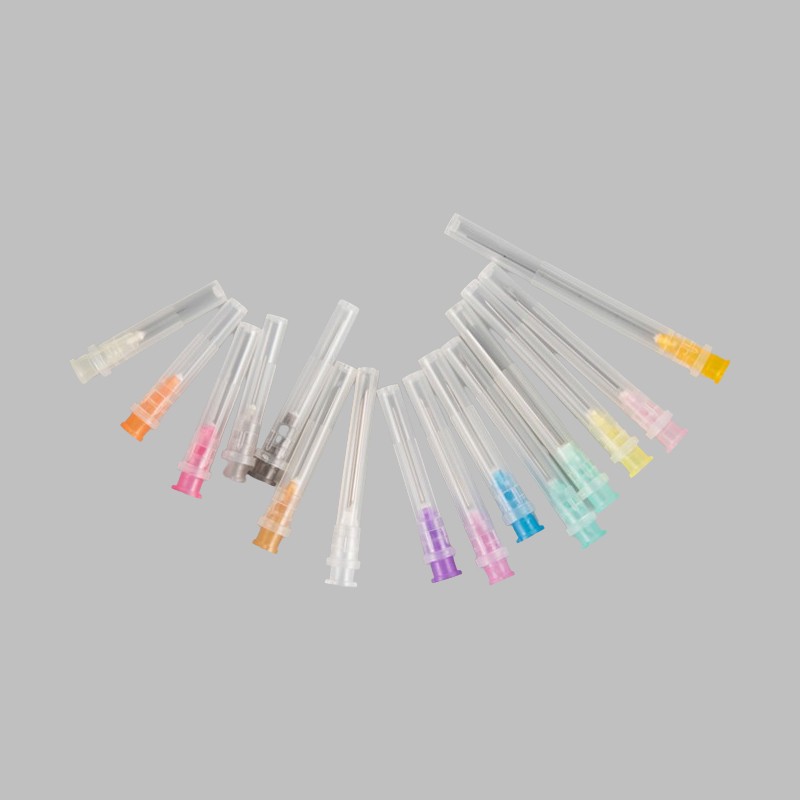
Pick the right needle gauge for the injection route to keep patients comfortable and safe.
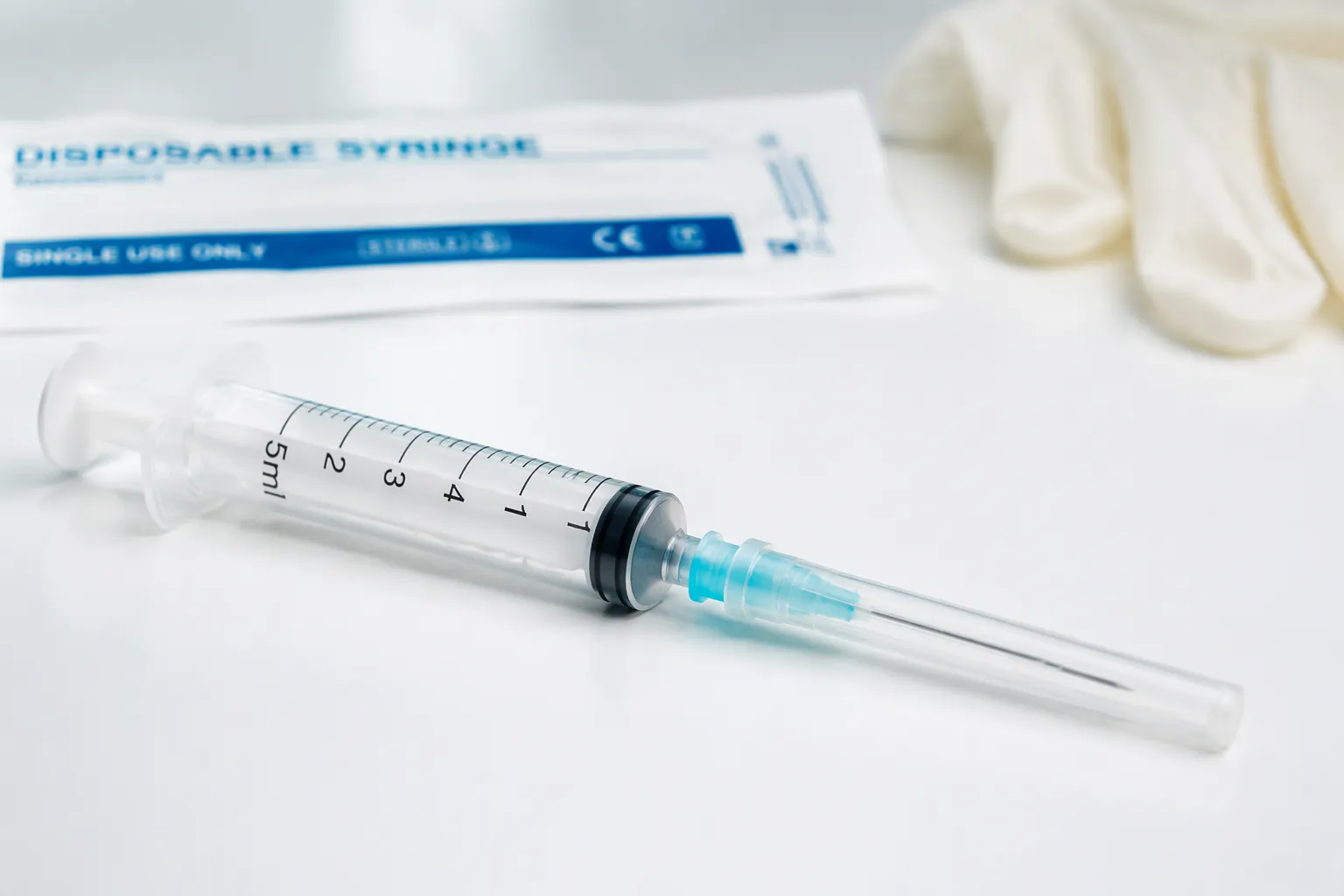
A disposable syringe is a medical device you use only once. You use it to inject or take out fluids, and then you throw it away safely. This simple definition covers many different products. Each one has the same basic parts.
The table below shows the main parts and what each one does.
Component | Function |
|---|---|
Barrel | Clear tube-shaped body that holds and measures fluid; has markings to read the volume |
Plunger | Moving part inside the barrel; pulling draws fluid in, pushing sends fluid out |
Gasket | Makes a seal between plunger and barrel wall; stops leaks and keeps pressure |
Flange | Flat back extension of the barrel; gives finger grip for steady control |
Syringe Tip | Connection point where fluid goes in or out; types include Luer Lock, Luer Slip, and catheter tip |
Needle Hub | Connects the needle shaft to the syringe; keeps it attached and lined up |
Needle Shaft | Hollow part that fluid passes through; usually made of stainless steel |
Bevel | Angled sharp needle end; affects how it enters tissue |
Needle Cap | Protective cover that keeps it sterile and stops accidental needle contact before use |
A clear barrel with permanent markings helps you measure volume and spot air bubbles. This sterile, single-use fluid transfer device lets you see the dose clearly at every step.
Single-use design stops cross-contamination and infection between patients. You never reuse a disposable medical syringe, so germs cannot pass from one person to another through shared equipment. The evidence for this protection is strong:
About one-third of AIDS cases in the United States are tied to sharing injection equipment, and using syringes and needles only once can prevent these cases.
Injection drug use is the main way hepatitis C spreads, and most of these infections can be prevented by using them only once, as the U.S. Department of Health and Human Services recommends.
In New York City, HIV prevalence among injection drug users dropped from 50% to 30% by 2000 after syringe exchange programs began.
These findings show why disposable syringes matter in every clinical setting. A fresh syringe for every dose protects your patients and your team.
Capacity is the first thing to check when you sort disposable syringe types by capacity. The volume you need to give or take out sets the size range. That size range then affects how accurate your measurement is. A syringe that is too big for a small dose makes it harder to read fine marks. A syringe that is too small cannot hold the full volume. This section divides the range into small-volume and large-volume groups.
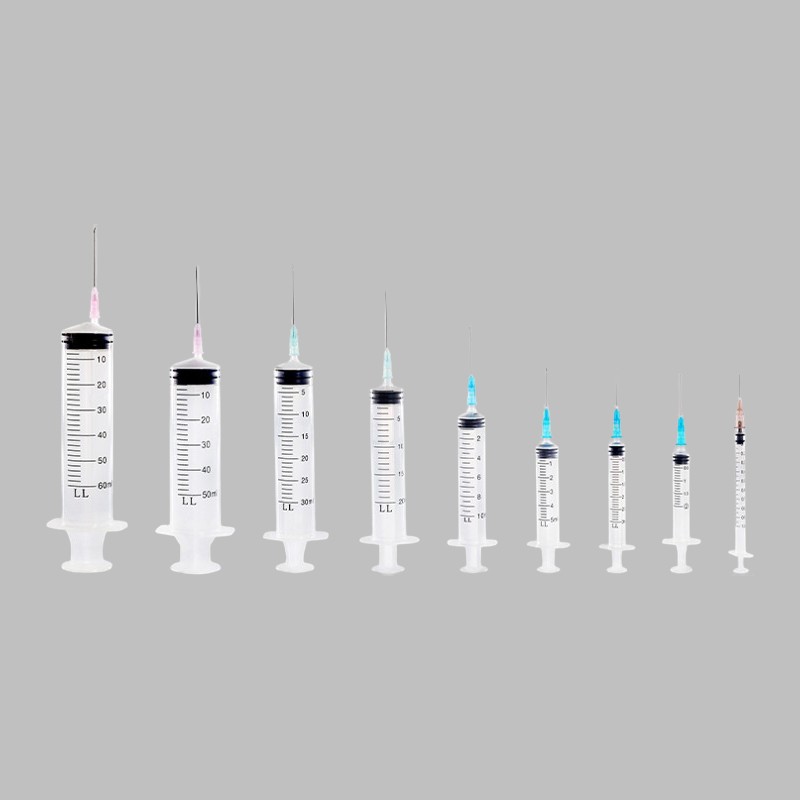
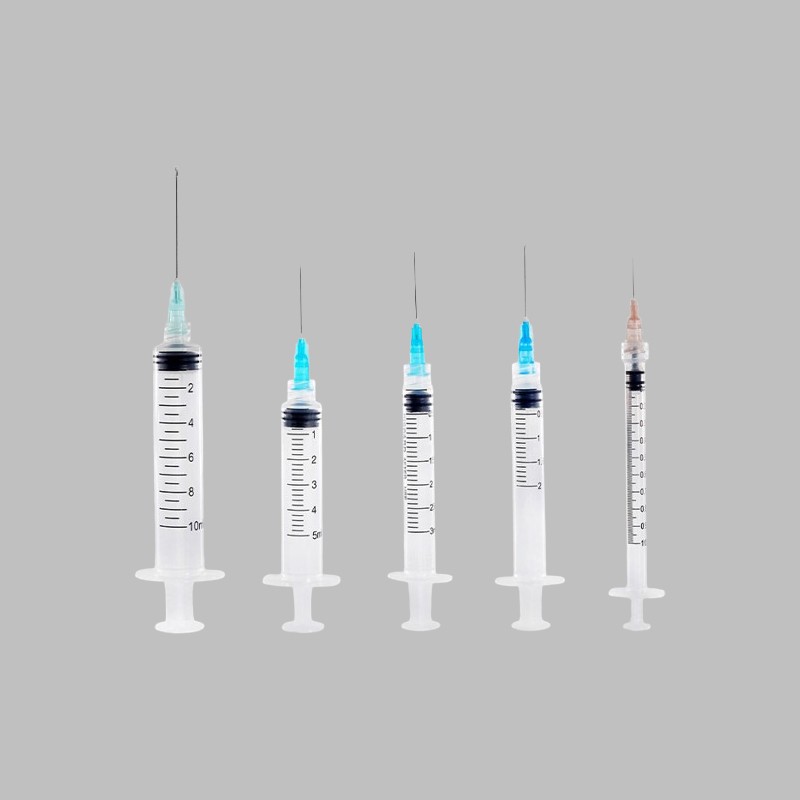
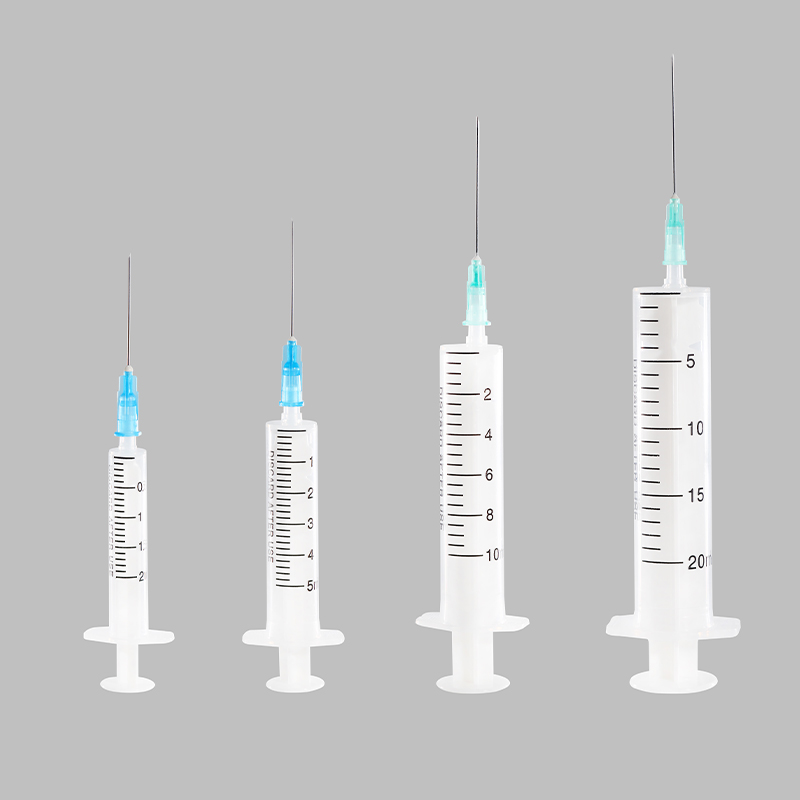
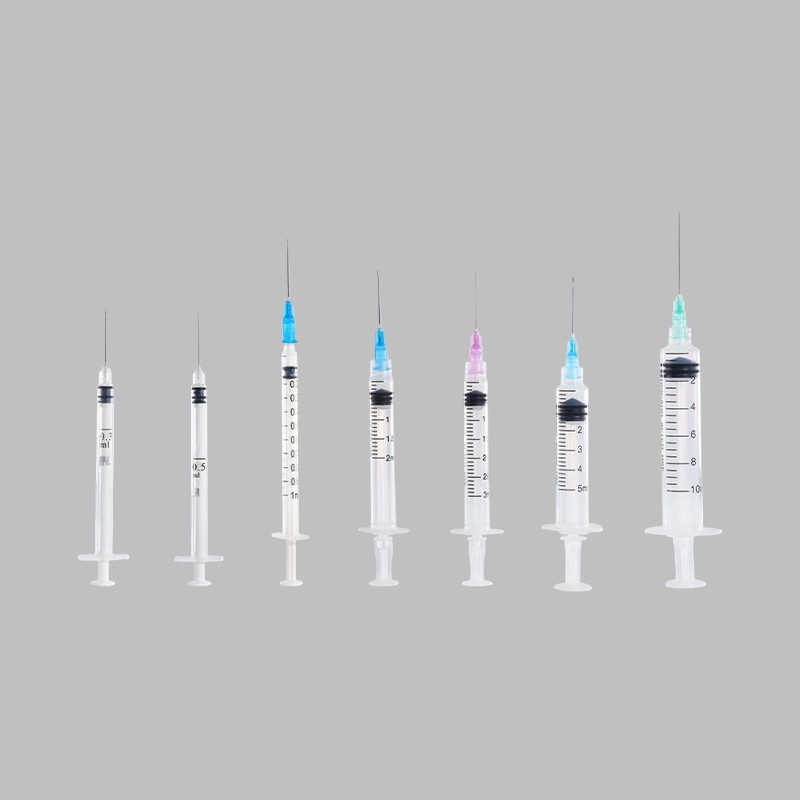
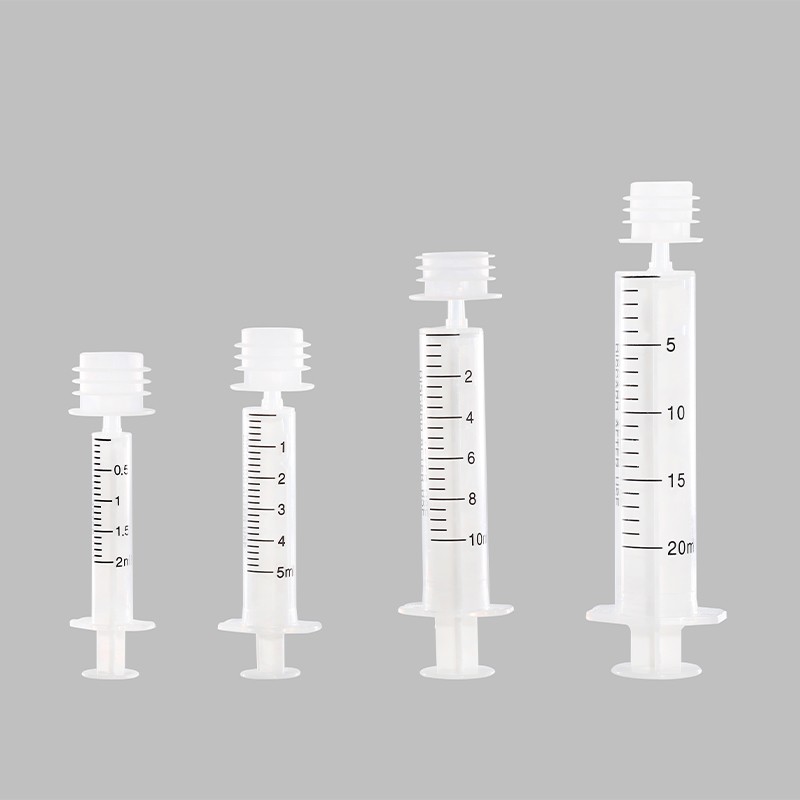
Small-volume syringes come in 1 mL, 2 mL, 3 mL, 5 mL, and 10 mL. Each disposable syringe size fits a different job. The table below pairs common sizes with their typical uses.
Syringe Volume | Common Uses |
|---|---|
1 mL | Very small, precise doses such as insulin and intradermal work; tuberculin syringes for precise small-dose measurement |
2 mL | Small-volume delivery |
3 mL | Most commonly used size for routine IM, SC, and IV use |
5 mL | Moderate medication volumes or flushing |
10 mL | IV medications and flushing lines |
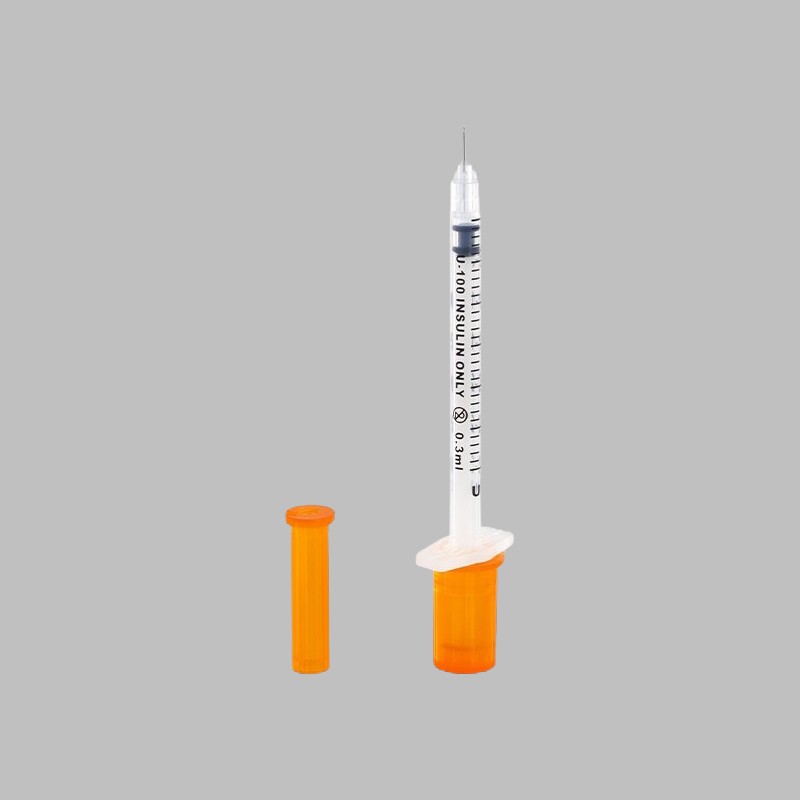
Pharmacy compounding also depends on these sizes. Strong drugs, drugs with narrow safety ranges, eye preparations, and children's doses all need high precision. A disposable insulin syringe is a good example of a 1 mL design made for exact measuring. Always choose the smallest syringe that holds the volume you need. This habit helps protect dosing accuracy.
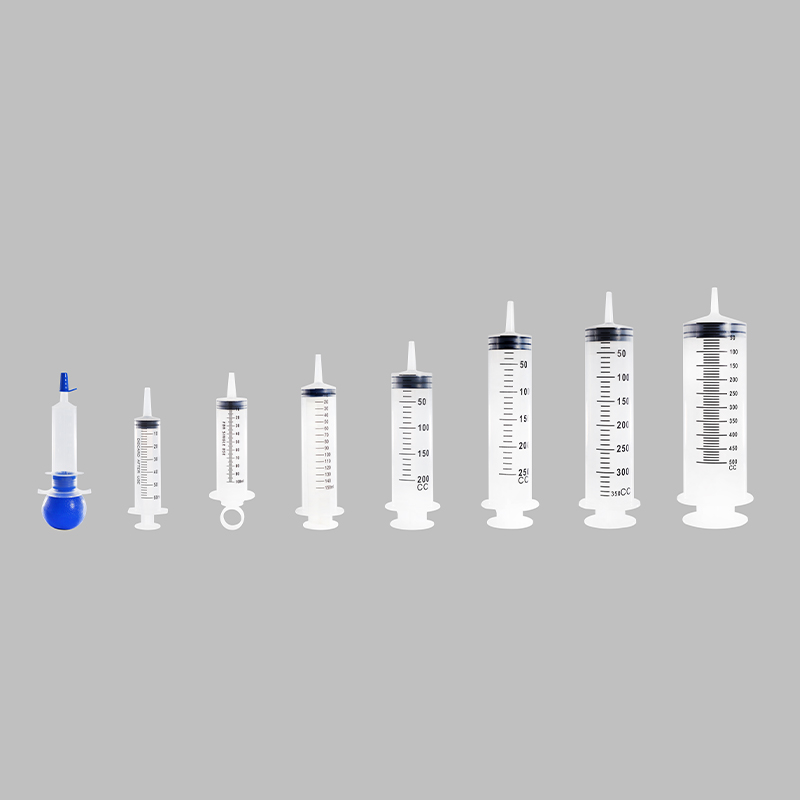
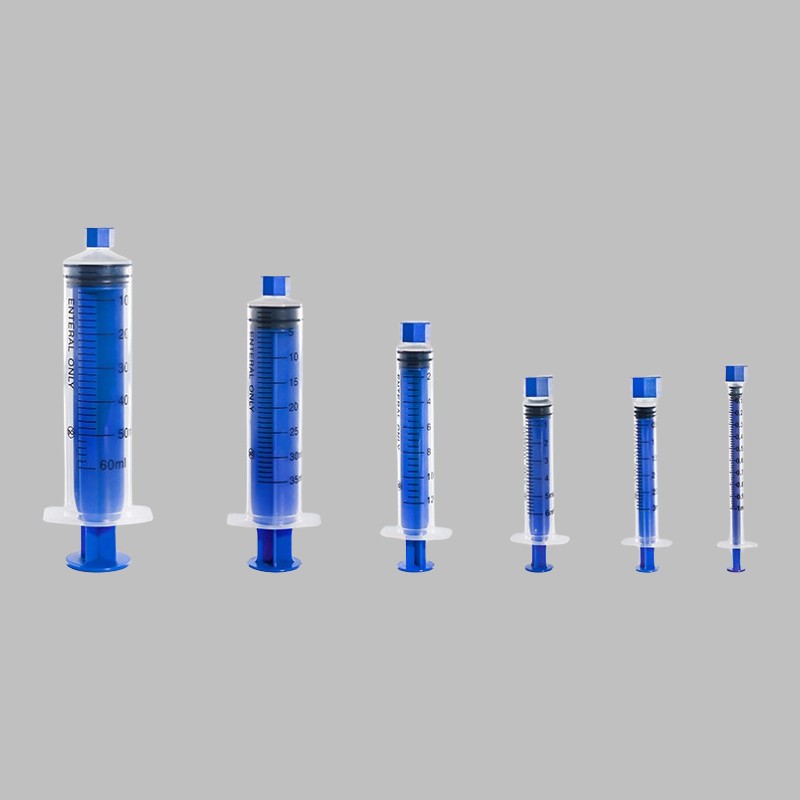
Large-volume disposable syringes go from 20 mL up to 100 mL. A 20 mL syringe works well for mixing or combining several medicines and giving them through an infusion set before patient administration. Sizes of 50 mL to 60 mL fit intravenous injections used with scalp vein sets. Clinicians pick an 18G to 27G needle based on vein diameter and solution thickness. Sizes of 30 mL, 50 mL, and 60 mL also serve irrigation, aspiration, enteral feeding, and catheter use.
One supplier can cover the whole range. Changzhou Medical Appliances General Factory Co., Ltd. offers disposable syringes from 1 mL to 100 mL. You get a single source across the full capacity range. Ordering stays simple, and specifications stay consistent.
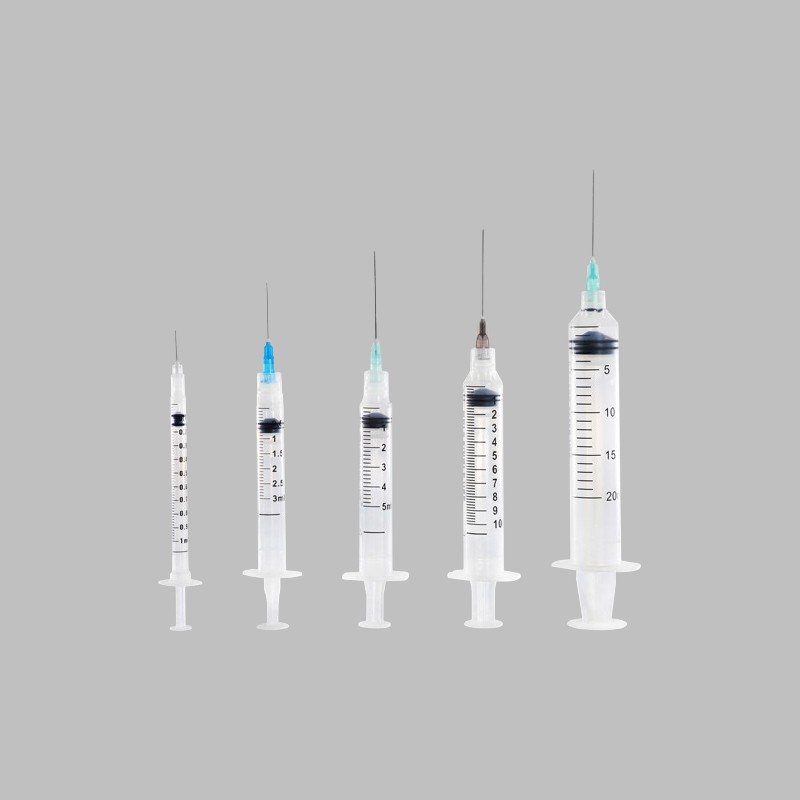
Structure is the next way to sort disposable syringe types. A two-part syringe has only a barrel and a plunger. Plastic rubs against plastic, so the movement feels stiffer and needs more push and pull force. The seal is basic but good enough for general work. This design costs less because it has fewer parts, and it works well for bulk buying. Pick it for routine injections, irrigation, and fluid transfer where cost matters.
A three-part syringe adds a rubber gasket between the plunger and the barrel. The gasket lowers friction, so the plunger slides smoothly and you control the speed better. The seal is tighter and more airtight, which blocks air from getting in and fluid from leaking out. These features help with precise dosing in medication delivery, vaccinations, insulin therapy, lab work, and critical care. The downside is a higher price, because the rubber stopper adds a part and boosts performance. The table below compares the two designs.
Attribute | Two-Part Syringe | Three-Part Syringe |
|---|---|---|
Plunger movement | Stiffer; more pressure needed | Smooth glide; better control |
Sealing | Basic plastic-to-plastic seal | Tighter, airtight seal |
Dosing accuracy | Good for everyday tasks | Improved precision |
Cost | Cheaper | Significantly more expensive |
Best use case | Basic transfer, cost-sensitive work | Medication dosing, vaccinations, critical care |
Some structures do one narrow job very well. A prefilled syringe comes with medication already loaded. You skip the draw-up step, so giving the dose is faster and the chance of a measuring error drops. These devices fit emergency use and busy clinics.
A catheter tip syringe has a long, tapered tip and no needle. You use it for irrigation, wound care, and enteral feeding. The tip reaches into tubing and delivers a steady flow without a sharp point. Both designs belong in a full catalog of syringe types, and each one removes a step or a hazard from your workflow.
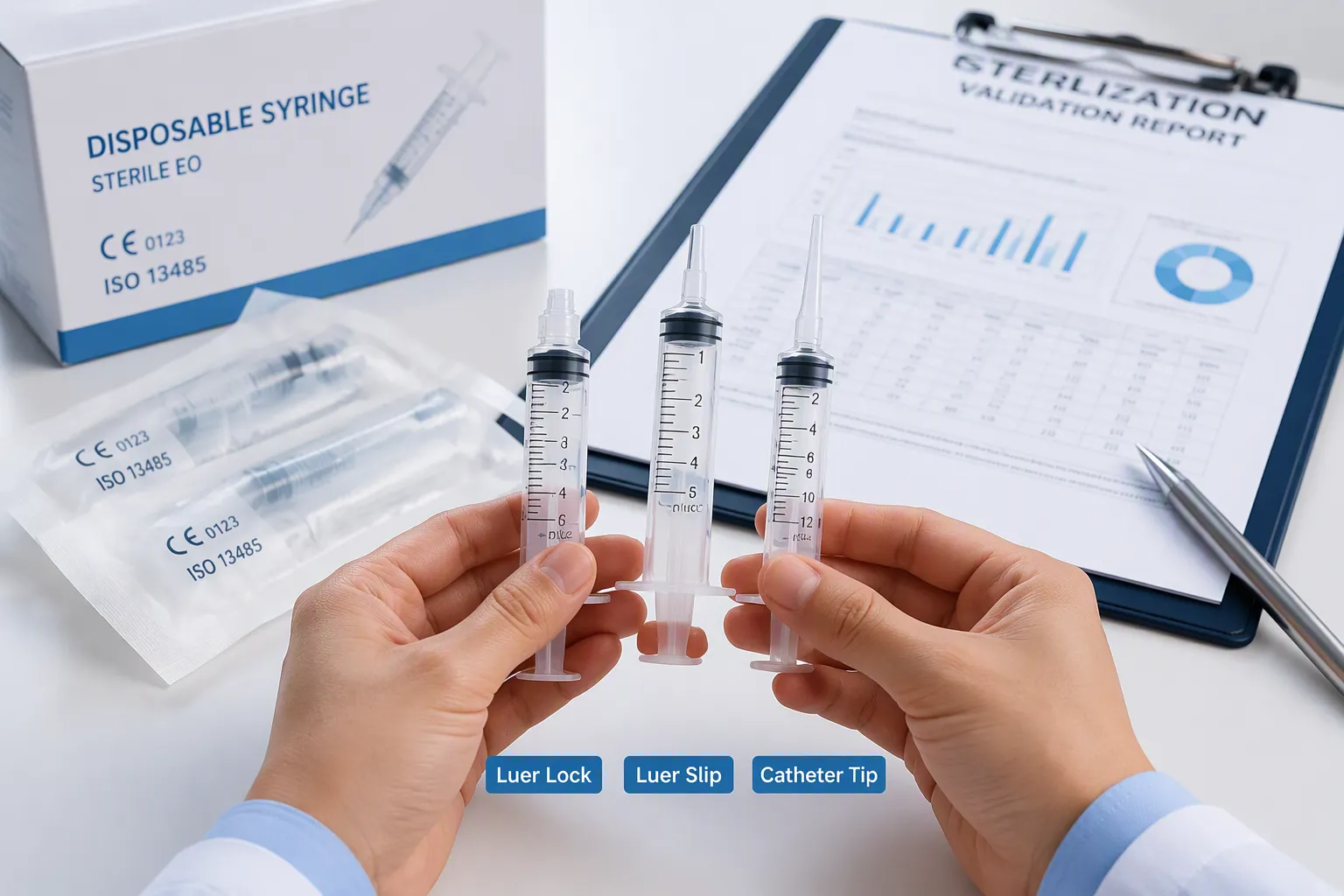
The tip controls how fluid leaves the barrel and how tightly the needle or tubing stays on. That is why buyers sort disposable syringe types by tip and connection style first. The table below compares the three main designs.
Tip Configuration | Connection Mechanism | Specific Uses |
|---|---|---|
Luer Lock | Threaded connection; holds the needle secure and stops it from coming off under pressure | High-pressure jobs like power injection and arterial lines, joint aspiration, intramuscular injections with thick medication, IV push doses |
Luer Slip | Friction-fit connection; fast to attach, fine for low pressure, costs less | Subcutaneous injections, quick single-use procedures, fast syringe swaps |
Catheter Tip | Tapered blunt tip with no Luer connection; blocks needle attachment | Gastric tube work, tracheostomy care, wound irrigation, enteral feeding in 30–60 mL sizes |
A luer lock syringe works for any job where the needle must stay put. The threads hold the hub tight, so you get a firm seal and no leaks. Pick a luer lock disposable syringe for high-pressure delivery and for injections with thick medication. A luer slip syringe attaches in seconds, which helps when you change devices often. The luer lock vs. luer slip choice comes down to pressure and speed. Catheter tip models are syringes without needles, so they fit tube feeding and flushing.
Some tips solve narrow problems. An eccentric tip sits off-center on the barrel. This placement lets you hold the needle almost parallel to the skin, which makes injection angles easier. It also helps in tight spaces around IV lines.
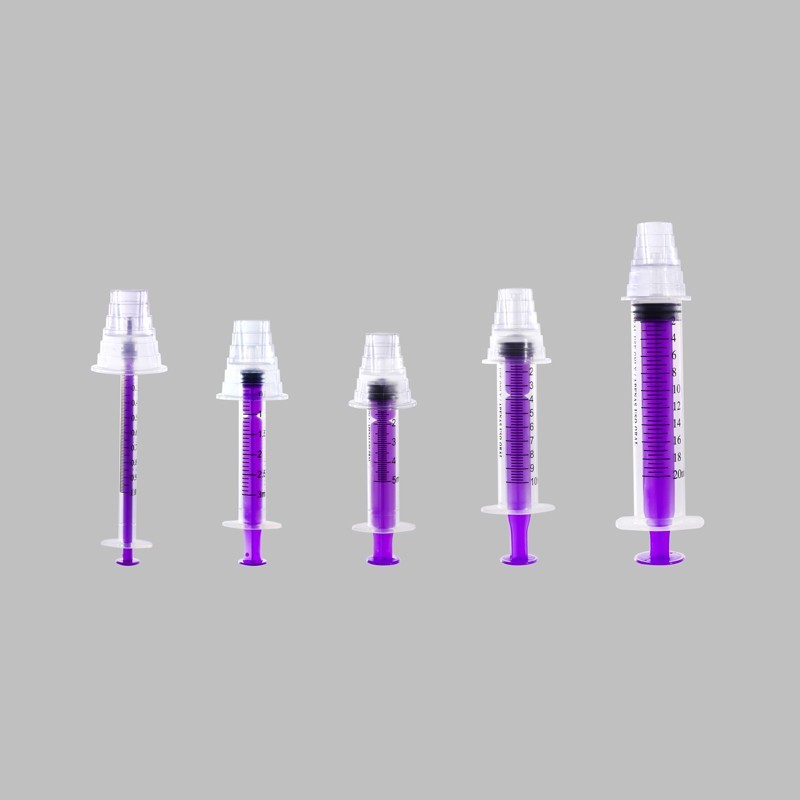
Oral tips use a wider blunt end. The design blocks a connection to an IV line, so liquid medication goes only by mouth or feeding tube. This safety feature matters when you stock disposable syringes with and without needles side by side. 医疗器材总厂 makes luer slip, luer lock, and catheter tip types of syringes, with needle sizes from 16G to 27G. One supplier covers every tip style you need.
You can also sort disposable syringe types by what they are used for. This view helps you match a device to the clinical task, not just to a volume. Injection syringes are the most common group. These syringes with needles put medicine into muscle, under the skin, or into the top layer of skin. Needle gauge changes with the route, so check the table below before you order.
Injection Route | Standard Needle Gauge | Typical Needle Length |
|---|---|---|
Intramuscular (IM) | 20G–23G commonly; 25G–29G in some scenarios | 13–16 mm |
Subcutaneous (SC) | 25G–30G | 4–8 mm (general-purpose SC needles: 5–16 mm) |
Intradermal (ID) | 25G–30G | 8–13 mm |
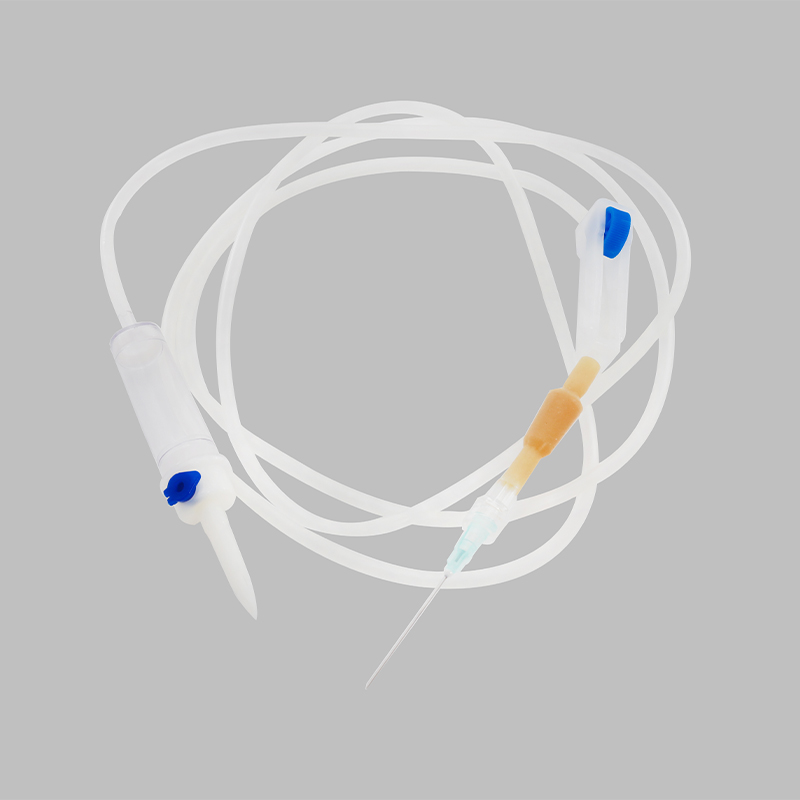
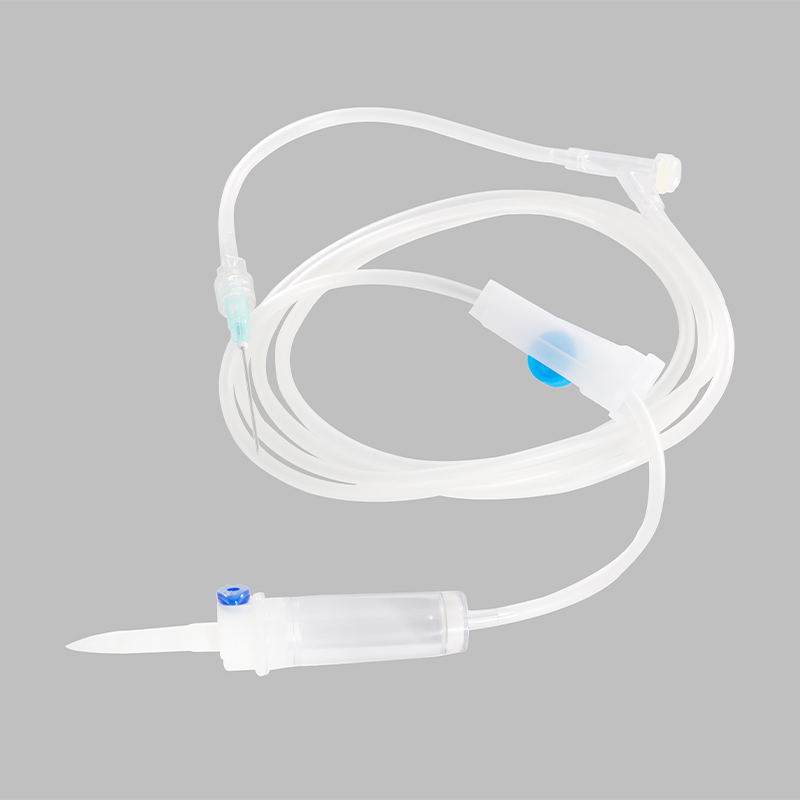
Infusion and aspiration syringes do a different job. You pair an infusion syringe with an infusion set to give fluid over time. An aspiration syringe pulls fluid out for testing or drainage. Both designs need a tip that stays connected, so a luer lock body often works best.
Specialty devices complete the types of medical syringes you will see in 2026. A disposable insulin syringe gives diabetes therapy a fine gauge and clear small-volume marks. A tuberculin syringe handles TB testing and other small-volume injections with the same precision. Oral and enteral syringes carry liquid medication by mouth or through a feeding tube, and their blunt tips block an IV connection. Prefilled syringes come with the dose already loaded, which saves a step in busy clinics.
These categories overlap with capacity, structure, and tip design. One device can be a small-volume, three-part, luer lock disposable syringe made for injections. Read the label with all five lenses in mind. That habit keeps your selection accurate and your patients safe.
You can also group disposable syringe types by how they keep people safe. Safety-engineered models have a built-in protective feature. These features cover the sharp or remove it after use, so a needlestick is much less likely. The benefit is real. Engineered safety solutions cut sharps incidents by more than eighty percent, according to industry reports. They also help your facility follow bloodborne pathogen rules and protect your staff.
Retractable syringes pull the needle back into the barrel right after the shot. The needle goes back as part of your normal injection motion, so your team needs no extra training. A break-off plunger then locks the device, which stops reuse and supports infection control. Reusing injection equipment is a major driver of bloodborne infections worldwide, which shows why designs that prevent reuse matter. 医疗器材总厂 offers safety syringes and auto-disable syringes next to its standard line, so you can stock every option from one source.
Shielding devices protect the sharp point with a cover instead of pulling it back. The table below shows the main options for safety disposable syringes.
Safety Needle Option | How It Protects |
|---|---|
Self-sheathing | A shield slides over the needle and locks in place |
Add-on device | A hinged or sliding shield attaches to the needle |
Eclipse needle | A one-handed mechanism locks over the needle |
Blunt-fill | Replaces the usual needle during filling |
Each design covers or pulls back the sharp after use, which makes it safer than recapping. The data backs this up. Safety-engineered devices are designed to shield the needle or sharp after use, which prevents percutaneous injuries. Auto-disable syringes work a different way. They lock after a single dose, which fits immunization programs. Match the shield type to your workflow, then check the feature on every disposable syringe you order.
Begin with the dose. Match the barrel size to the volume prescribed, so a 1.0 mL dose needs a 1.0 mL syringe. This pairing gives you the clearest scale and the most accurate reading. Stay away from a syringe that is too small, because it forces you to give the dose twice with a new needle. If you must use a larger barrel, pick the size closest to the volume you need. Otherwise, make sure the dose fills at least about 20% of the barrel, such as 1 mL or more in a 5 mL syringe. Watch for units that are tied to a specific medicine too. Insulin is prescribed in units, so choose a barrel marked in insulin units rather than mL to prevent dosing errors.
Next, pick the structure. A two-part syringe works for routine injections and irrigation at a lower cost. A three-part syringe adds a rubber gasket for smoother plunger travel and steadier dosing, which fits precision work.
Then choose the tip. A luer lock syringe uses a threaded hub that keeps the needle from coming off and stops leaks during high-pressure injections or thick-fluid handling. A luer slip tip attaches fast for routine low-pressure work. A catheter tip serves irrigation and tube feeding. Last, match needle gauge from 16G to 27G to the job, then confirm safety features and that the packaging is intact.
Quality checks protect your patients and your budget. Confirm ETO gas sterilization, non-toxic and non-pyrogenic status, and clear barrels with permanent markings. Ask for CE marking and ISO 13485 certification, and check each certificate with the issuing body rather than trusting a supplier's word. Request sterilization validation reports and batch traceability records. Test the sterile packaging barrier with seal checks such as dye penetration or bubble emission.
Parenteral Luer syringes must not take the place of oral or enteral devices. Taking off a needle does not change the connector or make it a proper substitute.
医疗器材总厂 makes disposable syringes in 100,000-level clean workshops on fully automated lines. The company holds CE certification and offers OEM/ODM customization of needles, scales, packaging, and private labeling. That flexibility lets you source a disposable medical syringe built to your exact specification. Ordering syringes with needles from one qualified partner keeps your specifications the same across every shipment.
Good handling starts before the needle touches a patient. Check the packaging for tears, moisture, or a broken seal, and look at the expiration date. Sterility is not guaranteed after expiry. Then follow a steady routine:
Keep sharps items in sight and never leave them alone.
Wipe the site with an alcohol swab and let it dry.
Draw the medication and remove air bubbles so the dose is accurate.
Put the used disposable syringe in a sharps container right away.
Place sharps containers within arm's reach of where you use them, never on the floor. Use closable, puncture-resistant, leakproof containers with a biohazard label. Match the waste stream to the waste: purple for cytostatic or cytotoxic material, yellow for highly infectious clinical waste. Never break or snap a needle before disposal, because that raises injury risk a lot. If a needlestick happens, get medical evaluation at once to limit the spread of hepatitis B, hepatitis C, and HIV.
The most serious error is reuse. Studies report reuse rates from 0.1% to 94.4% across settings, and wiping a single-use device with alcohol does not make it sterile again. Reused needles also get dull, which causes discomfort and bruising. Other common mistakes include recapping by hand, skipping needle inspection, and storing devices in humid places where moisture can weaken the seal.
Size and connection errors cause problems too. A barrel that is too large for a small dose makes the graduation marks hard to read, so match the syringe to the volume. Never force a luer slip connection under high pressure; choose a luer lock syringe when the needle must stay fixed. Pick the right needle gauge for the fluid and tissue, and rotate injection sites so tissue stays healthy. These habits help you inject safely and keep every dose accurate. Choosing the right disposable syringe type and size is still the foundation of safe, precise clinical use.
You now have a complete guide for medical buyers. You can sort types of disposable syringes by capacity, structure, tip design, intended use, and safety design. Each lens answers a different question. Matching type to application drives safety and accuracy. A luer lock disposable syringe holds under high pressure. An auto-disable model stops reuse in vaccination campaigns. A two-part design suits lubricant-sensitive lab work. Apply the step-by-step selection criteria and safe handling practices from this article to every order. For 2026 purchasing, choose a trusted, quality-focused supplier such as Changzhou Medical Appliances General Factory Co., Ltd.). Its CE and ISO 13485 certifications and supply experience across more than 60 countries make it a reliable source for different types of syringes and disposable syringes alike.
Match the barrel to the volume you need. A 1 mL dose fits best in a 1 mL syringe. This pairing gives you the clearest scale and the most accurate reading. Choose the smallest size that holds the full dose.
Pick a luer lock tip for high-pressure delivery and thick medication. The threads hold the needle tight and stop leaks. Choose a luer slip tip for routine low-pressure injections where fast attachment matters more than a secure lock.
A two-part syringe has only a barrel and a plunger. It costs less and works well for routine injections and irrigation. A three-part syringe adds a rubber gasket for smoother plunger travel and steadier dosing, which fits precision work.
No. Wiping a single-use device with alcohol does not make it sterile again. Reuse spreads bloodborne pathogens and dulls the needle, which causes discomfort. Put every used syringe in a sharps container right away.
Changzhou Medical Appliances General Factory Co., Ltd. makes disposable syringes from 1 mL to 100 mL in 100,000-level clean workshops. The company holds CE and ISO 13485 certification and offers OEM/ODM customization of needles, scales, packaging, and private labeling for buyers in more than 60 countries.
Whatsapp: +86-13616120206
E-mail: sale01@lelun.com
ADD: HengShanQiao Town, out of East Gate, Changzhou ,Jiangsu, China
Mobile: (+)86-13616120206