




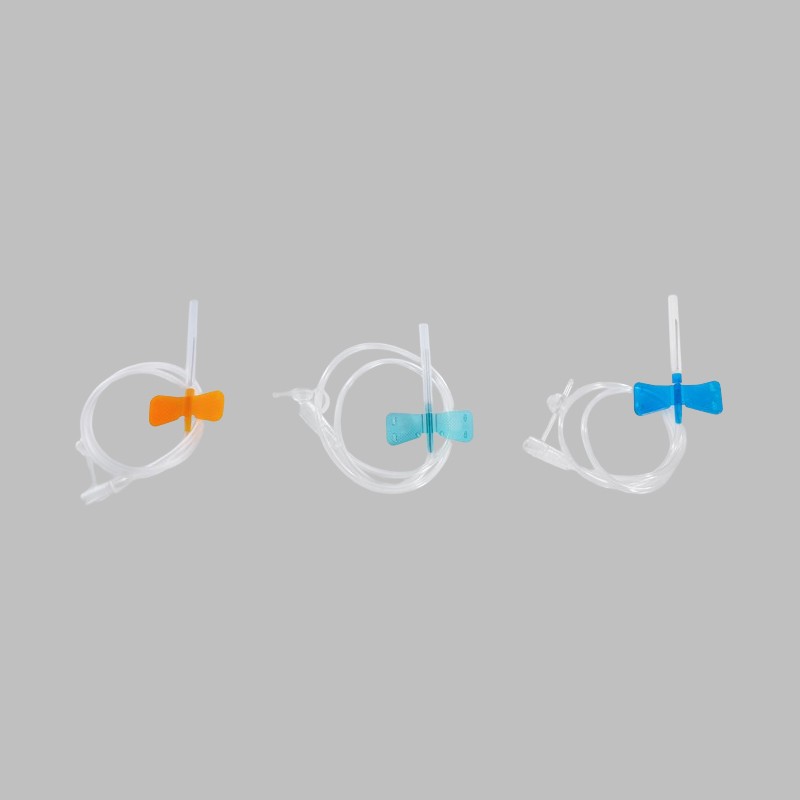


News Categories

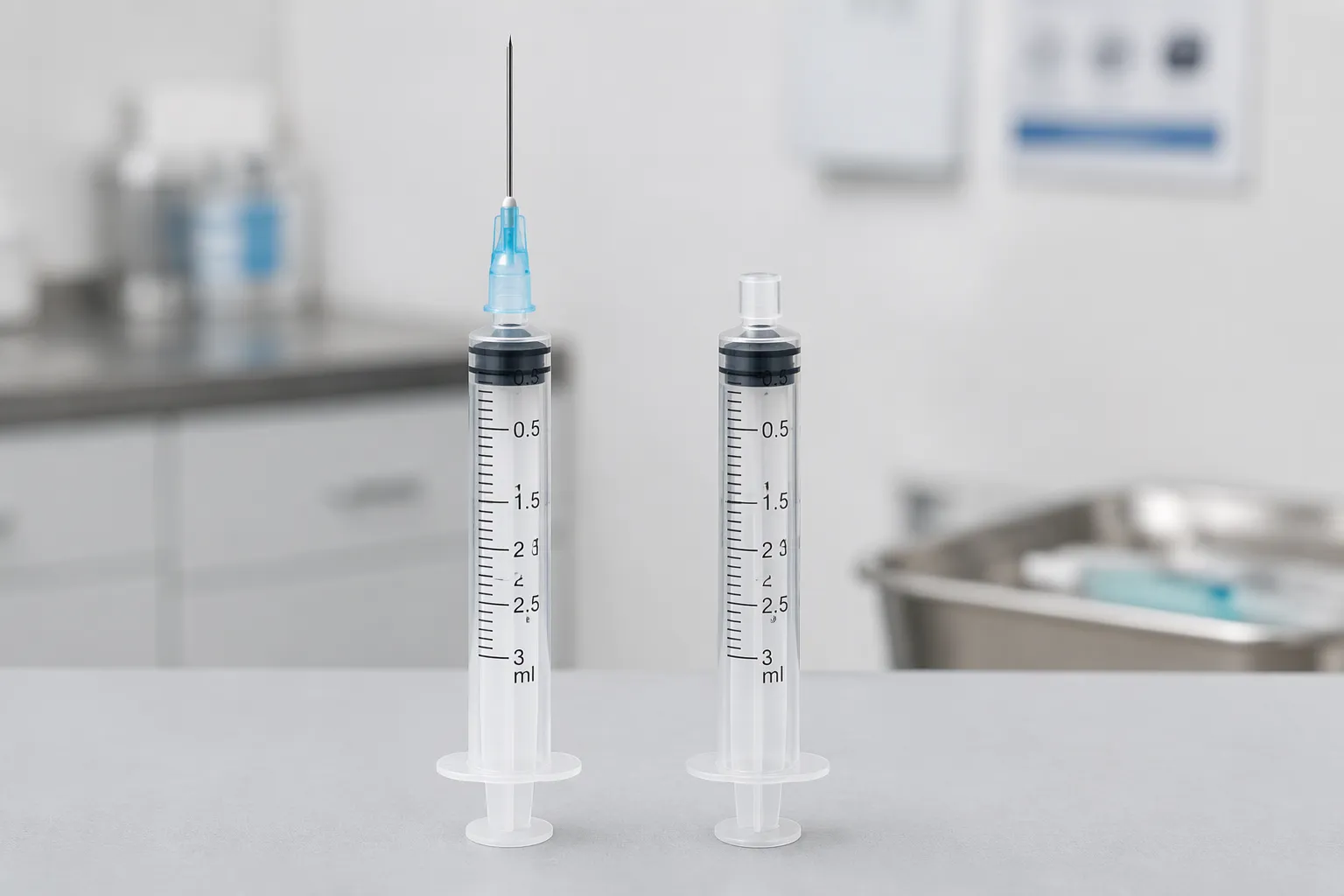
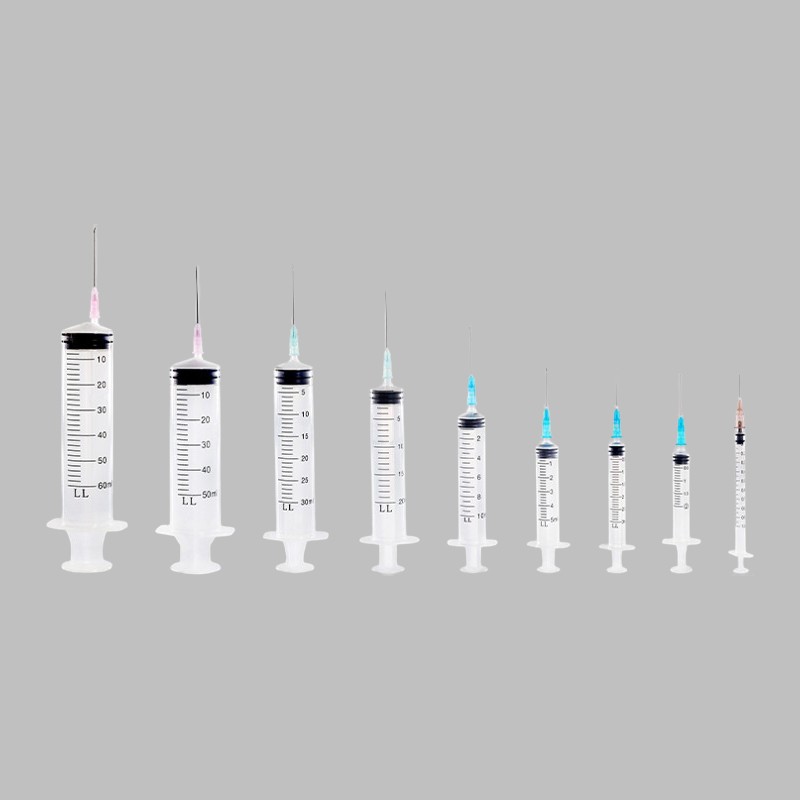
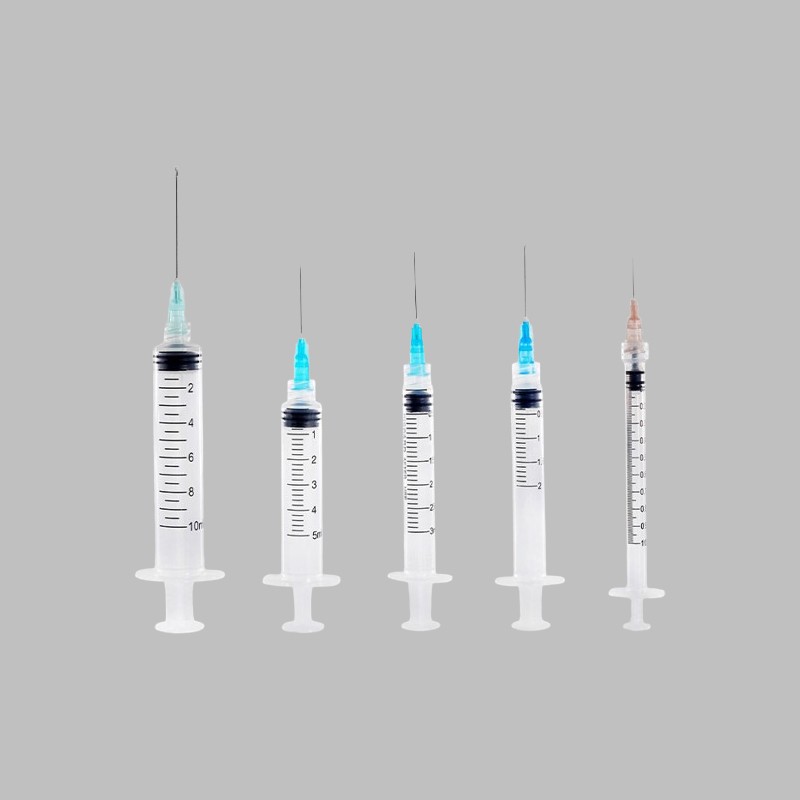
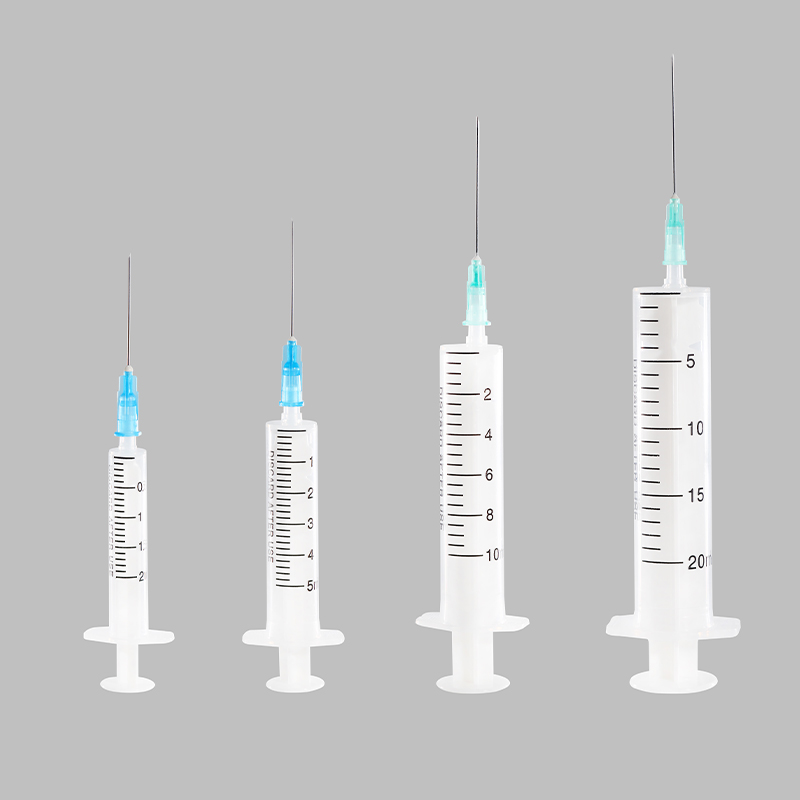
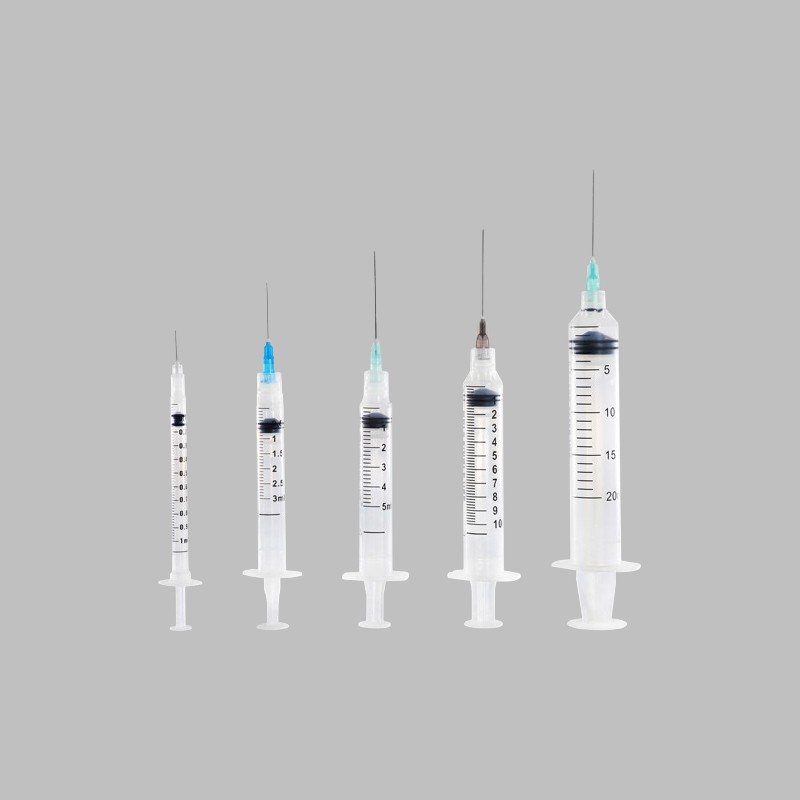
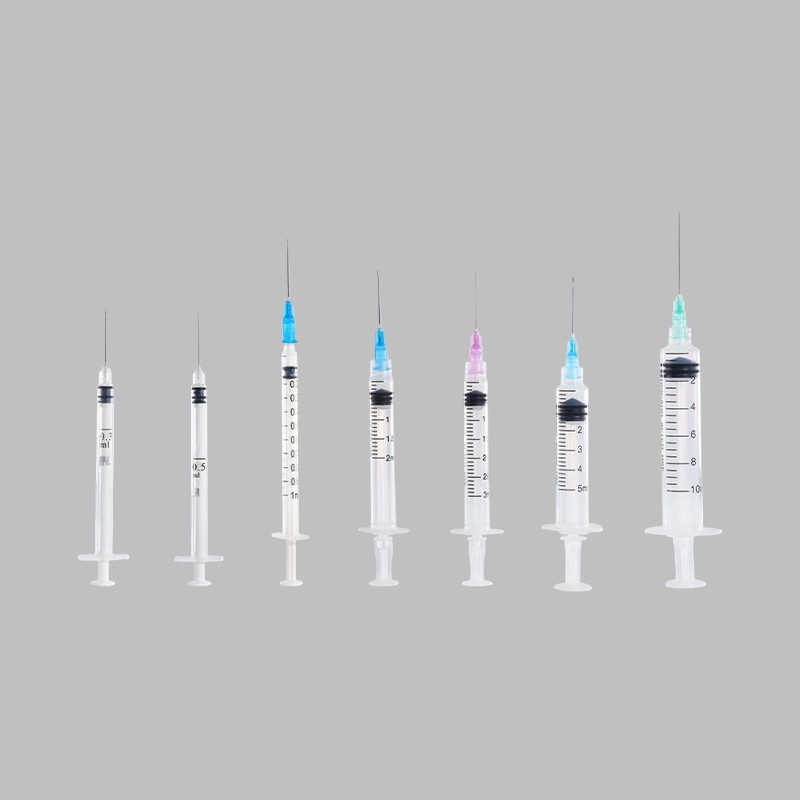
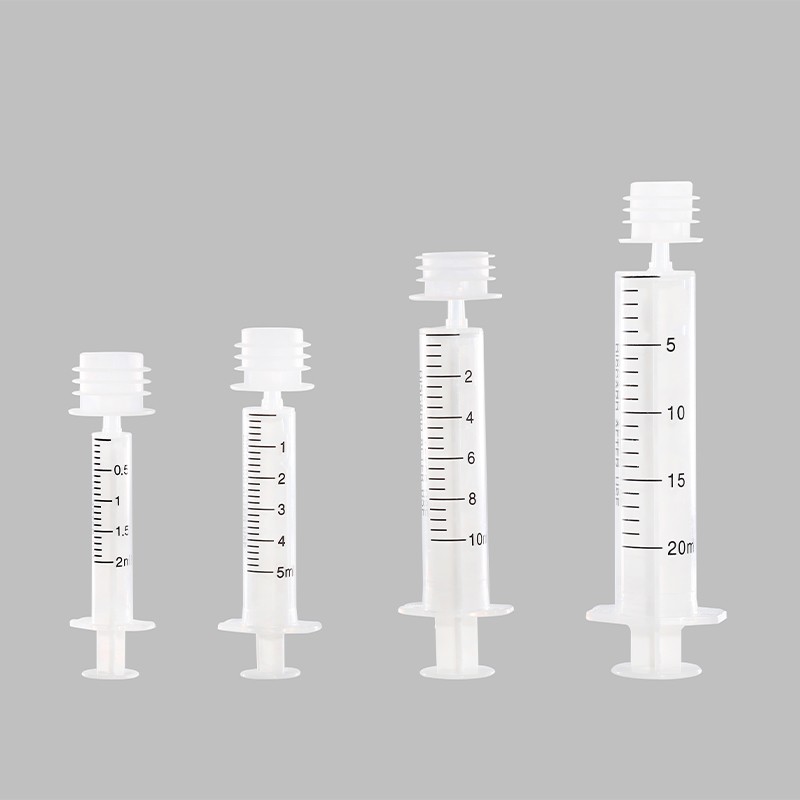
The right choice depends on what you plan to use it for. No single option is best for every task. A disposable syringe with needle comes with the needle already attached, so you can inject right away. A disposable syringe without a needle holds and delivers fluid, and you choose the needle or connector yourself.
These two kinds of disposable syringes do different jobs. This post compares syringes with and without needles on performance, fit for the task, safety, and cost. You will see the key differences that matter for injections, transfers, and mixing, along with the types of syringes that fit each situation.
A syringe that does not match the intended needle, tube, or catheter may leak or come apart. Always check the connection type.
Pick a syringe with a needle for shots and vaccines.
Choose a syringe without a needle for mixing, moving liquids, and tasks that use connectors.
Always pick the right needle size for the liquid and the way you give the shot.
Follow safety rules: use each syringe one time and throw away needles in sharps containers.
Think about all the costs: systems without needles lower the money spent on throwing away sharp items.
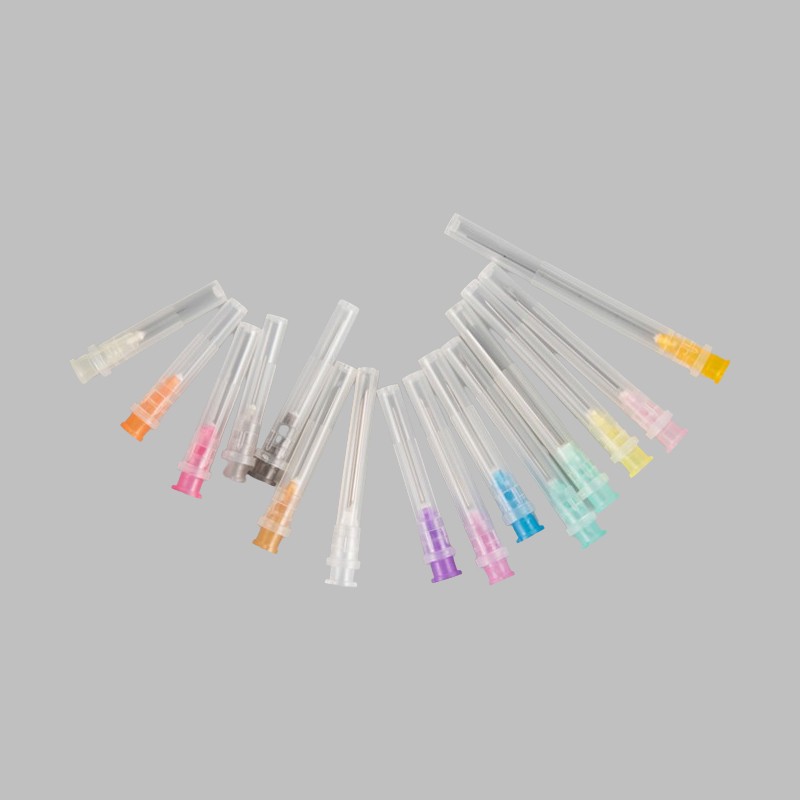
The gauge of a needle sets the balance between comfort and speed. A finer needle causes less tissue damage and less pain. A thicker needle moves fluid faster and resists clogging. Blood draws need a larger diameter, because thin needles can clog under the pressure of donation. Industry guidance from KDL Medical notes that 18G and 20G needles allow faster flow for blood collection and viscous medications, while 26G and 27G needles suit fine subcutaneous and intradermal work. A 21G needle measures about 0.82 mm across, and a 22G needle measures about 0.72 mm, per the same source. Viscous fluids such as oil-based suspensions need 16G to 20G to prevent clogging. Standard aqueous solutions work well with 21G to 25G. Dilute solutions suit 25G to 30G for precision. A disposable syringe with needle in 16G to 27G covers this full range. Medical Equipment General Factory supplies Luer Slip and Luer Lock options in 0.5ml to 100ml sizes, with EO sterilization, ISO 13485 and CE certification.
Dead space is the fluid left behind after you push the plunger. It sits in the syringe tip and the needle hub. A fixed-needle design can cut hub space compared with many detachable designs, but residual volume still varies by product architecture. Research published in PLOS ONE describes plastic inserts inside low dead space needles that reduce retained volume. Gauge alone does not set dead space. Needle lumen, length, and hub design all contribute. For accurate dosing, ask the supplier for a residual volume figure in microliters or milliliters, plus the test method and the exact device tested. A needle-free setup changes the picture. You attach a connector or blunt tip, and the assembled system determines total retention. Luer Lock connections reduce the risk of leaks and accidental detachment during high-pressure work, according to KDL Medical. Luer Slip connections attach faster and cost less. Both designs work when the parts match. These key differences in connection and retention shape how precisely a syringe with needle delivers a dose.
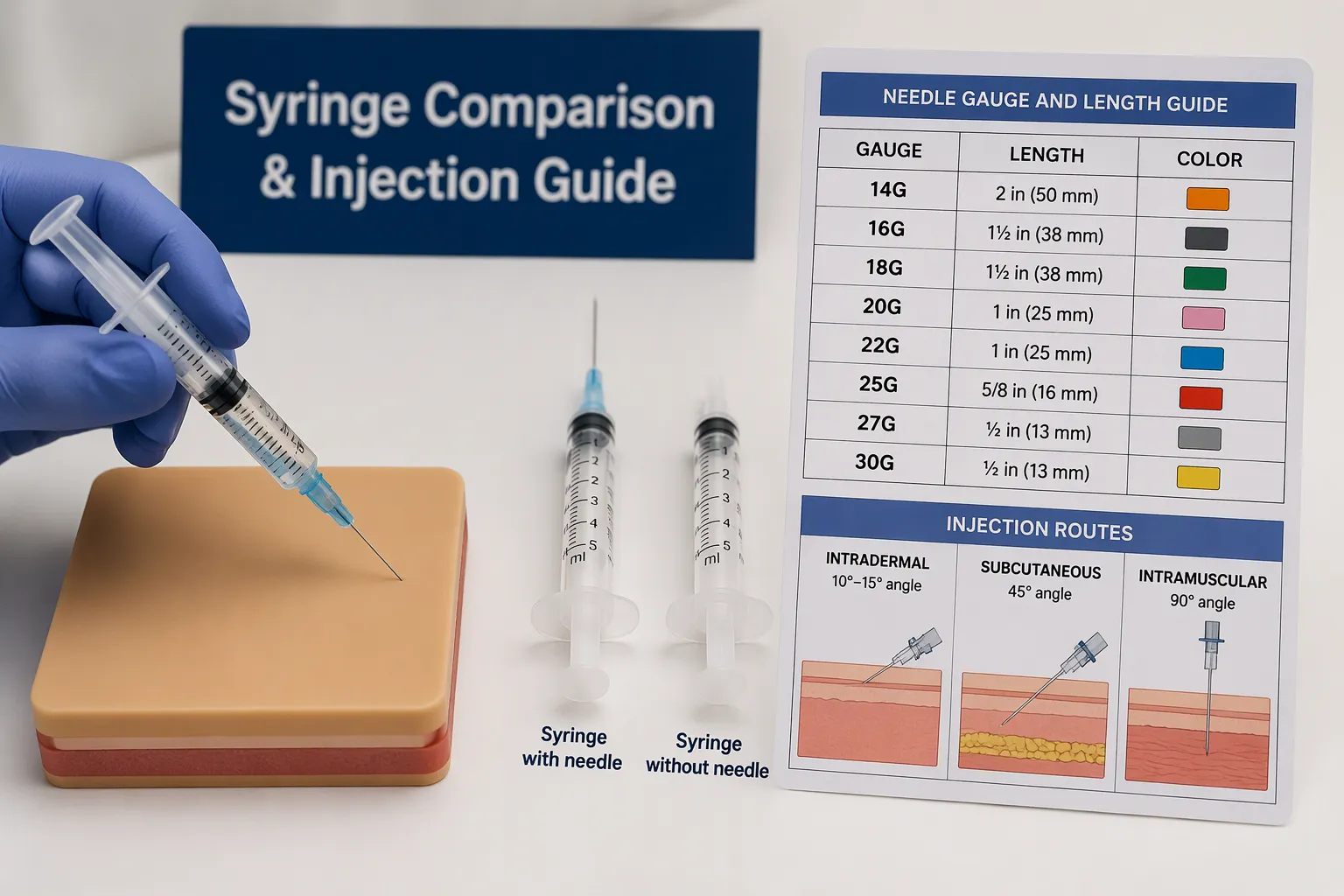
The difference between a syringe and a needle is easy to see. A syringe holds and delivers fluid. A needle goes through the skin. You can use them together or each one alone. That choice decides which jobs each setup does well.
A disposable syringe with needle works well for putting medicine straight into the body. Parenteral drug administration acts right away and skips breakdown in the mouth, according to research published in PMC. Vaccines are a big use. In the USA and Europe, almost half of prescription-based vaccines come in a prefilled syringe presentation, the same source reports. People also use them more and more to inject themselves for chronic disease and biological drugs. Emergency response and mass immunization campaigns also depend on single-dose pre-packaged systems to control infection and cut errors.
Needle choice follows the route. The table below shows the standard ranges from Varsity Tutors.
Route | Needle Gauge | Needle Length | Angle of Insertion | Max Volume |
|---|---|---|---|---|
Intradermal (ID) | 25–27G | ⅜–⅝ inch | 10–15° | 0.01–0.1 mL |
Subcutaneous (SC) | 25–27G | ½–⅝ inch | 45° (or 90° with short needle) | 0.5–1 mL |
Intramuscular (IM) | 20–23G | 1–1½ inch | 90° | Up to 3 mL (1 mL deltoid) |
Gauge works on an inverse scale. A 27G needle has a much finer lumen than an 18G needle, per Varsity Tutors. Thick medications need lower gauge numbers so the fluid flows without too much force. Needle length depends on the target tissue and the patient's body habitus. A patient with a higher BMI may need a longer needle for intramuscular work. A thin or pediatric patient may need a shorter one. For an IM injection of 0.5 mL in the deltoid of a standard-weight adult, Varsity Tutors suggests a 22–25G needle at 1 inch, with a 1 mL syringe for accurate dosing.
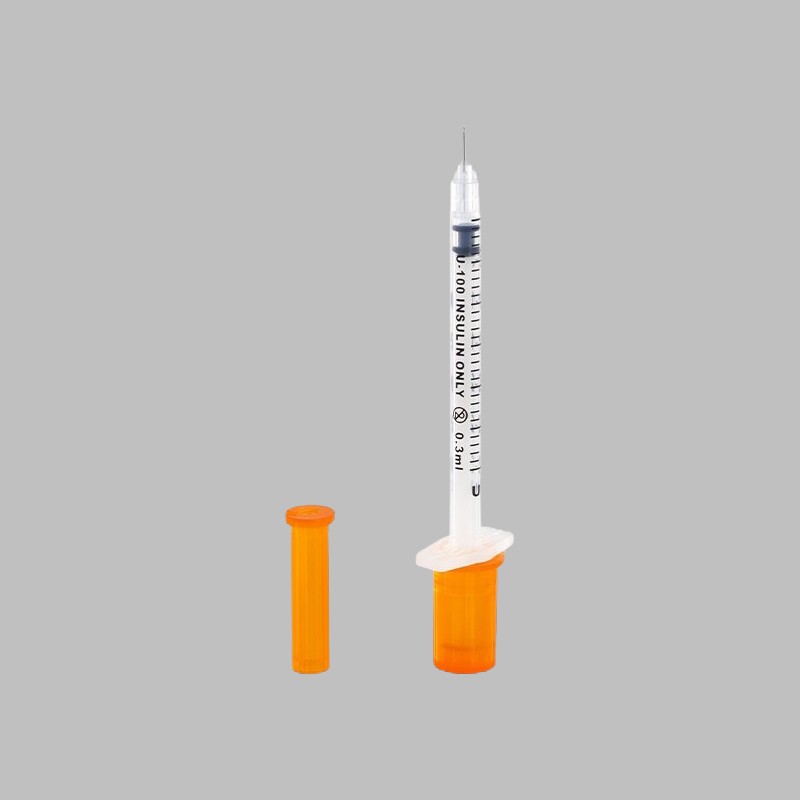
Insulin is a common subcutaneous case. Slow, steady absorption makes the fatty tissue the right target. You need the correct types of needles and their applications matched to the route. Blunt-ended needles add a safety layer for drawing up medication from a vial. They cannot puncture skin, so they lower needlestick risk during preparation.
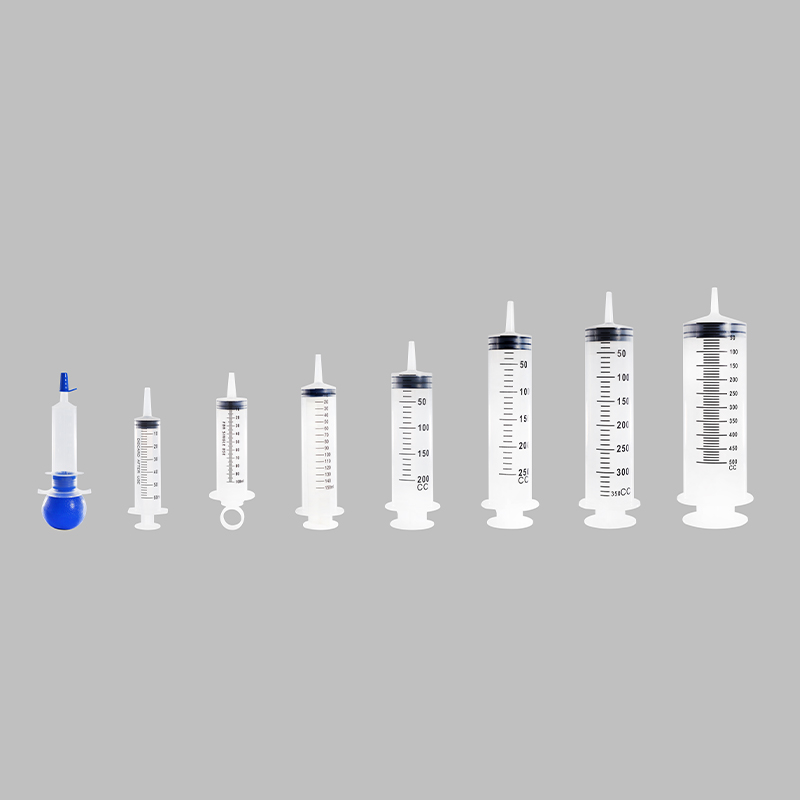
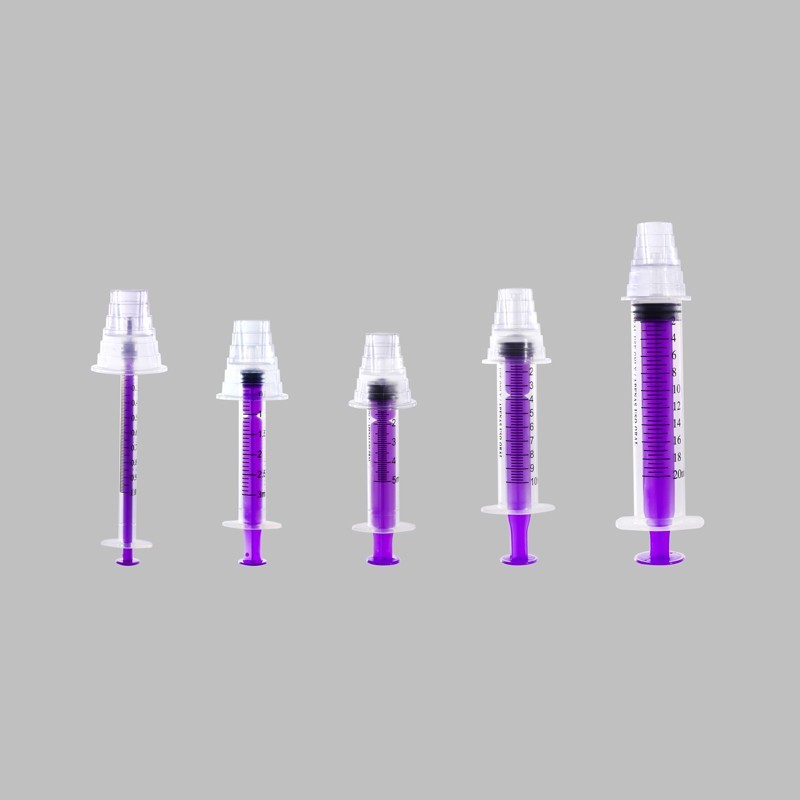
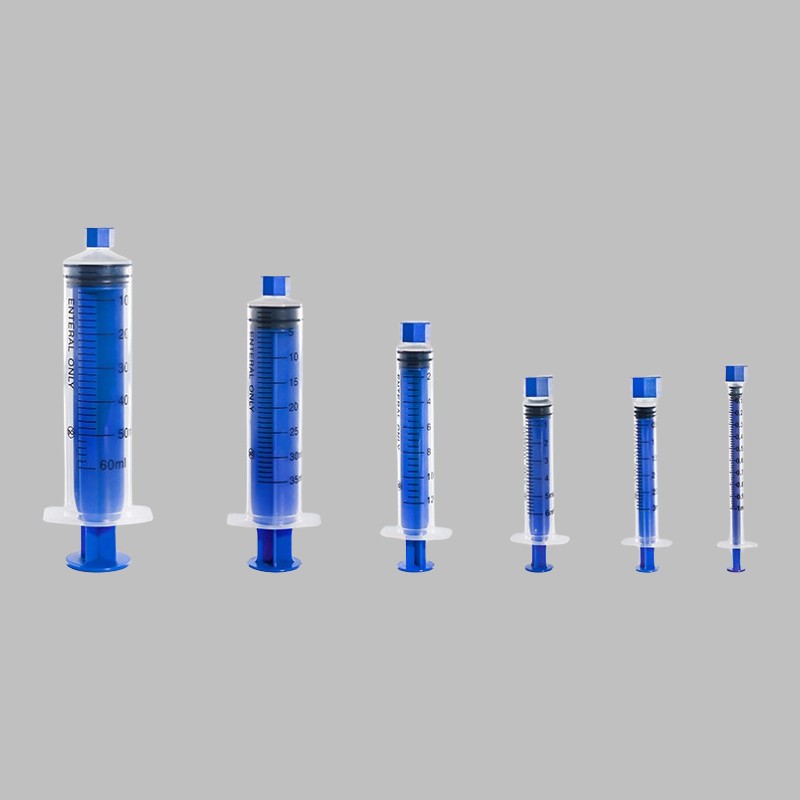
Syringes without needles work for measuring, mixing, and transferring. You attach a connector, a blunt tip, or a catheter tip to fit the task. This setup helps give medications to pediatric and geriatric patients and liquid drugs to people who cannot swallow pills, according to Ticare Health. Long-term care facilities use these syringes a lot.
Irrigation is a clear fit. A catheter-tip syringe sends fluid to a wound or body cavity with no sharp part. Needle-free syringes also work for enteral feeding and oral dosing, where exact measurement matters more than going through skin. These types of syringes keep the fluid path closed and simple.
The key differences come down to the task. Use syringes with needles for injections and vaccination. Use needle-free syringes for transfers, mixing, and connector-based workflows. Both support safe administration when you match the device to the job.
Learning to use syringes and needles safely begins with the rules. The FDA puts piston syringes in Class II, panel 80, under product codes FMF for piston syringes, MEG for antistick syringes, and FMI for hypodermic single lumen needles. This covers syringes with and without needles alike. A 510(k) submission must name the sterilization method, the validation approach, and the sterility assurance level. The FDA requires an SAL of 10⁻⁶ for devices that touch normally sterile body areas. For EtO cycles, you must report maximum residue levels of ethylene oxide, ethylene chlorohydrin, and ethylene glycol. The file also needs a pyrogen-free claim with the test method named.
Labeling matters too. The FDA expects the device identity, including needle gauge and length where applicable, plus the statements "sterile, single use only, nonpyrogenic, nontoxic." Recognized standards include ISO 7886 for sterile hypodermic syringes, ISO 7864 for sterile hypodermic needles, and ISO 8537 for insulin syringes. These pre-sterilized, single-use syringes protect patients only when the package stays intact until the moment of use.
Safe disposal methods protect you and everyone around you. The CDC says to place sharps containers within arm's reach and never on the floor. A compliant container is closable, puncture-resistant, leakproof on the sides and bottom, and biohazard-labeled. Never recap, bend, or break a contaminated needle. Put the connected needle and syringe straight into the container. Seal it at the fill line, or at three-quarters full when no line exists.
Needleless systems offer another route. Blunt cannulas and spray nozzles remove the sharp from many procedures, and the FDA urged their use back in a 1992 safety alert. Safety-engineered devices such as retractable needles add protection during administering injections. A single-use policy still applies. Changing a needle does not make a disposable syringe with needle safe to reuse, because the barrel and hub carry contamination risk. Follow the single-use policy for every disposable syringes product, and you help prevent cross-contamination during administering medications. These habits make safe administration routine for both syringes with and without needles.
The price on the label is only part of the story. A standard disposable syringe with a needle often costs more per unit than a bare barrel. That gap gets smaller once you count what a needlestick can cost. The Illinois EPA notes that medical sharps are biohazardous waste, because contaminated blood can live on these objects for over a week. The agency also warns that sharps can inject that fluid into anyone who touches them.
The table below shows the range of financial exposure from the Superior Waste Disposal review of needlestick data.
Cost Category | Value |
|---|---|
Cost per needlestick injury | $500 to $5,000 |
Annual economic burden of NSIs in U.S. healthcare system (2026) | $118 million to $591 million |
Injuries per year | approximately 236,000 |
Costs from inadequate precautions (long-term illness/permanent disability) | potentially exceeding $1 million |
The American Hospital Association found that one blood-borne infection case could cost $1 million for testing, follow-up, and disability payments. The GAO concluded that safety-engineered needles would save a lot of money by causing fewer injuries. For high-volume injections, that math can favor a safety-engineered with-needle product. For transfers and mixing, a needle-free barrel avoids the sharps cost entirely.
Disposal rules split the two options cleanly. Oregon's health authority states that only syringes with a needle attached count as sharps. A syringe without a needle may go in a red biohazard bag when it holds blood or biologic waste, or in the trash when non-infectious. That difference lowers handling costs for needle-free workflows.
Medical Sharps (syringes, hypodermic needles, needles attached to tubing, lancets, etc.) are considered biohazardous medical waste.
Storage and inventory also differ. Needle-free barrels stack and ship without sharp protection, so they take less shelf space. The WHO advises waste minimization through green procurement and less packaging. Medical Equipment General Factory supports this through OEM/ODM services, custom needles, scales, and packaging, plus a daily capacity of 5 million units for reliable supply. Match the product to the task, and each type of syringe proves cost-effective where it fits.
Four things help you decide: what you will use it for, your safety steps, the rules you must follow, and the total cost. Look at all four together, and the right answer usually becomes clear.
For routine shots and vaccines, pick a syringe with the needle already attached.
For moving fluids, mixing, and setups that use a connector, choose a barrel with no needle.
Oral dosing needs its own special device. Kohope points out that oral and injection syringes can never be swapped, no matter the size.
Keep your sterile disposable syringes matched to the job. That habit keeps you safe and protects your budget, because needle-free systems reduce the cost of sharps disposal. Both choices have their place. Match the syringe to the task, and you get the right result.
No. A barrel by itself cannot go through skin. You need a needle attached for any injection. Pick a with-needle product for shots and vaccines. Pick a needle-free barrel for measuring, mixing, and transfers.
Match the gauge to the fluid and the route. Thick fluids need a larger needle. Fine work needs a smaller one. The 16G to 27G range covers most tasks. Ask your supplier for help when you are not sure.
No. Every disposable syringes product is for one use only. Changing the needle does not take away contamination risk from the barrel and hub. Reuse weakens safety for you and your patients. Throw away the whole unit after one procedure.
Put the connected needle and syringe straight into a closable, puncture-resistant sharps container. Never recap or bend the needle. Seal the container at the fill line. A barrel without a needle follows your local waste rules instead.
No. The sterile claim holds only while the package stays intact. Open the pack right before use. Check the seal first. Throw away any unit with a broken or damp package.
Whatsapp: +86-13616120206
E-mail: sale01@lelun.com
ADD: HengShanQiao Town, out of East Gate, Changzhou ,Jiangsu, China
Mobile: (+)86-13616120206