






News Categories

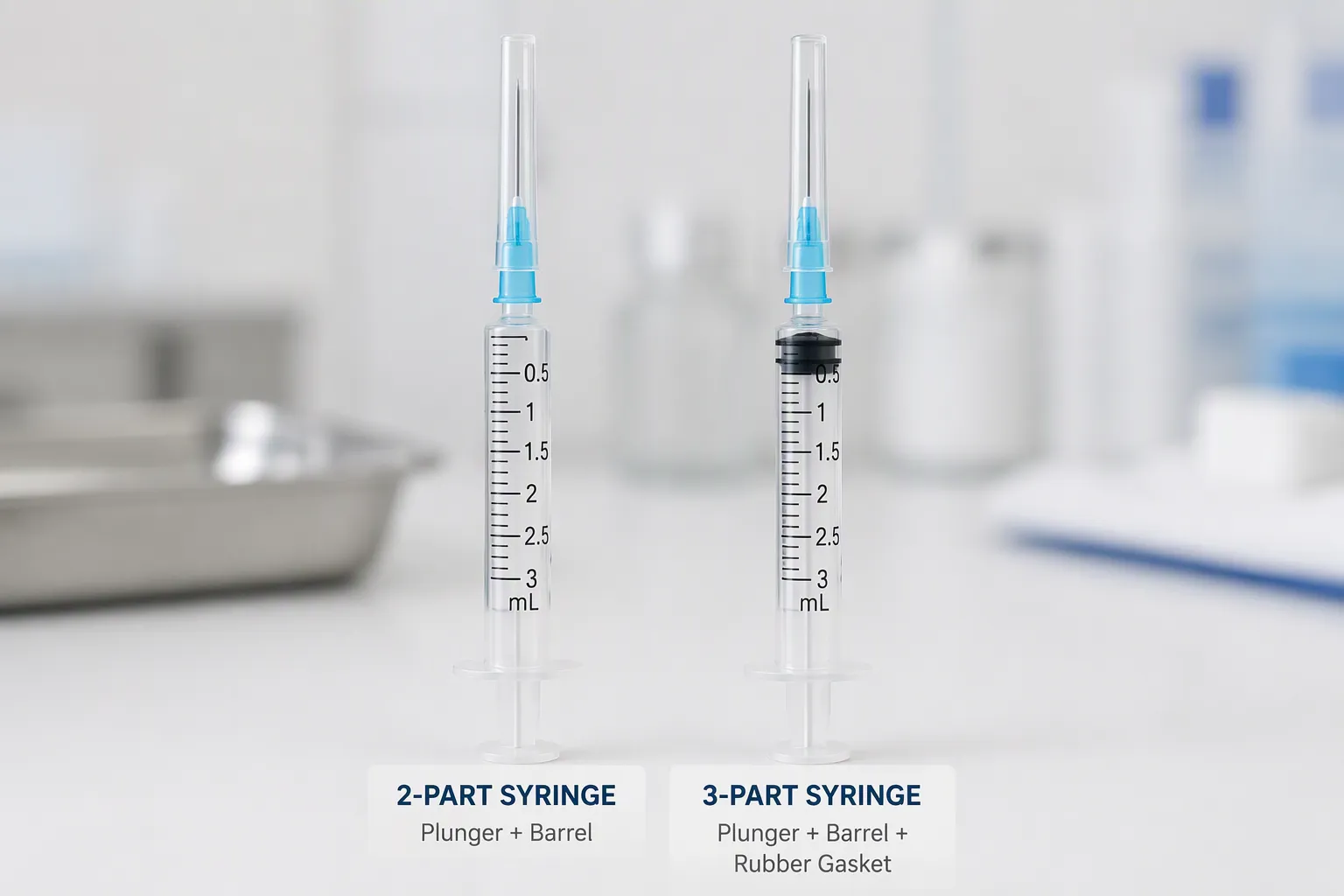
A 2-part syringe has only a barrel and a plunger. A 3-part syringe adds a rubber gasket, or stopper, to the plunger tip. That one extra part changes how each design seals, glides, and works with medications.
Sealing behavior, plunger movement, material compatibility, cost, and intended use set the two designs apart. The disposable syringe market shows steady demand, with a projected 6.7% CAGR through 2030 and a market size of $24.00Bn. Buyers who understand the 3 parts of syringe construction and the simpler two-part build can match a syringe to their clinical and budget needs. A two-part option often suits simple needs.
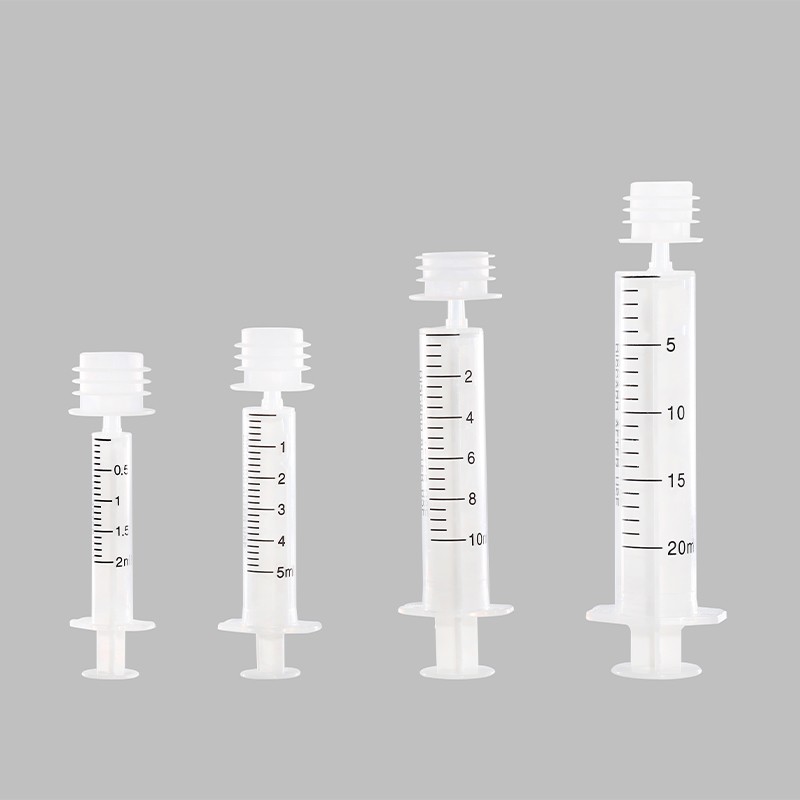
A 2-part syringe has just a barrel and a plastic plunger. It seals by fitting together tightly, so it needs no rubber gasket or silicone oil.
A 3-part syringe adds a rubber stopper to the plunger. This makes a tighter seal and lets the plunger move more smoothly.
Pick a 2-part syringe for easy jobs and lower cost. Pick a 3-part syringe for exact dosing and protection from leaks.
See how the syringe materials react with your medicine. A 2-part syringe keeps silicone and rubber from touching it.
For large orders, compare suppliers using the same specifications. This ensures a fair comparison of cost and quality.
A 2-part syringe has just two pieces: the barrel and the plunger. The plunger is made entirely of plastic. It has no separate rubber tip, cap, or stopper at the end. This simple build is what makes it different from three-part designs, which add an elastomer gasket to the plunger.
The plastic plunger is the key to how the seal works. Manufacturers mold the plunger head a little oversized and keep it to tight tolerances. So the plunger presses against the inside wall of the barrel along its full length. No rubber part sits between the two components.
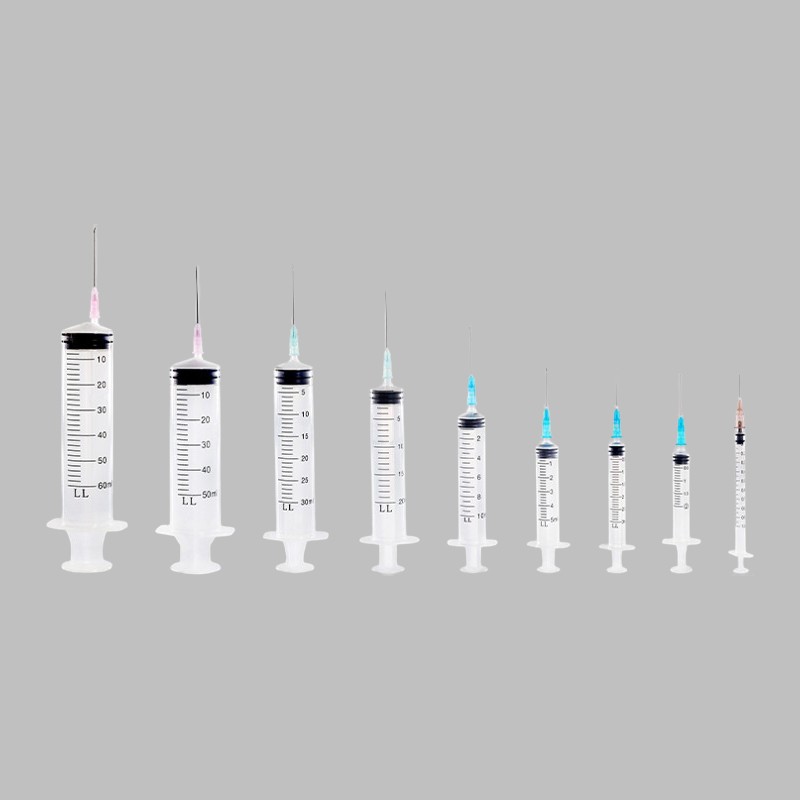
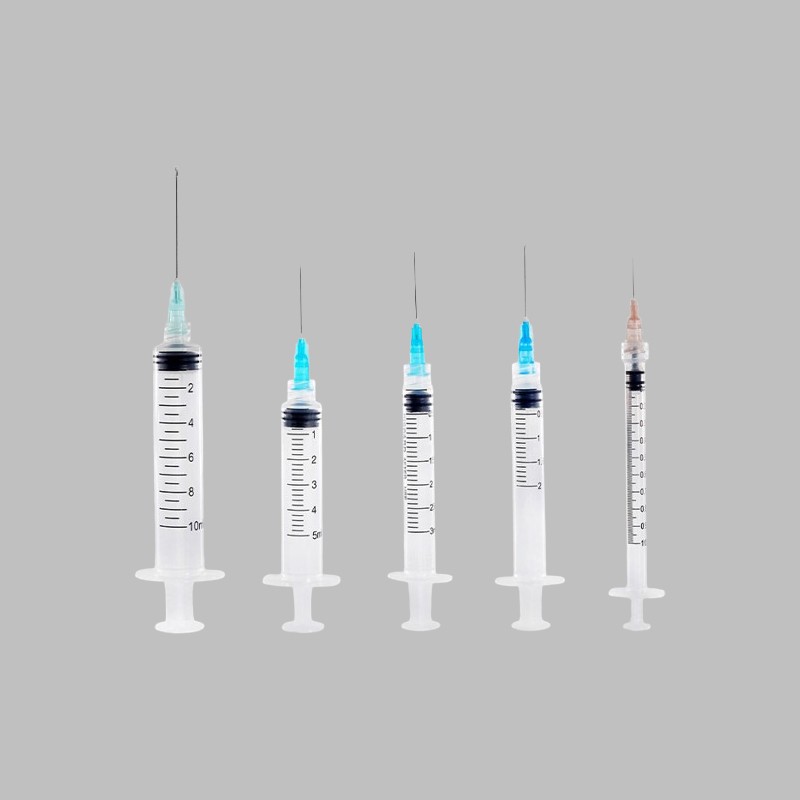
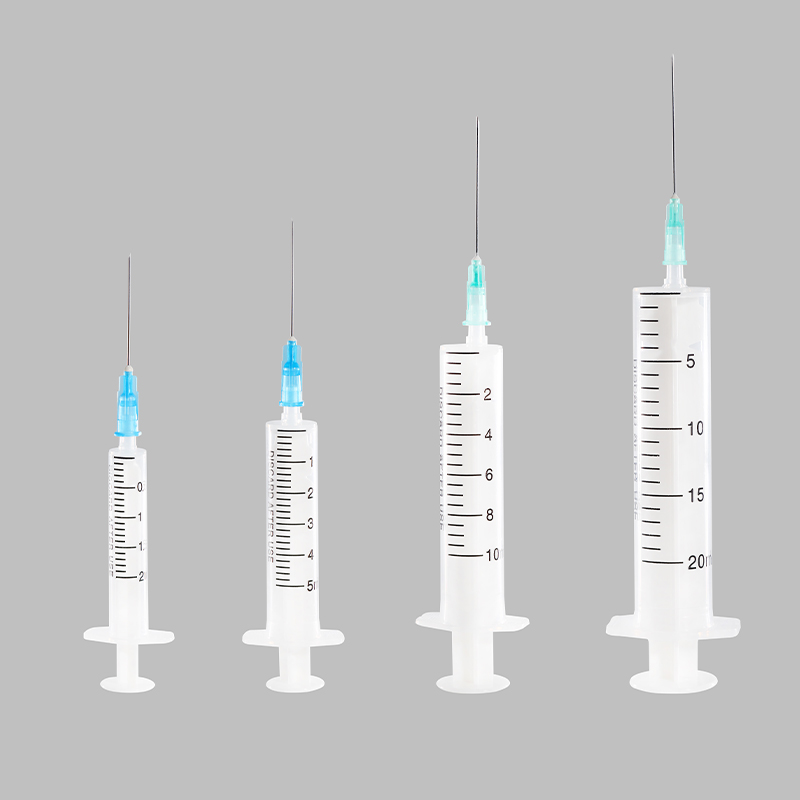
Changzhou Medical Appliances General Factory Co., Ltd.makes two-part syringes as part of its disposable syringe range. These two-part syringes come in sizes from 1ml to 100ml. Buyers can pick luer slip or luer lock connections for each size.
A two-part syringe seals through the fit between the plunger and the barrel. The oversized plastic head pushes against the barrel wall as the user pulls the plunger down. This push creates a vacuum inside the barrel. The vacuum keeps the seal and holds fluid in during use.
The design also does away with the need for lubricants like silicone oil. No oil coating sits on the barrel or the plunger. This helps in applications where foreign substances could mess up results. So a 2-part syringe fits workflows that need a clean fluid path.
Each 2-part syringe depends on precision molding instead of an elastomer gasket. The seal quality depends on how well the plastic head matches the barrel bore. A well-machined two-part syringe gives reliable sealing for routine tasks. The two-part approach keeps the device simple and easy to put together.
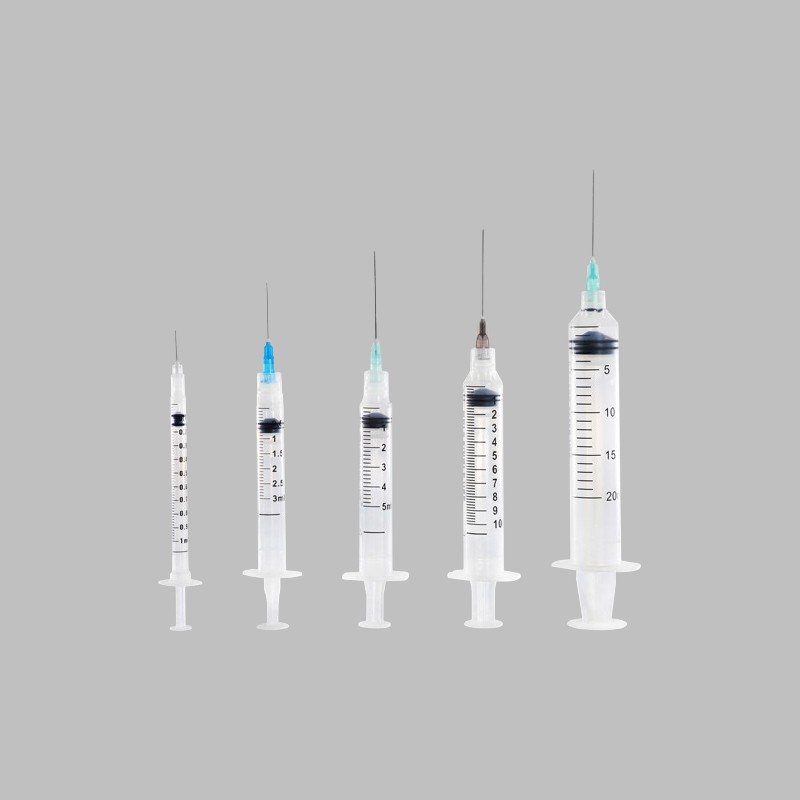
A three-part syringe has three separate pieces. The first piece is the barrel, the round tube that holds medicine before injection. Most barrels are see-through and have marked lines that show how much fluid is inside. The second piece is the plunger, the rod that slides inside the barrel. A user pushes or pulls this rod to draw fluid in or push it out. The third piece is a separate rubber or elastomer stopper attached to the tip of the plunger.
Component | Role |
|---|---|
Barrel | Holds the medication; graduated markings show volume |
Plunger | Slides in the barrel to draw in or expel fluid |
Rubber or elastomer stopper | Seals the barrel and prevents leakage or air entry |
This setup is what makes the three-part syringe different from the simpler two-part design. The rubber or elastomer stopper sits at the base of the plunger and presses against the barrel wall. Gasket choices include latex-free and rubber types. A double-contact synthetic rubber ring can hold zero fluid bypass under 300 kPa and zero leakage at 3.0 bar hydrostatic pressure. So each 3-part syringe depends on an elastomer seal, not on plastic touching plastic.
Silicone oil plays a key role in the 3-part syringe. Manufacturers coat the stopper and the inner barrel surface with this lubricant. The coating lowers the force needed to inject and helps the injection go smoothly. It also helps prevent incomplete drug dosage. Lubrication inside the barrel cuts down resisting forces and improves gliding, so the plunger moves smoothly both ways.
The rubber or elastomer stopper also creates a vacuum seal inside the barrel. This seal pulls material into the syringe during aspiration. The stopper and barrel wall stay in tight contact through the whole push and pull cycle. Sealing performance and friction depend on the stopper's design, material, size, and surface features. A well-made three-part syringe pairs that vacuum seal with even lubrication. The result is steady glide and consistent dosing over repeated use.
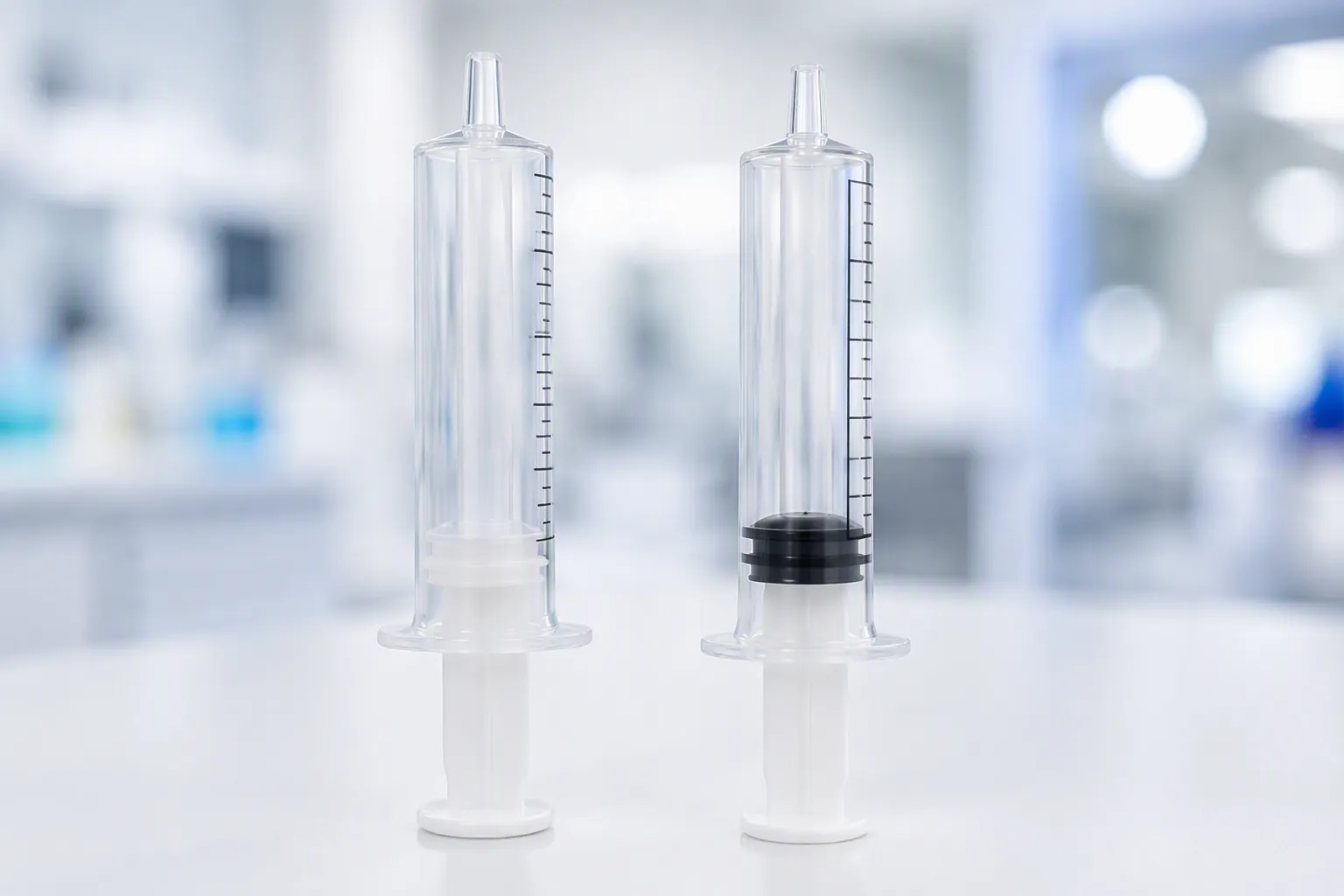
The main difference between 2-part and 3-part syringes begins with how each one seals. A two-part syringe depends on plastic touching plastic directly between the plunger and the barrel. The molded plastic head presses against the barrel wall along its whole length. This simple seal works fine for everyday uses. Still, it is somewhat weaker than a seal made with an elastomer.
A three-part syringe works in a different way. A rubber or elastomer stopper presses against the barrel and makes a tighter, more airtight seal. This rubber-based seal blocks air and fluid leaks more effectively. The result is stronger leak protection, especially for delicate procedures.
Attribute | 2-Part Syringe | 3-Part Syringe |
|---|---|---|
Seal quality | Basic plastic seal | Strong airtight seal |
Leakage risk | Low, but slightly higher than 3-part | Very low |
When the plunger moves, the rubber stopper forms a secure seal that stops leaks and also allows smooth motion.
So the difference in leak prevention between two-part and three-part syringes comes down to degree, not type. Both designs hold fluid. The three-part syringe just adds a special sealing part that the two-part syringe does not have.
Plunger movement separates the two designs just as clearly. Two forces matter here: breakaway force, which gets the plunger moving, and glide force, which keeps it moving. The two-part syringe depends on plastic-on-plastic friction. That friction can make the first push stiffer and the travel less even.
The three-part syringe pairs its rubber or elastomer stopper with silicone oil lubrication. This combo lowers resistance and helps smooth travel in both directions. A special cross-linked silicone coating on the inner barrel keeps glide forces low and predictable. This matters in auto-injector uses, where steady breakaway and glide forces let even low-force springs deliver the full dose.
Glide force also shapes how dosing feels. A force that runs too high makes an injection feel jerky and can cause pain, and it can cause uneven drug delivery. A force that runs too low lets the plunger move out of control, which raises the risk of overdosing. The three-part syringe's smoother movement supports accurate dosing because the user or device can move the plunger in steady steps.
The parts of each design explain this gap. The two-part plunger sealing design has no separate elastomer layer to absorb friction changes. The three-part build adds that layer, and the lubricant works with it. For routine tasks, the two-part feel is fine. For precision work, the smoother three-part action gives better control.
Buyers comparing two-part and three-part options should treat sealing and glide as linked traits. The same rubber or elastomer stopper that tightens the seal also smooths the stroke. That one part drives much of the difference between 2-part and 3-part syringes in daily use.
Contact materials matter most when a drug reacts with the surfaces it touches. A three-part syringe puts a rubber or elastomer stopper and silicone oil in the fluid path. Some formulations do not handle that contact well. Standard synthetic elastomers exposed to aqueous CPC formulations can swell badly in small areas. Plasticizers may move out of the elastomer matrix during long surfactant exposure. The polymer matrix can also turn brittle, which leads to seal fatigue and tiny cracks. These effects can end in seal leakage during normal use cycles.
Biologics and large-molecule drugs are very sensitive to ion leachables, particles, and silicone contamination. In one survey, 63% of biopharma professionals named particle or leachable contamination as a top concern. A stopper that is only partly coated with fluoropolymer leaves bare rubber exposed, which raises leachable risk. A fully fluoropolymer-coated component gives an inert barrier. Non-siliconized fluoropolymer coatings can deliver the needed gliding force without adding silicone.
A two-part syringe avoids these concerns in a different way. Its plastic plunger needs no elastomer gasket and no silicone oil. That makes the two-part design a natural fit for formulations that react to elastomer contact or to lubricant residue. The trade-off is that the two-part seal relies on plastic-to-barrel fit alone.
The right choice starts with the drug, not the device. A formulation that is sensitive to silicone or to elastomer extractables points toward a two-part syringe. A formulation that needs a tight vacuum seal and smooth glide points toward a three-part syringe with a fully coated rubber or elastomer stopper. Neither type wins across the board. Each one fits a different set of medications.
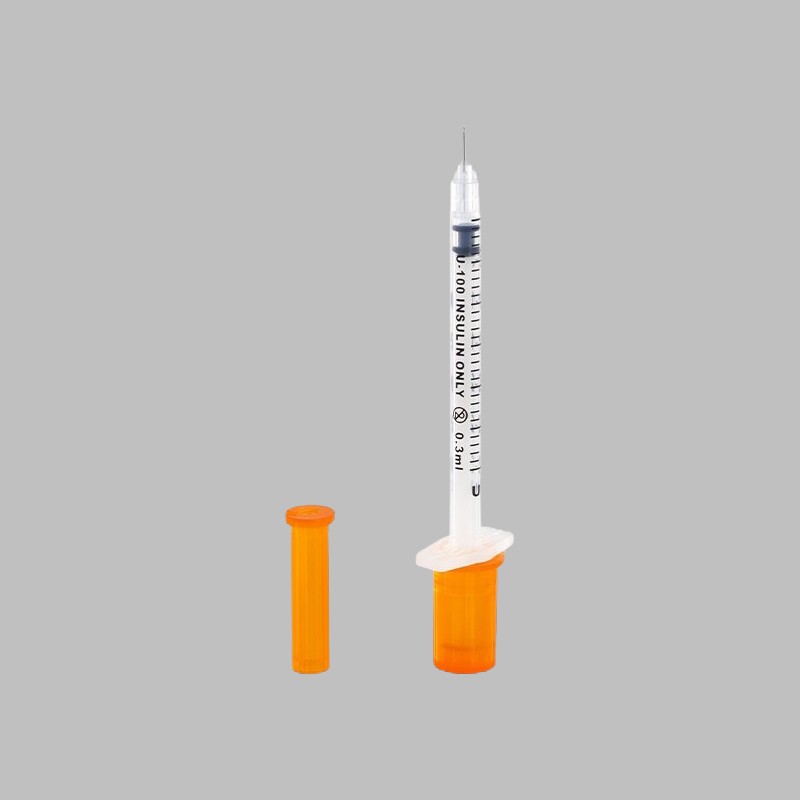
Insulin dosing shows how capacity and graduation guide selection. The table below pairs syringe size with a practical dose range.
Syringe capacity | Graduation | Ideal dose range |
|---|---|---|
0.3 mL | 1-unit intervals | Doses under 30 units |
0.5 mL | 1-unit intervals | Doses between 30 and 50 units |
1 mL | 2-unit intervals | Doses over 50 units |
Needle length also shapes the match. Long 12.7 mm needles are no longer recommended for insulin. Needles of 8 mm and 6 mm reduce pain and avoid accidental intramuscular injection. A 4-mm pen needle or a 6-mm syringe needle suits most people without pinching. Thin-skinned individuals may need to pinch when using a 6-mm or longer needle.
Buyers weighing two-part vs. three-part syringes should also check the syringe barrel material against the drug. A clear, compatible plastic keeps the fluid path stable. The final call rests on the formulation, the dose volume, and the injection route together.
Cost is often the first thing people check when choosing a syringe. A two-part syringe has a lower unit cost because it has fewer parts. A three-part syringe costs more per unit, since the extra rubber stopper and better features raise the price. That gap looks small on one unit. It grows across a large order.
Attribute | 2-Part Syringe | 3-Part Syringe |
|---|---|---|
Unit cost | Lower; fewer components make it cheaper | Higher; extra rubber stopper and added performance features raise price |
Bulk purchasing suitability | Well suited for bulk/volume buys | Less economical at scale |
Cost behavior at scale | Savings compound in large orders | Small per-unit premium accumulates over large purchases |
Best use case | Cost-sensitive, basic fluid transfer | Precision dosing where performance justifies premium |
Although the price gap per syringe is minor, it becomes substantial when multiplied across large-volume orders, meaning procurement budgets for high-volume facilities are noticeably affected by choosing 3-part over 2-part syringes.
Buying in bulk lowers the unit price through volume savings. Net savings can shrink when packaging is inefficient or inventory holding costs go above about 1.5% monthly. Packaging design matters here. High-density blister packs and standard carton sizes raise container fill rates and cut per-unit freight. Raising container use from 80% to 95% spreads fixed freight costs over more units. Buyers can also negotiate on standard specs, combined multi-size loads, annual forecasts, and better packaging to lower the final cost.
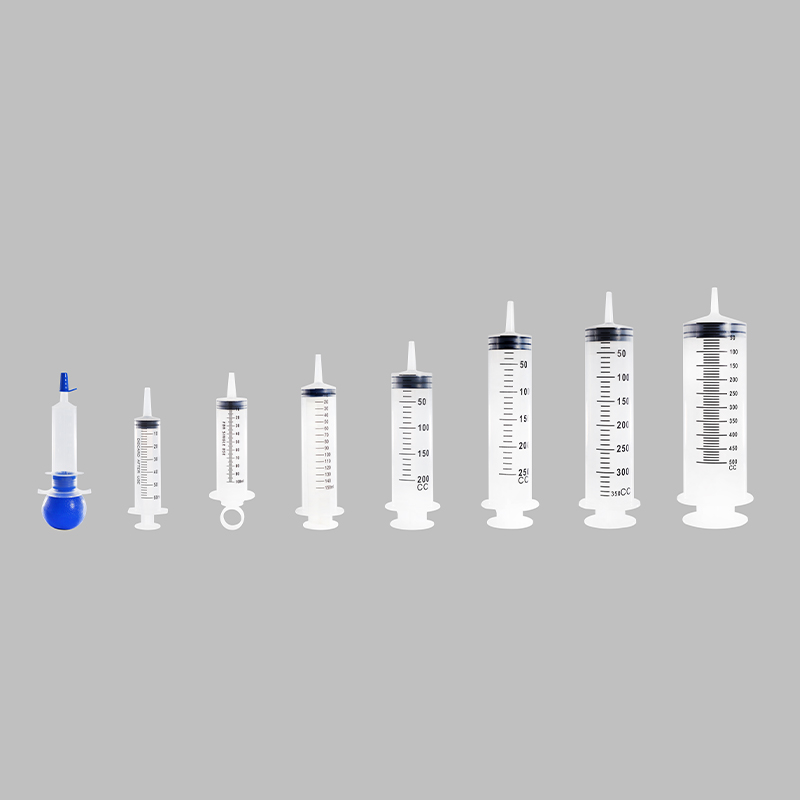
The wider disposable syringe category covers vaccination, insulin administration, and irrigation. Each task has its own cost logic. Vaccination programs use huge volumes, so the lower unit cost of two-part syringes adds up to real budget savings. Insulin administration needs smooth, accurate dosing, which favors the three-part syringe. Irrigation often needs large volumes and simple fluid transfer, a natural fit for the two-part design.
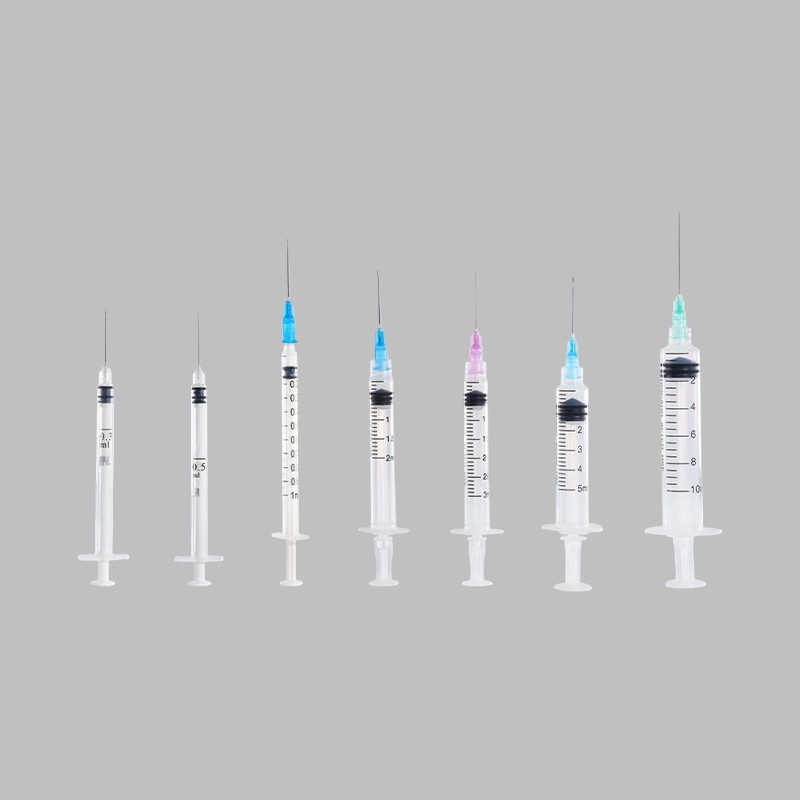
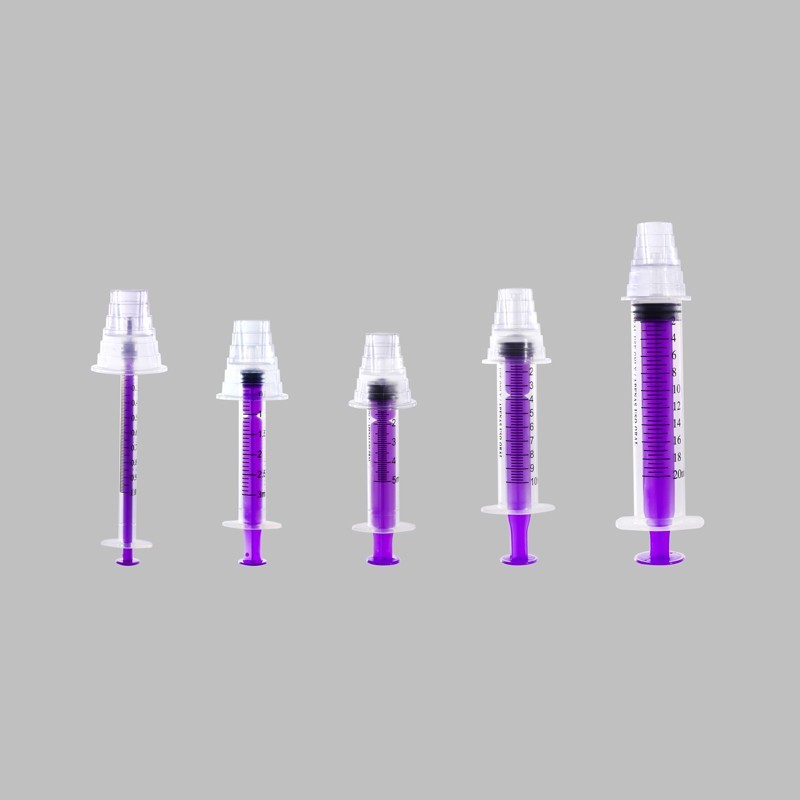
Changzhou Medical Appliances General Factory Co., Ltd. offers luer slip, luer lock, insulin, two-part, and catheter tip syringes to cover these use cases. That range lets a buyer match each task to the right design instead of forcing one type across every application. The difference between 2-part and 3-part syringes in cost therefore comes down to volume and task. Two-part and three-part syringes each hold a clear place in a well-planned procurement list.
Each design has clear strengths. A two-part syringe is simple. It has only a barrel and a plastic plunger, so it is easy to put together. Its fluid path has no silicone oil and no elastomer contact. That makes the two-part syringe a good fit for formulations that react to lubricant residue. So the advantages and disadvantages of 2-part syringes start with a clean, simple build.
A three-part syringe has its own strengths. The rubber or elastomer stopper seals better, lowers leakage, and helps the plunger move more smoothly. That extra part gives the three-part syringe a tighter vacuum seal and steadier glide. The advantages and disadvantages of 3-part syringes center on that added performance layer.
The trade-offs need a practical look, not a final verdict. A simpler structure does not by itself mean lower cost, better accuracy, or improved safety. Those results depend on manufacturing processes, design, inspection requirements, and model specifications. Buyers comparing two-part vs. three-part syringes should check leakage test results, operating-force data, and dimensional tolerances. They should not assume one design always seals better or glides smoother.
3-part syringes include a rubber gasket that improves sealing, reduces leakage, and ensures smoother plunger movement.
Cost comparisons work best on equal footing. Buyers should compare supplier quotations on the same product specification and order quantity to find true cost differences. That method keeps the 2-part and 3-part syringe comparison fair. The 3 parts of syringe construction add a part, yet the real cost gap depends on how each supplier builds and inspects the device. Weigh sealing consistency, glide, cost, and material compatibility together. Two-part and three-part syringes each carry trade-offs that suit different priorities.
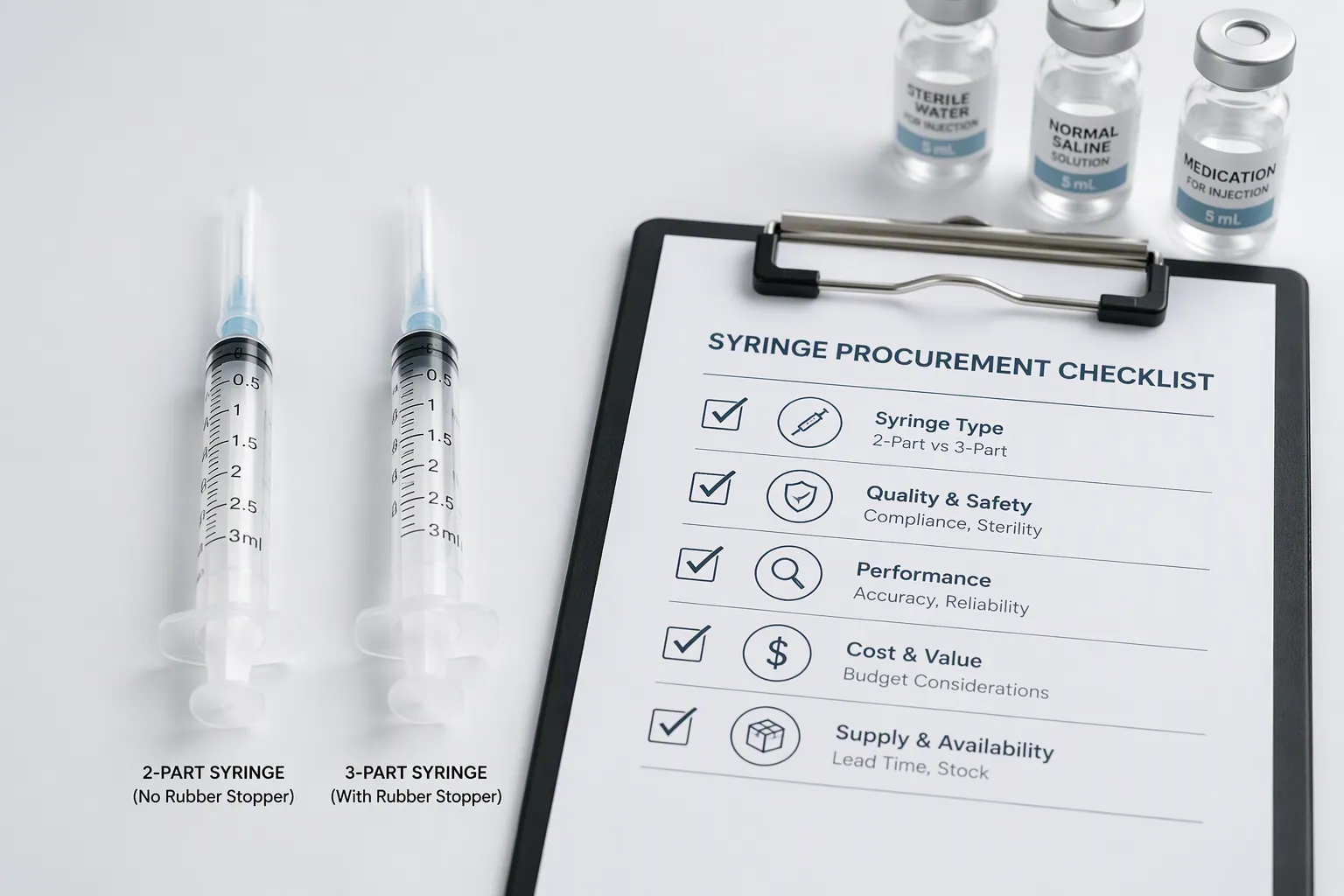
The intended use decides the choice before anything else. A clinician should name the task first, then work through sealing needs, material compatibility, and budget in that order. This order keeps the decision based on real clinical needs.
Medication thickness shapes needle and barrel selection. For thick drugs, a wider needle with a lower gauge helps flow. For thin drugs, a thinner needle with a larger gauge works well. The smallest needle that holds the full dose gives precise dosing. At least 20% of the syringe should hold the medication, so a 10 mL barrel should not deliver a 2 mL dose. Flow through the needle becomes the key step with thick drugs, not the first plunger push. A smooth barrel surface also helps the drug flow.
Sealing needs come next. A three-part syringe with a rubber stopper suits tasks that need a tight vacuum seal. A two-part syringe suits tasks where a clean fluid path matters more. Material compatibility follows. Formulations that react to silicone oil or elastomer contact point toward the two-part design. Budget closes the review. Readers weighing which syringe is best for accurate medication dosing should test samples under real conditions before committing.
Bulk buyers need a written checklist. Start with minimum order quantity and case-rounding effects, and treat both as part of total operating cost. Map the full restocking lead time, including order review, warehouse processing, transit, and supply risk. Private label programs can raise MOQ and lengthen lead time, so define product MOQ, packaging MOQ, and tooling charges early.
Sterilization deserves its own line. Ethylene oxide gas runs at mild conditions, usually at or below 60°C, and suits plastic and rubber syringes that cannot take steam heat. EO also reaches complex designs and mixed materials without taking them apart.
Certifications confirm the quality system. ISO 13485 shows controlled manufacturing, inspection, and documentation. CE marking opens many international markets. Changzhou Medical Appliances General Factory Co., Ltd. holds ISO 13485 and CE among its certifications, runs a 100,000-level clean workshop, and offers OEM/ODM services with a daily capacity of 5 million units for fast response.
Quality checks go beyond certificates. Buyers should ask for dimensional reports, validation records, and change-control procedures. Seal integrity tests, slip force testing, and batch documentation per ISO 13485 give traceability. Representative samples belong in every approval file.
The difference between 2-part and 3-part syringe selection therefore rests on application, seal, material, and budget, checked in that order. A structured review of two-part vs. three-part syringes: design and selection keeps both 2-part and 3-part options in fair view. The difference between 2-part and 3-part syringes rarely comes down to one trait. Two-part and three-part syringes each serve distinct roles, and a clear checklist settles the 2-part and 3-part syringe question fast. A two-part syringe rewards simplicity, and a 3-part syringe rewards precision. Buyers who compare 2-part and 3-part syringes on equal specifications reach the right call. The two-part design and the 3-part syringe both earn a place on a well-planned order list.
No single design is best in every case. Two-part syringes work well for tasks where simple use and low cost matter most. Three-part syringes work well for tasks where a steady seal and smooth plunger movement matter most.
The order of the decision does not change. Readers should first name the job the syringe must do. Next comes sealing needs, then material compatibility, then budget. This plan keeps the comparison between two-part and three-part syringes tied to real needs.
Complex or large orders deserve expert advice. Buyers can ask syringe specialists or suppliers such as Changzhou Medical Appliances General Factory Co., Ltd. to confirm the right fit before they buy. A short talk up front prevents costly mistakes later. The two-part option and the three-part build both reward a careful, informed choice.
No. A two-part syringe depends on how tightly its plastic plunger fits the barrel. There is no rubber gasket at the plunger tip, so it does not need silicone lubricant. This clean fluid path works well for formulations that react to lubricant residue.
A three-part syringe usually glides more smoothly. Its rubber stopper and silicone oil coating reduce friction during both push and pull. A two-part syringe relies on plastic touching plastic, which can feel stiffer at the start of the stroke.
Changzhou Medical Appliances General Factory Co., Ltd. offers two-part syringes from 1ml to 100ml with luer slip or luer lock connections. Three-part syringes cover similar clinical volumes. The right size depends on the dose and the injection route, not on the part count alone.
Yes. EO gas sterilization works for both designs. It runs at mild conditions and works well with plastic and rubber components. Changzhou Medical Appliances General Factory Co., Ltd. sterilizes its disposable syringes with EO gas, and the products are non-toxic and non-pyrogenic.
Changzhou Medical Appliances General Factory Co., Ltd. sets a minimum order quantity of 200,000 pieces. The factory runs a 100,000-level clean workshop and produces 5 million units daily. That capacity supports fast response to large or emergency orders.
Whatsapp: +86-13616120206
E-mail: sale01@lelun.com
ADD: HengShanQiao Town, out of East Gate, Changzhou ,Jiangsu, China
Mobile: (+)86-13616120206