





News Categories

A standard IV set lets fluid run straight from the bag, so keeping a small patient within a narrow fluid window depends on a roller clamp and close monitoring. A burette infusion set adds a graduated chamber that measures and limits each volume before it reaches the patient. This guide compares the two delivery methods, explains where measured infusion is normally specified, and lists the details purchasing teams should confirm.
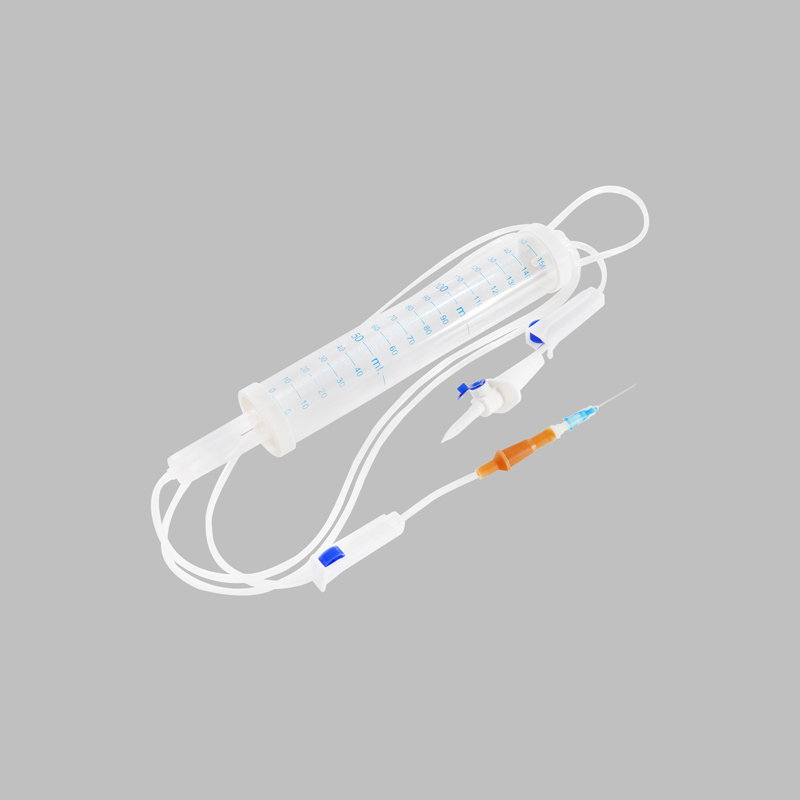
A graduated chamber, typically 100 mL or 150 mL, measures and limits the fluid delivered in each interval.
Drop factor is a key specification: micro-drip chambers deliver about 60 drops per mL, while macro-drip chambers commonly deliver 10, 15 or 20 drops per mL.
Measured, volume-limited infusion is widely specified in pediatric, neonatal and critical care, where narrow fluid windows and small doses are routine.
Material, connector type, sterilization method and documentation are practical points to verify when comparing an infusion set for clinical use.
A burette chamber is a transparent, calibrated tube that holds a measured volume of fluid. A burette infusion set places this chamber between the source bag and the patient: fluid is first drawn from the bag into the chamber, observed against the graduations, and then delivered from the chamber to the IV line. A vent lets air enter as fluid leaves, and two flow regulators allow independent control of filling and delivery.
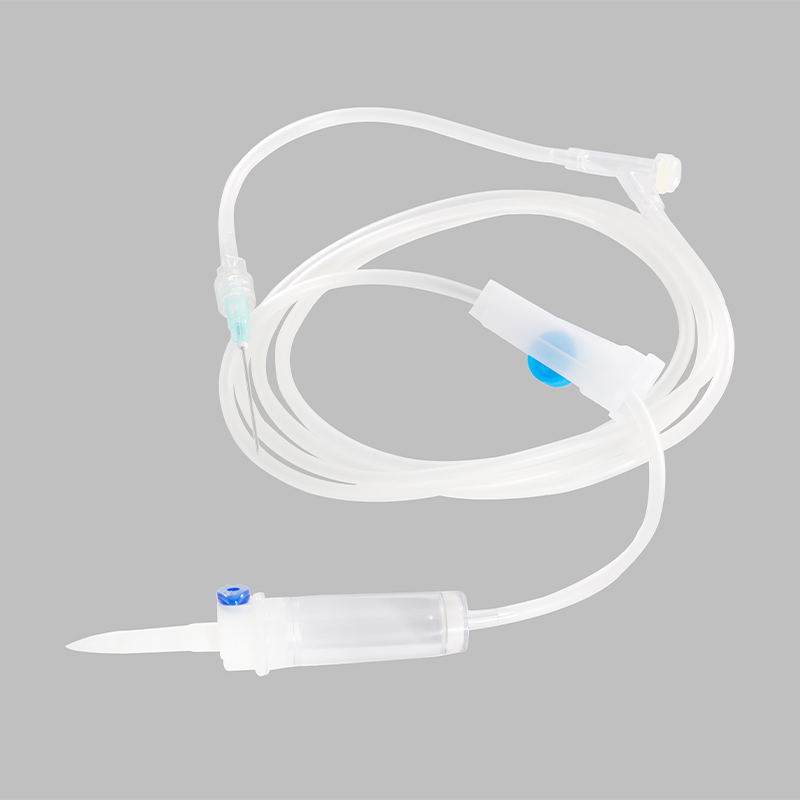
Because only the fluid inside the chamber can reach the patient, the volume available for any one interval is visibly capped. This is the central distinction from a standard disposable infusion set, where the whole bag remains connected to the line and the delivered volume depends on how long the clamp is left open. Graduations commonly allow readings in small steps, supporting doses measured in a few milliliters.
Two clamps serve different purposes. The upper regulator fills the chamber to the prescribed line and then closes, so the bag cannot keep feeding the line. The lower regulator sets the drip rate from the chamber to the patient. Some designs add a float valve or an air-stop feature that closes the outlet when the chamber empties, limiting the chance that an empty bag is followed by air in the line.
Both sets connect an IV container to a venous access device, but they manage measurement and control in different ways. Understanding these differences helps explain why one format is specified for measured doses and the other for routine continuous infusion.
Drop factor is the number of drops that make up one milliliter, and it is printed on the set packaging. An IV therapy reference for nursing practice describes macro-drip tubing delivering 10, 15 or 20 drops per mL for routine adult infusions, and micro-drip tubing delivering about 60 drops per mL for pediatric or neonatal care, where small volumes are given over longer periods. A micro-drip chamber makes a low rate easier to count by hand: a 40 mL volume over 60 minutes equals 40 drops per minute at 60 drops per mL, compared with roughly 13 drops per minute at 20 drops per mL.
A standard set usually draws continuously from the source bag, and medications are added at a Y-site or through a bag port. In a measured set, additives can be introduced directly into the chamber for dilution as well as through an access site. Infusion sets with a Y-site are one common configuration when more than one medication must be given through the same line. Neither approach replaces an infusion pump where a pump is required by protocol.
Published specifications, configuration options and documentation can be reviewed before placing an order.
Measured infusion is most useful when a patient's fluid tolerance is narrow or the prescribed dose is small. Pediatric patients generally need smaller primary volumes than adults, and smaller bags are selected according to age and condition. When pumps are not available, gravity tubing is used, making the visible chamber and a countable drip rate more relevant to safe administration.
Neonatal and pediatric wards commonly use measured sets for maintenance fluids, small-volume antibiotics and electrolyte replacement. Critical care uses them where medications are titrated and fluid balance must be watched closely. Restricted-fluid adults, such as some cardiac or renal patients, may also be managed with a measured chamber. For a full source bag running at a steady rate, a standard infusion set is normally the more direct choice.
Many disposable infusion sets are made from medical-grade PVC, sometimes with a DEHP-free option. DEHP is a plasticizer that can leach from PVC devices into infusion fluids, and a peer-reviewed review of neonatal exposure notes that certain infants in neonatal intensive care may receive daily exposure well above the tolerable intake estimated at the time of that review. A European scientific committee opinion likewise identifies neonates among groups that may face greater risk from DEHP-containing devices. For light-sensitive medications, a light-protected infusion set is another option, specified by a published transmittance range.
The following products reflect configurations that are commonly compared when specifying an infusion set for measured or routine delivery.
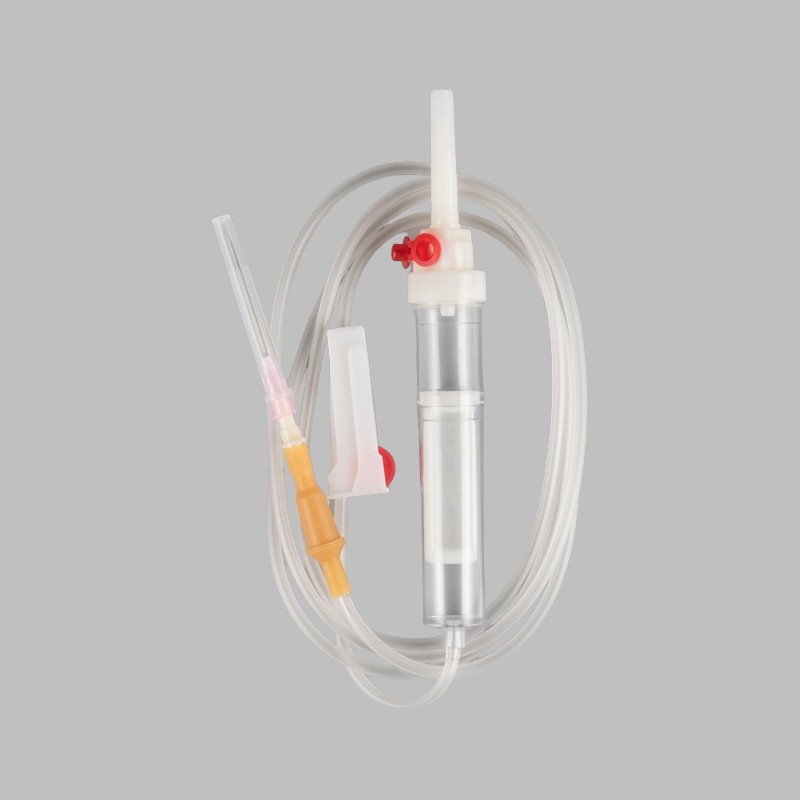
A single-use IV set with a graduated chamber for measured, volume-limited infusion, sterilized by EO gas.
View Product
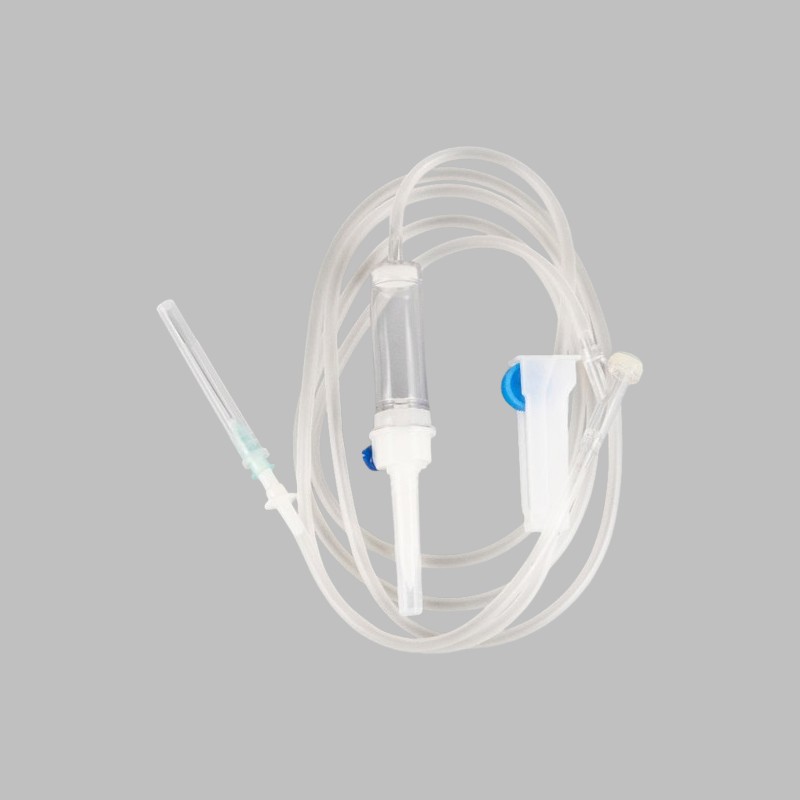
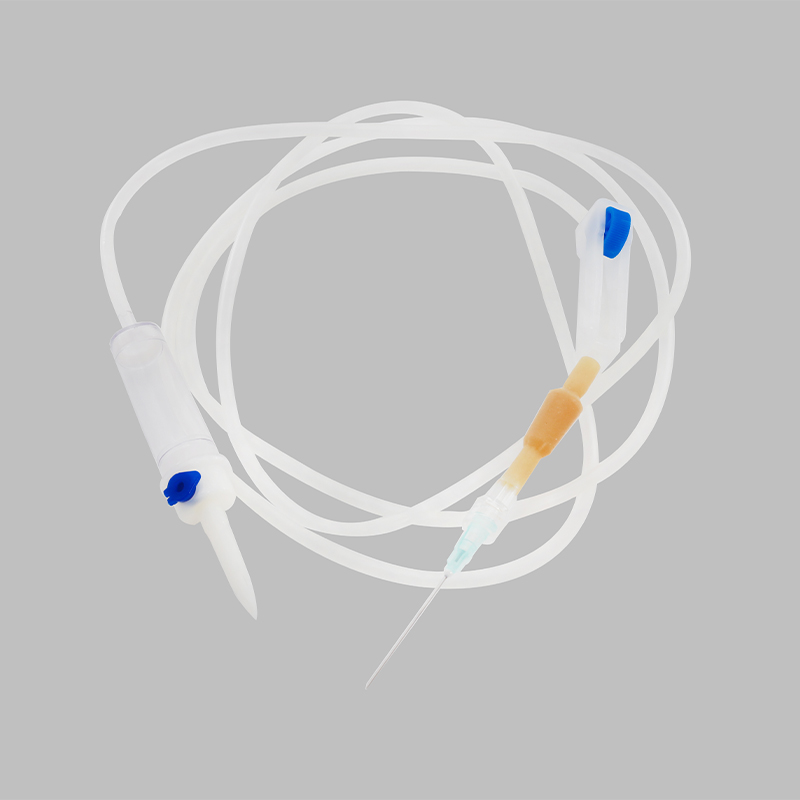
A standard set with a Y-site, Luer lock connector and medical-grade PVC tubing, with or without DEHP.
View Product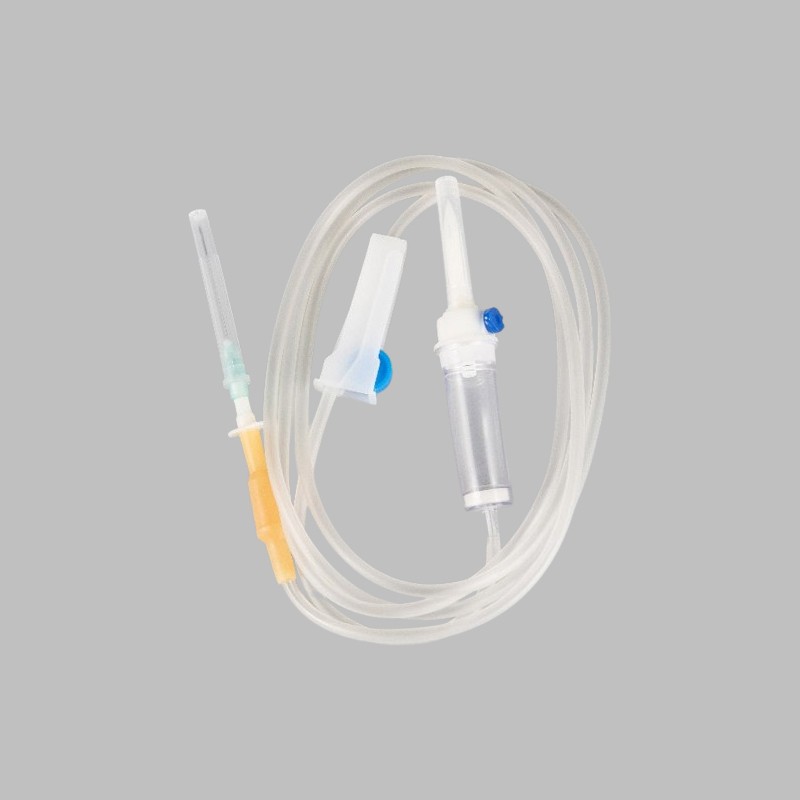
A PVC infusion set specified with a 290 nm to 450 nm transmittance range for light-sensitive medications.
View ProductSelection starts with the volume window the ward needs. Manufacturer-published options include 100 mL and 150 mL chambers; the smaller size suits neonates and infants, while the larger one covers older children and small-volume adult titration. The drop factor should be stated explicitly on a purchase order, since micro-drip and macro-drip sets are not interchangeable on the same trolley.
Connector choice follows the care setting. A Luer lock connection resists accidental separation when a patient moves, while a Luer slip connection is simpler for short, stable lines. Tubing is usually medical-grade PVC, with DEHP-free versions available; some configurations include a latex injection site. Sterilization is typically EO gas or gamma radiation, and sets are supplied single use in a polybag or blister. Buyers normally check the certificate, quality-system documentation and labeling against the intended market. Single-use sets should not be reused, and a damaged pack should not be used.
| Feature | Burette infusion set option | Standard IV set |
|---|---|---|
| Measuring chamber | Graduated chamber, commonly 100 mL or 150 mL | No measuring chamber; fluid runs from the bag |
| Common drop factor | Micro-drip about 60 drops per mL; macro-drip options also listed | Macro-drip 10, 15 or 20 drops per mL |
| Volume control | Chamber caps the volume delivered per interval | Roller clamp and staff monitoring |
| Air protection | Vent with optional float valve or air-stop feature | Vented spike; varies by specific design |
| Additive access | Direct into chamber or through an access site | Y-site or source bag port |
| Typical use | Pediatrics, neonates, critical care, titrated drugs | Routine adult continuous infusion |
| Material | Medical-grade PVC or PP; DEHP-free option available | Medical-grade PVC, with or without DEHP |
| Sterilization and packing | EO gas, single use, polybag or blister pack | EO gas, single use, polybag or blister pack |
Configuration questions, documentation and sample availability can be raised directly with the manufacturer.
The measured, volume-limited approach works through the graduated chamber, the countable micro-drip rate and optional air-stop features when doses are small and fluid tolerance is narrow. A standard IV set remains a practical choice for routine continuous infusion from a full bag. The decision rests on patient population, required drop factor, connector safety, material preference and documentation, rather than on one format being universally better.
For readers comparing burette infusion set manufacturers, LELUN provides published specifications, technical documentation and direct inquiry channels for further evaluation.
The measured system uses a graduated chamber that limits the fluid delivered in each interval. A standard IV set has no chamber, so fluid runs from the bag and volume is controlled by a clamp and monitoring.
A 60 drops per mL micro-drip chamber turns a small volume into a rate that can be counted over a minute, which suits low-flow pediatric and neonatal infusions. Macro-drip rates of 10 to 20 drops per mL are harder to verify at low volumes.
Yes, when an adult needs a small, closely measured volume, such as titrated medication or restricted fluid intake. For routine full-bag infusion at a steady rate, a standard set is usually sufficient.
It means the PVC tubing is made without DEHP plasticizer. DEHP can leach from PVC into infusion fluids, so DEHP-free tubing is often requested for neonates and other sensitive patient groups where regulators have raised concerns.
Luer lock is often preferred where movement could separate the connection, including pediatric care. Luer slip is simpler for short, stable lines. The choice should follow the facility's protocol and the access device in use.
Whatsapp: +86-13616120206
E-mail: sale01@lelun.com
ADD: HengShanQiao Town, out of East Gate, Changzhou ,Jiangsu, China
Mobile: (+)86-13616120206